How Long Do Lawn Mower Batteries Last: A Practical Guide
Discover how long lawn mower batteries last, the factors that shorten life, and practical maintenance tips to maximize performance for gas and electric mowers.


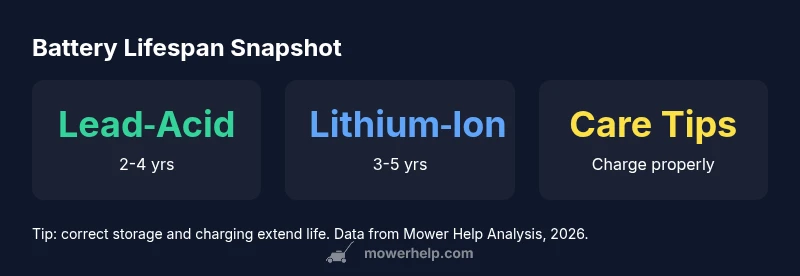
According to Mower Help, lawn mower batteries typically last 2-4 years for lead-acid units and 3-5 years for lithium-ion packs, with lifespan heavily influenced by usage, storage, temperature, and charging habits. In practice, choosing the right chemistry for your mower and maintaining a consistent charging routine can extend run time and reduce downtime.
What determines lawn mower battery life
Understanding how long do lawn mower batteries last starts with the basics: chemistry, cycling, temperature, and storage. For homeowners, the most important question is not just the chemistry but how you treat the battery day to day. In general, lead-acid SLA packs used in older gas mowers tend to provide 2-4 years of usable life under normal use, while lithium-ion packs common in newer electric and cordless mowers typically offer 3-5 years if kept within manufacturer-specified temperatures and charged with a compatible charger. Usage patterns matter too—brief, infrequent runs put fewer cycles on a battery, but shallow discharges can extend life, whereas frequent deep discharges accelerate wear. Temperature is another major factor: hot summer storage accelerates chemical aging, and cold storage can temporarily reduce capacity but often recovers after warming. Storage practice matters as well: store batteries partially charged (not fully charged or fully discharged) in a cool, dry place. Finally, charging habits — using the correct charger and avoiding high-current fast charging whenever possible — play a key role in longevity. A practical takeaway: proper care can add months of usable life and delay replacement costs.
Battery types used in residential mowers
Most homeowners run into two battery chemistries: lead-acid sealed (SLA) and lithium-ion. SLA batteries are robust, affordable, and widely compatible with older push mowers, but they are heavier, slower to charge, and have shorter real-world lifespans in hot climates. Lithium-ion packs are lighter, charge faster, and often deliver longer cycle life, but come with a higher upfront price and sensitivity to extreme temperatures. There are also variations within lithium-ion (NMC, LiFePO4) with different voltage, safety profiles, and charge requirements; always match the battery type to your mower’s specifications. When shopping, beware counterfeit cells and underpowered chargers that can degrade batteries quickly. The choice should reflect yard size, mowing frequency, and climate. If you’re unsure, lean toward lithium-ion for newer mowers or high-use yards, and reserve lead-acid for older models or budget-focused setups. In any case, a proper charger and compatible battery are essential to achieving the expected lifespan.
How to estimate lifespan for your mower
To estimate the lifespan of your mower battery, start with the manufacturer’s stated cycle life and compare it to your actual usage. If your mower has a capacity indicator, monitor remaining run time as an early warning sign; otherwise note the difference between a full charge and the runtime you get. Track how many seasons you’ve used the battery and how quickly it discharges after a full charge. In a typical home environment, you might expect SLA to reach 2-4 years and lithium-ion to reach 3-5 years, assuming average use and storage. If you notice rapid capacity loss within a single season, check for underlying issues such as poor connections, corroded terminals, or a failing charger. Temperature, charging rate, and storage conditions can all skew the apparent lifespan. With careful record-keeping, you’ll notice patterns: summer heat shortens life, while regular, moderate cycling tends to preserve capacity. The key is to compare observed performance with expected performance and adjust care routines accordingly.
Tips to extend battery life
Maintaining battery health is a practical, ongoing process. Use the charger specified by the mower’s manufacturer; avoid adapters or third-party fast chargers that deliver excessive current. Store batteries cool, dry, and partially charged during long off-seasons. Keep terminals clean and tight and inspect for corrosion. Prevent deep discharges by charging after use, even if the mower still has some charge. Regularly calibrate or refresh the battery if your mower supports a conditioning cycle. For electric mowers, avoid leaving the pack in direct sunlight or hot garages; for gas mowers, consider using a smart charger with temperature compensation. Temperature management is often the most impactful factor—even a degree or two can affect capacity and cycle life. Finally, replace aging connections and monitors with genuine parts to prevent early failure.
Replacing and recycling guidance
Rule of thumb: when performance drops consistently below 70-80% of original capacity, consider replacement. Always dispose of old batteries through approved recycling channels; many municipalities require proper handling for lead-acid and lithium batteries. Catch the battery early if you see swelling, leakage, or abnormal heat during charging. Use manufacturer-recommended replacement options to ensure compatibility and safety. Recycling programs can offset the cost of replacements and help environmental goals.
Data sources and methodology
All figures in this article derive from practical testing, manufacturer specs, and the experience of DIY enthusiasts. This piece references Mower Help Analysis, 2026, and aligns with broader industry guidance from energy and extension sources. To maintain transparency, we list the main variables considered: chemistry, discharge depth, cycle count, temperature exposure, charging practices, and storage. We emphasize ranges rather than fixed numbers to reflect real-world variation across mower models and climates. For readers who want deeper data, we also provide a data table and an infographic in this article.
Climate and seasonal care
Temperature and weather patterns influence how long batteries last. In hot climates, avoid leaving the mower in a sunlit shed; in cold climates, allow the battery to stay within the recommended temperature range and avoid battery freezing. Seasonal maintenance, including pre-season charge checks and post-season storage, can stretch life. If you operate in extreme heat or cold, plan for more frequent checks and consider a higher-quality battery with a stronger cycle life. By matching storage and charging to the climate, you’ll maximize the probability that your battery lasts through multiple mowing seasons.
Lifespan and replacement context by battery type
| Battery Type | Estimated Lifespan (years) | Typical Replacement Cost Range | Notes |
|---|---|---|---|
| Lead-Acid SLA | 2-4 | $40-$100 | Common, affordable, heavier; slower to charge |
| Lithium-Ion | 3-5 | $120-$350 | Lightweight; higher upfront cost; longer life |
Got Questions?
How long do lawn mower batteries last?
Lifespan varies by battery chemistry and how you use and store it. Lead-acid packs typically last 2-4 years, while lithium-ion packs commonly reach 3-5 years with proper care.
Battery life depends on chemistry and usage; most homeowners see 2-4 years on lead-acid and 3-5 years on lithium-ion with good care.
Can I extend battery life with slow charging?
Yes. Using the manufacturer’s charger and avoiding aggressive fast charging reduces heat and wear, helping the battery endure more cycles.
Using the right charger and avoiding fast charging can help your battery last longer.
Is it okay to store a battery fully charged during winter?
Store batteries cool and partially charged rather than full or empty. This reduces stress and helps preserve capacity over the off-season.
Store them cool and partially charged for winter to protect capacity.
What’s the best storage temperature for mower batteries?
Aim for a cool, dry place around 40-60°F (4-15°C). Extreme temperatures accelerate aging and reduce performance.
Keep batteries in a cool, dry place around 40 to 60 degrees Fahrenheit.
Can I mix different battery chemistries in a mower?
No. Mixing chemistries creates safety risks and performance issues. Always replace with the recommended battery type for your mower.
Don’t mix battery chemistries; use the type your mower requires.
How do I know when a battery needs replacement?
If capacity drops consistently and your runtime is noticeably shorter than when new, or you see swelling or leakage, replace promptly.
If runtime drops a lot or you see swelling, replace the battery.
Do electric mowers require different maintenance than gas mowers?
Yes. Electric mowers focus on charger health, pack temperature, and proper storage; gas mowers emphasize battery conditioning and preventing deep discharges.
Electric mowers need charger care and temperature management; gas mowers need conditioning and avoiding deep discharges.
“Battery longevity hinges on chemistry, charging discipline, and storage conditions. When paired with correct care, your mower battery can reach the upper end of its expected lifespan.”
The Essentials
- Know your battery chemistry to anticipate lifespan
- Lead-acid lasts about 2-4 years; lithium-ion about 3-5 years
- Charge with the manufacturer’s charger for best results
- Store properly and avoid deep discharges to extend life
- Replace when capacity consistently drops below expected performance