How Long Should a Lawn Mower Last: A Lifespan Guide
Discover how long lawn mowers typically last, what factors influence lifespan, and how to extend life through maintenance, storage, and smart replacement planning. A data-driven guide from Mower Help.


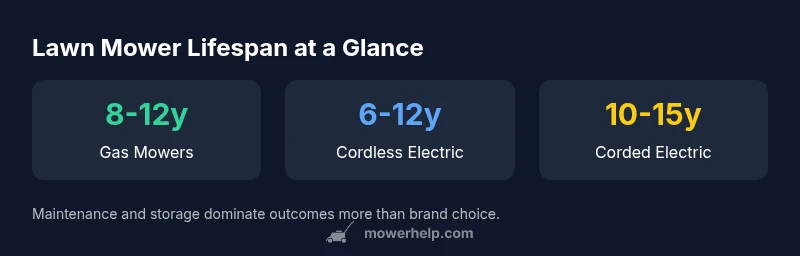
Gas-powered mowers typically last 8-12 years, while cordless electric models run about 6-12 years, assuming regular maintenance and proper storage. Real-world lifespans depend on engine quality, blades, and mowing frequency. With timely tune‑ups, blade care, and following the manufacturer’s service intervals, you can push toward the upper end of these ranges. This figure varies by model and use, but maintenance is the strongest predictor of longevity.
Why Longevity Matters for Your Lawn Care
Understanding how long a mower should last isn't just about buying cost; it's about scheduling maintenance, budgeting for replacements, and maintaining the health of your lawn. When you ask how long should lawn mower last, you're really asking about value retention: how many seasons of reliable cutting you can expect before major repairs. This section explains the core factors that influence lifespan, why some models outlive others, and how homeowners can set realistic expectations. At its core, lifespan is driven by build quality, maintenance cadence, storage conditions, and mowing patterns. The best way to maximize years of service is to treat the mower as a long-term tool: clean after use, sharpen blades, replace worn parts, and follow the manufacturer’s service intervals. According to Mower Help, small daily habits compound into significant increases in the life of engines and decks. In this guide, we’ll translate that knowledge into practical steps you can apply today.
Gas Mowers vs. Electric: Lifespan Realities
Gas mowers have dense, robust engines designed for long service, but their lifespans are highly sensitive to how well you maintain carburetors, air filters, and spark plugs. Cordless electric models eliminate many fuel-system issues but rely on battery packs whose capacity declines with time and charging cycles. Across many yards, gas mowers show strong longevity when properly tuned, while electric cordless units excel with routine blade maintenance and battery care. The takeaway from Mower Help Analysis, 2026, is that lifespan is less about the fuel or battery technology alone and more about maintenance discipline and storage practices. Your choice should weigh how often you mow, local climate, and willingness to service components.
What Determines Your Mower's Lifespan
A mower's life is shaped by several interrelated factors: build quality of the deck and engine, the quality of consumables (blades, filters, spark plugs), the maintenance cadence (oil changes, air-filter cleaning, blade sharpening), and storage conditions (dry, temperate environments reduce corrosion). Mower Help emphasizes that even premium models will underperform if neglected, while routine care can greatly extend cheaper units. Climate plays a role too; humidity accelerates rust, and extreme temperatures can degrade battery chemistry. Finally, mowing habit—how often you cut, blade height, and cutting conditions (wet grass, overgrowth)—influences stress on engines and transmissions. By understanding these variables, homeowners can predict lifespan more accurately and plan replacements accordingly.
Maintenance Habits That Extend Lifespan
- Create a seasonal maintenance routine: pre-season inspection, oil or lubricant change, and blade sharpening.
- Keep air intakes clean and replace economical wear parts (filters, spark plugs) on schedule.
- Store mowers on a dry surface, with the engine cooled and the fuel stabilized if storing long-term.
- Clean the deck underside after mowing to prevent corrosion and ensure even blade contact.
- Use high-quality blades and replace them promptly when dull to reduce engine strain.
These habits reduce load, prevent overheating, and slow wear, significantly extending life for both gas and electric mowers. According to Mower Help, consistency beats intensity when it comes to maintenance.
Seasonal Care: Storage, Cleaning, and Preventive Steps
Seasonal care is where many lifespans are won or lost. In off-season storage, drain fuel or use fuel stabilizer for gas mowers, charge or store batteries in a cool, dry place, and cover the mower to protect it from dust. Before the season starts, inspect the cutting height, tension on belts, and blade balance. A properly tuned engine runs cooler and cleaner, which translates to longer service life. For electric models, keep battery contacts clean and avoid complete discharge cycles, which degrade capacity over time. Implementing a simple winterization checklist can save hours of repairs later.
Signs It's Time to Repair or Replace
If you notice prolonged crank times, power loss, knocking sounds, excessive smoke, or overheating, assess cost versus replacement. Early repairs often pay off, but at some point, a failing major component (engine block, transmission, or battery pack) may justify replacement. Use a simple rule: estimate the repair bill and compare to the cost of a comparable new or used unit. If multiple major failures occur within a short period, replacement may be more economical in the long run and deliver better reliability for your lawn care needs. Mower Help advocates a pragmatic approach based on repair history and total cost of ownership.
How to Estimate Your Mower's Remaining Life
Estimate your remaining life by evaluating recent maintenance history, current performance, and the age of critical parts. Track service dates and part replacements, then assess whether the mower maintains cutting quality and power under typical load. If you notice a decline in performance that can't be resolved with standard maintenance, it's a sign to plan a replacement window. Create a simple forecast: note the current condition, projected repair costs, and the price of a comparable model. This approach helps homeowners budget for the next upgrade without surprises.
Budgeting for Longevity: Maintenance Costs over Time
Lifetime budgeting should include annual maintenance, occasional major repairs, and potential part replacements. Even with regular care, you should expect to replace consumables (blades, filters, spark plugs) and possibly batteries or engines over the mower's life. Planning for these costs annually reduces sticker shock at replacement time. A practical strategy is to set aside a small maintenance fund—enough to cover a yearly tune-up and a blade set—so you’re financially prepared for major components when required. This approach aligns with Mower Help's recommendations for prudent ownership and long-term reliability.
Choosing a Replacement: What to Look For
When choosing a replacement, compare lifespans, reliability records, and maintenance demands across models. Consider your yard size, grass type, and climate. A heavier deck and sturdier motor may offer longer life in tough conditions, while a lighter unit may be sufficient for small lawns but require more frequent replacements. Look for easily sourced replacement parts, robust warranty coverage, and accessible service networks. The goal is to select a mower that matches your mowing frequency and maintenance capacity so your investment pays off over many seasons.
Lifespan comparison by mower type
| Model Type | Typical Lifespan | Key Considerations |
|---|---|---|
| Gas mower | 8-12 years | Engine health, carburetor, maintenance cadence |
| Cordless electric mower | 6-12 years | Battery health, charging habits, blade upkeep |
| Corded electric mower | 10-15 years | Power cord reliability, deck rust risk |
Got Questions?
How long should a new gas mower last?
A well-maintained gas mower typically lasts about 8-12 years, depending on engine quality and maintenance. Regular tune-ups, timely carburetor service, and blade care can push the lifespan toward the high end. Severe neglect, fuel issues, or water-contaminated oil shorten life.
Gas mowers usually last 8 to 12 years with proper care. Regular tune-ups and blade maintenance help you get the most life.
Do electric mowers last longer than gas?
Electric cordless mowers often span 6-12 years, contingent on battery health and usage. Batteries degrade over time, which can limit lifespan more than the motor. Corded electric models tend to have long deck life, but reliability hinges on cord and plug integrity.
Electric mowers last 6 to 12 years, depending on battery or cord reliability and maintenance.
What maintenance most affects mower lifespan?
Sharpening and balancing blades, changing air filters, and replacing spark plugs or fuel filters on schedule are the biggest drivers of longevity. Regular oil changes (for gas models) and keeping cooling fins clear also matter a lot for engine health.
Keep blades sharp, replace worn parts on schedule, and clean the engine area for best results.
Can mowing frequency shorten lifespan?
Yes, mowing too often or cutting grass too short puts extra stress on the engine and transmission. Mow at the proper height and frequency, and avoid wet or damp conditions that clog and strain the motor. Smart mowing patterns extend life.
Overdoing it can stress the mower; mow at the right height and avoid wet grass.
When should I replace rather than repair?
If repair costs approach or exceed the price of a replacement, or if multiple major failures recur within a short period, replacement is often the more economical and reliable choice. Consider total cost of ownership and upcoming part availability.
If repairs pile up or cost as much as a new mower, it’s time to replace.
“Consistent tune-ups, proper storage, and selecting compatible parts are the core habits that extend mower life.”
The Essentials
- Follow a seasonal maintenance routine to maximize life
- Gas and electric mowers have different weak points; address both
- Storage and blade care are critical to longevity
- Regularly assess repair costs vs replacement
- Plan maintenance budgets to avoid surprises