How to Change a Lawn Mower Battery
Learn to safely replace your lawn mower battery with this comprehensive, DIY-friendly guide. Identify battery types, prepare your workspace, install the new battery, and test starting performance to keep your mower reliable all season.


By the end of this guide, you'll safely change a lawn mower battery and get back to mowing. You'll learn how to identify battery type, disconnect safely, remove the old unit, install the new battery, reconnect cables correctly, and perform a quick test to ensure the mower starts reliably. Follow the step-by-step process to avoid sparks, spills, and damage to electronics.
Why replacing a lawn mower battery matters
A healthy starting battery is essential for reliable starts and safe operation of a gas-powered mower. According to Mower Help, battery health is a key determinant of how well your mower starts, how long it runs on a charge, and whether you’ll encounter intermittent electrical issues. The Mower Help team found that aging batteries often fail to deliver the cranking power needed under load, which can leave you stranded in the middle of mowing. Replacing a tired battery before it fails protects other electrical components (like the alternator and charging system) and reduces downtime. This simple upgrade also ensures that every mowing session begins with consistent performance, even on cooler mornings when the engine struggles to ignite. Approaching battery replacement with care minimizes the risk of electrical shorts and acid exposure, helping you keep your lawn and equipment in good shape for the season.
Battery types and choosing the right one
Most walk-behind lawn mowers use a 12-volt lead-acid battery, but you’ll encounter a few different chemistries. Flooded lead-acid batteries require regular checking of electrolyte levels and may need water. Sealed lead-acid batteries offer maintenance-free operation, and AGM (absorbed glass mat) variants are common in modern mowers for their higher vibration resistance and slower self-discharge. When selecting a replacement, verify the battery size, terminal orientation, and compatibility with your model. The battery label usually lists the voltage, group size, and terminal layout. If in doubt, consult your mower’s manual or contact the seller with your model number. Mower Help emphasizes matching the new battery to the original type to avoid charging incompatibilities or damaged connections.
Safety first: PPE, environment, and quick checks
Battery work can produce acid splashes and fumes, so wear safety glasses and chemical-resistant gloves. Work in a well-ventilated area and avoid open flames or sparks. Before you touch anything, make sure the mower is off and the key is removed to prevent accidental starts. If you can, disconnect the spark plug wire to add an extra layer of safety. Keep a baking soda paste handy in case of spills; it neutralizes acid, then wipe clean. Finally, unplug the charger and store tools within easy reach so you can complete the job safely and efficiently.
Workspace setup and tools you’ll need
Choose a flat, dry surface like a driveway or garage floor and set the mower on a non-slip mat or thick cardboard. Gather the essential tools: a wrench or socket set (commonly 10-12 mm), insulated pliers, a screwdriver if needed, gloves, safety goggles, and a battery strap or handle to help lift the unit. Have a replacement battery ready, plus a mineral or anti-corrosion spray for terminals if available. Place the old battery in a sturdy bag or container for proper disposal. Having these items on hand reduces back-and-forth trips and minimizes the risk of dropping the heavy unit. This setup helps ensure a smooth, safe swap.
Step-by-step replacement overview
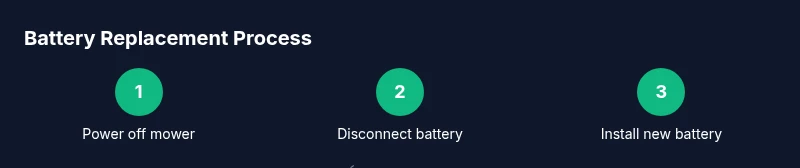
This section provides a concise map of the work. You’ll follow the steps in the dedicated STEP-BY-STEP section, but understanding the sequence helps you plan and prepare. Start with safety and power-off checks, then move to disconnect and remove, install the new battery, reconnect cables in the correct order, and finally test the mower. A deliberate, orderly approach prevents mixing up terminals or dropping the battery. If your mower uses a wiring harness or quick-release connectors, note their positions and test fit before tightening clamps.
Post-installation checks and maintenance
Test the mower by turning the key and listening for a crisp start; if it coughs or stalls, stop and recheck the connections. Inspect the battery tray for corrosion or loose mounting hardware. Clean terminals with a brush and wipe away any debris. Recheck the battery hold-down or strap to prevent vibration; a loose battery can loosen connections or cause damage. If you’re unsure about the charge, use a multimeter to verify it holds a solid charge after a few minutes of operation; recharge if needed. Finally, consider labeling the date and model on the replacement battery so you can track its life and schedule future changes.
Common mistakes to avoid
Rushing through the process, reversing the order of disconnect/connect, or using the wrong polarity could cause sparks or electrical damage. Avoid forcing a battery into a tray that doesn’t fit, which can break the clamps or cause misalignment. Don’t skip safety steps or work in wet conditions, as moisture increases the risk of corrosion and short circuits. If you notice a battery that is swollen, leaking, or emitting a strong odor, stop and replace it immediately rather than attempting a risky repair.
Tools & Materials
- New lawn mower battery (12V, compatible with your model)(Check your manual or the label on the old battery for the correct group size and terminal layout.)
- Wrench set or socket wrench (commonly 10-12 mm)(Used to loosen battery clamps.)
- Gloves (chemical-resistant)(Protect hands from acid and grime.)
- Safety goggles(Eye protection against splashes.)
- Wire brush(For cleaning corrosion from terminals.)
- Baking soda and water paste(Neutralize any acid spills.)
- Container or bag for old battery(Transport and dispose properly.)
- Multimeter (optional)(To verify charge after replacement.)
Steps
Estimated time: 30-45 minutes
- 1
Power off mower
Turn off the engine and remove the key if applicable to prevent accidental starts during the work. This step establishes a safe baseline for handling the battery and wiring.
Tip: Ensure the ignition switch is fully off before touching any cables. - 2
Disconnect the negative terminal
Using the appropriate wrench, loosen the negative terminal clamp and lift it off the battery post. Keep metal tools away from the positive terminal to minimize the risk of a short.
Tip: Loosen gradually and avoid prying; sudden movement can damage connectors. - 3
Disconnect the positive terminal
Loosen the positive terminal clamp and remove it from the battery post. Place the clamp away from metal surfaces to prevent accidental contact with the battery.
Tip: If the terminal is stubborn, apply a small amount of penetrating oil and wait a minute. - 4
Remove the old battery
Carefully lift the battery straight out of the tray, using a strap or helper if needed. Keep the unit upright to prevent electrolyte spills.
Tip: Support the weight with your legs, not your back, to avoid strain. - 5
Clean the tray and terminals
Inspect for corrosion on terminals and in the tray. Clean with a brush and baking soda paste if needed; wipe dry before proceeding.
Tip: Dry everything completely to avoid condensation causing corrosion. - 6
Install the new battery
Place the new battery into the tray in the same orientation as the old one and secure it with the hold-down clamp.
Tip: Make sure the battery sits level and the connectors line up with the posts. - 7
Reconnect the positive terminal
Attach the positive clamp first and snug it securely without over-tightening.
Tip: A snug connection is more reliable than a tight but crooked one. - 8
Reconnect the negative terminal
Attach the negative clamp last and tighten firmly. This sequence reduces the chance of arcing to nearby metal.
Tip: Double-check that the clamp is secure and not loose. - 9
Test start and final checks
Reconnect any removed components, insert the key, and try starting the mower. Listen for a clean start and observe for unusual smells or heat.
Tip: If it won’t start, recheck wiring and terminal polarity before charging.
Got Questions?
What type of battery does a typical lawn mower use?
Most walk-behind lawn mowers use a 12-volt lead-acid battery, commonly available as flooded or AGM variants. Check your model’s manual for the exact specification.
Most mowers use a 12-volt lead-acid battery, often AGM or flooded variants.
How do I know if my mower battery is dead?
If the mower cranks slowly, fails to start, or dies soon after starting, the battery is likely weak or discharged. Inspect connections for corrosion as a quick check.
If the mower cranks slowly or won’t start, the battery is likely dead.
Can I recharge a mower battery after it dies?
Yes, provided the battery isn’t swollen or damaged and you use a compatible charger. If swelling or leakage is present, replace the battery instead.
You can recharge if it isn’t damaged, but replace if you see swelling.
How should I dispose of an old lawn mower battery?
Take the old battery to a recycling center, hardware store, or auto shop that accepts used batteries. Many communities offer free disposal and recycling programs.
Dispose at a proper recycling center.
Do I need to disconnect the battery when storing the mower long-term?
Yes. Disconnect the negative terminal and store the battery in a cool, dry place to minimize drainage and corrosion.
Disconnect the battery when storing the mower.
Why might my mower start and then die after a battery change?
This usually points to loose connections, wrong terminal orientation, or a faulty battery. Recheck all connections and verify battery compatibility.
It might be loose connections or wrong battery type.
Watch Video
The Essentials
- Inspect battery health regularly and replace when starts worsen
- Disconnect negative terminal first when removing battery
- Install positive terminal first when reconnecting
- Test starting after installation to confirm success
- Dispose of old battery responsibly at authorized facilities