How to Check a Lawn Mower Battery: A DIY Guide
Learn to safely inspect, test, and maintain your lawn mower battery. This step-by-step guide covers voltage testing, charging, and troubleshooting to keep your mower starting reliably.


By the end of this guide, you’ll confidently check a lawn mower battery’s health, verify voltage, inspect connections, and decide whether to recharge or replace. You’ll need a few basic tools and a safe workspace. This applies to common 12-volt sealed lead-acid and AGM batteries used in residential mowers.
Understanding Lawn Mower Battery Basics
According to Mower Help, maintaining a healthy lawn mower battery is a cornerstone of reliable starts and long equipment life. Most walk-behind and entry-level riding mowers use a 12-volt sealed lead-acid (SLA) or AGM battery. Some lighter-duty or lithium-powered models exist, but the same safety rules apply when handling any battery: avoid metal jewelry, keep sparks away, and work on a non-conductive surface. A battery stores chemical energy and converts it to electrical power to turn the starter motor. Over time, sulfation, vibrations, heat, and poor charging can reduce capacity. In this guide, you’ll learn how to check the battery’s health, verify resting voltage, assess charging conditions, and determine whether a replacement or a recharge is the best option, using tools that most homeowners already own. The Mower Help team found that deliberate, repeatable checks lead to fewer dead starts and smoother seasonal maintenance. The goal is to identify issues before you’re stranded in the middle of a yard job.
Safety Protocols Before You Start
Safety is the foundation of any battery work. Start by parking the mower on a dry, non-slip surface and turning off the engine. Remove the key, unplug any attached charging cords, and wait for moving parts to stop. Put on safety glasses and chemical-resistant gloves to protect against battery acid and corrosion. Use insulated tools to prevent accidental short circuits, and work in a well-ventilated area. If you’re uncomfortable with any step, stop and consult a professional. These precautions help prevent fires, acid burns, and accidental shock, especially when you’re dealing with older, swollen, or damaged packs.
Checking Battery Type and Accessibility
Identify whether you have a sealed lead-acid (SLA), AGM, or lithium-ion battery. Most lawn mowers use SLA or AGM cells that are maintenance-free but can still suffer from sulfation and voltage drop. Check the battery label for voltage, chemistry, and terminals. Note the orientation, terminal layout, and any protective caps or covers. If access is hindered by a dead engine, gently tilt the mower or move the battery to a stable workspace. Understanding the battery type helps you choose the correct testing method and charging strategy, and it reduces the risk of accidental damage during disconnection and reconnection.
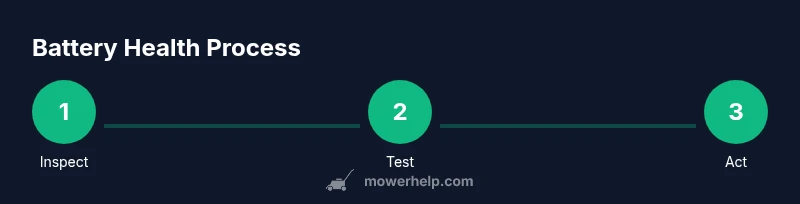
Visual and Physical Inspection
Begin with a close look at the battery casing for cracks, bulges, or leaks. Any swelling indicates a failing cell and the battery should be replaced. Inspect battery terminals and cables for corrosion, white/blue crust, or loose connections. Clean corrosion with a small brush and a solution of baking soda and water, drying thoroughly afterward. Look for frayed cables, melted insulation, or obvious signs of heat damage. A visually sound battery is more likely to hold a steady voltage and accept a proper charge. If you notice strong odors, swelling, or leaking, stop and replace the pack.
Electrical Testing: Voltage and Load Tests
Use a digital multimeter to measure the battery’s resting voltage across the terminals. A healthy 12-volt SLA/AGM battery typically shows a resting voltage around or above 12.6 volts when fully charged; readings well below this indicate discharge or sulfation. If you have access to a battery load tester, perform a slow load test (usually at 60-100 amps for 10-15 seconds) to see how the battery maintains voltage under load. If the voltage drops significantly under load, the battery is weak and may require replacement. If the resting voltage is low but it recovers after a brief rest, a proper charging cycle could restore some capacity—but monitor for rapid voltage drop after charging ends.
Charging and Maintenance for Longevity
If the battery tests as discharged but capable of accepting a charge, connect an appropriate charger designed for the battery chemistry. Follow the charger’s instructions and avoid fast charging, which can heat the battery and shorten its life. After charging, let the battery rest for several hours and recheck voltage to confirm it holds a charge. If you store the mower for extended periods, keep the battery on a smart charger or trickle charger to prevent deep discharge. Regular checks, clean terminals, and proper storage reduce sulfation, corrosion, and standby losses, extending overall life.
Troubleshooting Common Symptoms
If the mower won’t start or cranks slowly, rule out the battery first, then inspect the ignition switch, starter solenoid, and cables. A battery that seems healthy but won’t start may have corroded terminals, a loose connection, or an internal fault. If your voltage tests are inconclusive or you see rapid voltage sag during a test, consider replacing the battery. On some models, a faulty charging circuit can cause the battery to drain even when not in use; this requires more in-depth electrical diagnosis. Always test in a controlled environment and consult the mower’s manual for model-specific guidance.
When to Replace vs Recondition
Battery reconditioning is not always possible or advisable for lawn mower packs, especially sealed lead-acid batteries that show swelling or leaks. If the battery fails a proper charge, holds little charge under load, or exhibits significant sulfation, replacement is usually the best option. Some inexpensive packs may be salvaged by equalization charging or desulfation, but results vary by brand and chemistry. If you’re unsure, replace with a compatible AGM or SLA battery and store it on a smart charger when not in use. Regular maintenance reduces the frequency of replacements and keeps your mower ready.
Pro Tips for Different Battery Chemistries
If you’re using lithium-ion packs, follow manufacturer-specific charging practices and avoid over-discharging, which can permanently reduce capacity. For flooded lead-acid batteries, check the electrolyte levels and water this only if the battery is designed for it; do not overfill. AGM and SLA types are more resilient to vibration but still benefit from clean terminals and steady charging. Always match charger amperage to the battery’s rated capacity and use a charger that features automatic shutoff to prevent overcharging. Understanding the chemistry helps you apply the right maintenance and testing approach.
Authority Sources and Quick Reference
Reliable battery information comes from official safety and energy organizations. For safety guidelines, refer to OSHA resources. For general energy and battery technology context, consult DOE and NREL materials. These references support best practices for handling, charging, and disposing of lead-acid and other battery types. Always cross-check model-specific recommendations in your mower’s manual and with a qualified technician if you’re unsure.
Authority Sources
- OSHA: https://www.osha.gov
- U.S. Department of Energy (DOE): https://www.energy.gov
- National Renewable Energy Laboratory (NREL): https://www.nrel.gov
Note: Use these sources to understand safe handling, charging best practices, and disposal considerations for lawn mower batteries. Always follow local regulations for battery disposal and recycling.
Tools & Materials
- Digital multimeter(Measures DC voltage; set to 0-20 V or auto-range; test across battery terminals)
- Battery load tester (or conductance tester)(Helpful for a true load test; not strictly required if you only check resting voltage)
- Safety glasses(Impact-rated; protects eyes from splashes or sparks)
- Chemical-resistant gloves(Nitrile or neoprene; protects hands from acid and corrosion)
- Insulated wrench or socket set(For safely disconnecting and reconnecting terminals; use non-sparking tools)
- Wire brush or terminal cleaner(Remove corrosion from terminals and connectors)
- Rags or paper towels(Cleanup spills and dry terminals after cleaning)
- Distilled water(Use only for flooded lead-acid batteries if the manufacturer allows water refill)
- Battery terminal protector spray(Optional to reduce future corrosion)
- Flashlight or headlamp(Illumination for tight spaces and dark work areas)
Steps
Estimated time: 60-90 minutes
- 1
Prep and safety
Park the mower on a dry surface, turn off the engine, remove the key, and unplug any charger. Put on safety glasses and gloves. Ensure the area is well-ventilated and free of flammable materials.
Tip: Always work with the battery cold; hot batteries are more dangerous to handle. - 2
Identify battery type and access
Locate the battery and read the label to determine chemistry (SLA/AGM vs lithium). Confirm terminal layout and ensure you can access both terminals without forcing cables.
Tip: If access is blocked, consult the mower manual or remove panels only if you can do so safely. - 3
Disconnect the negative first
Using an insulated tool, loosen and remove the negative terminal clamp first, then the positive. This minimizes the chance of a short if a tool touches the frame.
Tip: Never grab both terminals with the same tool or metal jewelry while working. - 4
Clean and inspect terminals
Brush away corrosion with a wire brush and a baking-soda solution if needed. Wipe dry and examine for cracks or loose connections. Re-seat cables firmly after cleaning.
Tip: If corrosion recurs quickly, consider replacing cables or applying terminal protector spray after reconnecting. - 5
Measure resting voltage
Set the multimeter to DC volts and place probes on the battery terminals. Record the resting voltage without starting the engine for an accurate reading.
Tip: Take multiple readings at different times (after charging and after a short rest) to gauge consistency. - 6
Perform a load test (optional but informative)
If you have a load tester, apply the specified load for 10-15 seconds and observe voltage drop. A healthy battery will maintain voltage above the recommended threshold under load.
Tip: If you don’t have a load tester, you can substitute a controlled load by turning on the mower briefly and listening for cranking performance, but this is less precise. - 7
Recharge or replace based on results
If resting voltage is low but rebounds after rest, consider a controlled recharge. If voltage sags under load or cannot hold a charge, plan for replacement.
Tip: Use a charger compatible with your battery chemistry and avoid high-current charging unless specified by the manufacturer. - 8
Reconnect and verify
Reconnect the positive terminal first, then the negative. Recheck voltage after installation and test starting the mower to ensure a reliable crank.
Tip: Observe for any unusual heat or smells during initial start after reinstalling. - 9
Storage and ongoing maintenance
If storing, keep the battery on a smart or trickle charger. Periodically recheck voltage and clean terminals to prevent corrosion during off-season.
Tip: Label the date of replacement or last charge to track battery life over seasons.
Got Questions?
Can I recharge a lawn mower battery at home, and how long does it take?
Yes, you can recharge at home using a charger compatible with your battery chemistry. Charging time depends on the charger and the battery's state of charge, but a typical full recharge can take several hours. Always monitor the process and avoid fast charging unless recommended by the manufacturer.
Yes, you can recharge at home with the right charger. It usually takes several hours, depending on the charger and battery state, so monitor the process and avoid fast charging unless the manufacturer approves it.
What should I do if the battery voltage reads low but recovers after resting?
A low resting voltage that recovers after a short rest can indicate a rechargeable but weak battery. Try a controlled recharge and recheck. If it repeatedly loses voltage under load, replace the battery to avoid unexpected failures.
A low voltage that recovers after resting might mean a weak battery. Try recharging and retesting; if it keeps dropping under load, replace it.
Is it safe to use a car battery to jump a lawn mower?
Jump-starting a lawn mower from a car is generally not recommended unless the mower manual explicitly permits it. Incorrect voltage or wiring can damage the mower’s electrical system or pose safety risks. Use a proper mower charger instead.
It’s usually not safe to jump a mower from a car unless the manual says it’s okay. Use a dedicated mower charger instead.
When should I replace the lawn mower battery rather than attempt a recharge?
Replace if the battery cannot hold a charge after proper charging, shows significant voltage drop under load, or is physically swollen or leaking. Reconditioning isn’t reliable for many lawn mower batteries.
Replace if it won’t hold a charge or shows swelling or leaks; reconditioning is often not reliable for lawn mower batteries.
What safety gear should I wear when handling a mower battery?
Wear safety glasses and chemical-resistant gloves. Work in a well-ventilated area and keep metal tools away from the terminals to prevent sparks.
Wear safety glasses and chemical-resistant gloves, and work in a ventilated area to stay safe.
How often should I clean the battery terminals?
Clean terminals whenever you notice corrosion or a loose connection. Regular cleaning helps ensure a reliable electrical connection and minimizes resistance.
Clean corrosion off terminals whenever you see it to keep a solid connection.
Watch Video
The Essentials
- Check battery health before every mowing season.
- Use proper safety gear and follow a protocol for disconnecting/reconnecting terminals.
- Voltage under rest and under load guides recharge or replacement decisions.
- Keep batteries clean and terminals corrosion-free for best performance.