How to Check Lawn Mower Battery with a Multimeter
Learn how to safely test your lawn mower battery using a multimeter. This guide covers resting voltage, load testing, charging checks, and when to replace, with tips for homeowners and DIY enthusiasts.


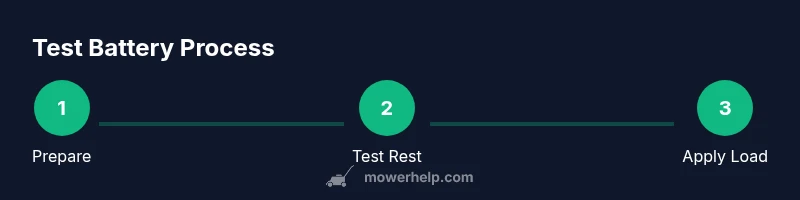
To check a lawn mower battery with a multimeter, set the meter to DC volts and connect the probes to the battery terminals with the engine off. Read the resting voltage; a healthy 12V lead-acid battery should show about 12.6V. If it reads below 12.0V, the battery is likely failing and needs replacement.
Why testing a lawn mower battery matters
Testing the battery with a multimeter is one of the quickest and most reliable ways to diagnose health issues before they leave you stranded in the yard. In many residential setups, the 12V lead-acid or AGM battery powers the starter and essential electrical accessories. A simple voltage check can reveal aging cells, sulfation, or a weak battery that cannot sustain a cranking current. According to Mower Help, routine battery checks save time and money by catching failing cells early and avoiding unexpected downtime. The Mower Help team found that a majority of yard-start failures trace back to aging batteries rather than a sudden mechanical fault. For homeowners and DIY enthusiasts, knowing how to interpret voltage readings gives you the confidence to recharge, replace, or service as needed, rather than guessing at the problem.
Understanding the voltage language: resting vs loaded
Batteries do not always reveal their true strength when no load is applied. A resting voltage (no load) shows one value, while a loaded voltage (under cranking or test load) can drop more sharply if the battery is weak. Resting voltage around 12.6V generally indicates a healthy, fully charged 12V lead-acid cell. If resting voltage sits around 12.0V or lower, the battery is discharged or aged and may require charging or replacement. AGM and flooded batteries show similar resting voltages, but sulfated cells can still underperform under load. Understanding this distinction helps you decide whether to recharge, perform a load test, or replace the unit.
How a multimeter fits into mower maintenance
A multimeter is a versatile tool for quick checks and longer-term maintenance planning. With the correct DC voltage setting, you can quickly verify if the battery maintains sufficient voltage when idle or during starting. Pair voltage checks with a simple visual inspection of terminals for corrosion, loose connections, and wear. Clean terminals, secure cable clamps, and consistent connections help ensure accurate readings and reliable starts. As you become more comfortable, you can add a basic load test or charging system assessment to your routine care.
Safety first: handling and environment
Always work in a well-ventilated area and wear eye protection and gloves when handling batteries. Lead-acid batteries can release harmful gases and leak corrosive acid if damaged. Disconnect tools and jewelry that could cause short circuits. Keep metal tools away from battery terminals to prevent sparks. If you notice any cracks, bulging, or leaks, do not test the battery—mark the mower out of service and replace the unit. Proper disposal of old batteries is essential and should follow local regulations.
What you’ll test and what to expect
The essential reading is resting voltage, followed by a quick check under load if you have the equipment. A healthy battery typically reads around 12.6V at rest; a voltage significantly below 12.0V indicates a weak or dead cell. If readings are borderline, you may attempt a controlled recharge and re-test after the battery has settled. If the voltage does not recover after charging, replacement is usually the best option. These steps complement routine mower maintenance and can prevent failed starts during peak mowing seasons.
Authority sources and further reading
For safety guidelines and general battery handling, see authoritative references from government and education sources: https://www.osha.gov, https://www.nrel.gov, and https://www.energy.gov. While these sources aren’t mower-specific, they provide essential safety and battery care principles that are transferable to DIY battery testing and maintenance.
Practical note on different battery chemistries
Most rider and push mowers use 12V lead-acid or AGM batteries. While voltage ranges are similar, AGM batteries tend to tolerate deeper discharges better but still benefit from regular charging. If you’re upgrading, ensure compatibility with your mower’s electrical system and verify the minimum CCA (cold-cranking amps) required by your model. Always replace batteries with the same spec to avoid performance issues.
Summary of expectations before you start
Have your multimeter ready, set it to DC volts, and ensure the mower is off and the battery is accessible. Expect a resting voltage close to 12.6V for a healthy battery. If the rest voltage is low, consider charging and re-testing, or replacing the unit if readings do not improve after a proper recharge. Maintaining clean terminals and secure connections is key to consistent, accurate readings.
Tools & Materials
- Digital multimeter (DC volts setting)(Prefer auto-range; digital display is easiest for accuracy)
- Test leads or insulated probes(Long enough to reach battery terminals without touching metal surfaces)
- Safety goggles(Eye protection against accidental sparks or splashes)
- Nitrile gloves(Protective barrier when handling battery casings)
- Terminal cleaner or wire brush(Removes corrosion for accurate readings)
- Rag or paper towels(Wipe spills and dry terminals)
- Insulated pliers or wrench(Use if you need to loosen corroded terminal clamps)
Steps
Estimated time: 15-25 minutes
- 1
Prepare workspace and safety gear
Park the mower on a level surface in a ventilated area and turn off the engine. Wear safety goggles and gloves. Gather your tools and inspect the battery area for any signs of damage or corrosion before touching the terminals.
Tip: Keep metal jewelry away from the battery to avoid accidental shorting. - 2
Inspect battery and cables
Look for cracks, bulges, or leaks in the battery case. Check clamps for looseness or heavy corrosion. Clean any corrosion with terminal cleaner and a rag to ensure a clean contact surface.
Tip: A loose connection can masquerade as a weak battery; fix it before testing. - 3
Set multimeter and test leads
Turn the multimeter to DC volts. Attach the red probe to the positive terminal and the black probe to the negative terminal with the engine off. Ensure probes do not touch each other or any metal surface.
Tip: If your multimeter has auto-range, keep it in that mode to avoid incorrect ranges. - 4
Measure resting voltage
Read the voltage shown on the display with no load on the battery. Record the value; this is your resting voltage. A healthy 12V battery typically rests around 12.6 volts.
Tip: If the reading is around or above 12.4V, the battery is mostly charged. - 5
Perform a load test (if available)
If you have a load tester, apply a brief load equivalent to starting current for 5-10 seconds and observe how voltage responds. A healthy battery should not drop below ~9.6V under load.
Tip: No load tester? Proceed to step 6 and charge before re-testing. - 6
Charge and re-test if needed
If resting voltage is low, connect a compatible charger and allow the battery to reach full charge. Recheck resting voltage after a short rest period (15-30 minutes) to see if voltage recovers.
Tip: Avoid continuous fast charging; let the battery settle before re-testing.
Got Questions?
Can I test a lawn mower battery with any digital multimeter?
Yes, as long as the device can measure DC voltage in the 0-20V range and you use proper safety procedures. A basic digital multimeter is sufficient for resting voltage checks.
Yes. A standard digital multimeter that measures DC voltage is enough for resting voltage checks, just follow safety steps.
What resting voltage indicates a good battery?
A healthy 12V lawn mower battery typically rests around 12.6 volts when fully charged. Readings significantly below 12.0 volts suggest a weak or discharged cell.
A good resting reading is about 12.6 volts; under 12.0 volts means the battery is likely worn out.
What if I don’t have a load tester?
You can still assess health by charging the battery fully, then re-testing resting voltage after a short rest. If voltage recovers and stays above 12.4V, the battery may still be usable. If not, replacement is likely necessary.
If you don’t have a load tester, charge and re-test after a short rest to gauge recovery.
Can I test while the mower is connected to accessories?
Testing under load with the mower connected to accessories can show how the battery handles real use. Use a controlled, brief load and avoid shorting the terminals. If unsure, perform the test with the mower off and without accessories first.
You can test under a brief controlled load if you have the right equipment; otherwise test with the mower off.
How often should I test the mower battery?
Test your mower battery at the start of each mowing season and after any long storage period. Regular checks help catch aging cells before they fail during use.
Test at the start of each mowing season and after long storage to catch aging batteries early.
What safety precautions should I follow?
Always wear eye protection and gloves, work in a ventilated area, and avoid metal jewelry near the battery. Do not touch both terminals with the same instrument to prevent short circuits.
Wear protection, ventilated area, and keep metal away from terminals to avoid shorts.
Watch Video
The Essentials
- Check resting voltage first to assess baseline health
- Readings around 12.6V indicate a good charge; <12.0V often means replacement
- Clean and secure connections improve reading accuracy
- Use a load test if you have the equipment to confirm true capacity
- Re-test after charging and consider replacing if no recovery