How to Start a Lawn Mower with Choke: A Complete Guide
Learn how to start a lawn mower with choke safely. This comprehensive guide walks homeowners through steps, safety tips, and troubleshooting for common gas mowers to ensure reliable starts every time.


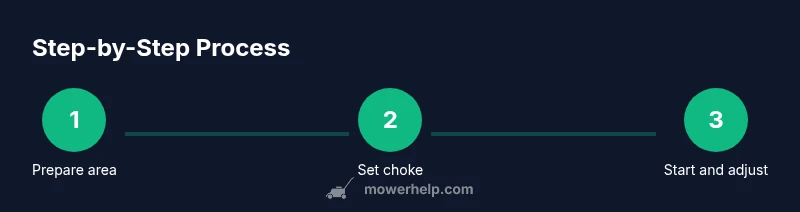
You can start a lawn mower with choke by preparing the mower on a flat surface, locating the choke lever, and following a safety-guided starting sequence. This method is ideal for cold starts on carbureted engines; for newer models, consult the manual. Always prioritize safety and perform basic checks first.
Understanding how to start lawn mower with choke: core concepts and safety
Starting a gas-powered lawn mower on cool mornings often relies on briefly engaging the choke. The choke restricts air intake to enrich the fuel mixture, aiding ignition when the engine is cold. This concept matters most on carbureted engines and older models, where improper starting can lead to flooding or hard starting. According to Mower Help, using the choke correctly reduces cranking effort and increases reliability for a first-start. The choke is typically used only during a cold start and is disengaged once the engine fires and runs smoothly. This section lays the groundwork so you can apply the steps confidently across common walk-behind mowers and small riders.
Step-by-step foundation: what you’ll need and what to expect
Before you touch the mower, understand that safety comes first. You'll work near spinning blades and a hot engine, so PPE and stable footing matter. The choke works best for cold starts on engines with a carburetor. If your mower has fuel-injection or a primer bulb, follow the manufacturer’s guidance, as those models may not use a traditional choke. The goal is to establish a reliable starting sequence that minimizes flooding and excessive cranking. In this guide, we’ll anchor each step to practical checks and clear actions, with tips and warnings to help you succeed on the first pull.
Tools overview: what you’ll need and how to prepare
Having a quick-access toolkit speeds up starting and maintenance. Essential items include basic safety gear (gloves and eye protection), a clean, dry area, and an accessible choke control. You’ll also want a clean spark plug boot, a working fuel container if you’re refueling, and the owner’s manual. While this article focuses on choke-start procedures, some models rely on priming, a primer bulb, or a different starting sequence. Check your mower’s documentation for model-specific nuances.
Safety first: prepare your mowing area and yourself
Always start on level ground away from bystanders and obstacles. Ensure the blade is stopped before you approach the mower. Disconnect the spark plug wire when performing maintenance or adjustments. Wear snug clothing and avoid loose fabrics that could snag on moving parts. If you smell fuel or hear unusual noises, pause and inspect for fuel leaks, loose connections, or damaged components. The safety mindset you adopt here reduces risk and frames a smoother start.
Step 1: Inspect the mower and gather safety gear
Kick off with a quick safety check: engine cool, air filter clean, and fuel in good condition. Put on eye protection, gloves, and sturdy footwear. If you’ve recently performed maintenance, double-check that the spark plug wire is properly reconnected and that the blade is clear of debris. A clean start environment reduces the chance of slipping or stalling as you begin.
Step 2: Check fuel, oil, and general condition
Verify the fuel is fresh and appropriate for your mower (gasoline with ethanol content specified by the manufacturer is common). Check the oil level and top up if needed, following the dipstick guidance in your manual. Clear any dirt from the carburetor area to prevent debris from entering the intake. If you notice fuel smells, a stale fuel can cause tough starts or misfires. These checks help the choke-start process go smoothly.
Step 3: Locate the choke and throttle controls
Identify the choke lever or control on your mower. It may be a lever, a knob, or a pull-cable connected to the carburetor. Some models combine choke with the throttle, so understand the base position (open/closed) and where the control rests when off. If your mower uses a primer bulb, know where to press it for 3–5 quick pumps before starting. These identifications ensure you apply the correct starting sequence for your specific model.
Step 4: Set the choke for a cold start
With the engine cool, move the choke to the full or closed position for a cold start. If your model has a mandatory primer, press the bulb as directed (usually 3–5 times). Do not keep the choke closed for too long after the engine fires; lingering with the choke engaged can flood the engine or cause short-lived rich running. The goal is to get a quick ignition with the enriched fuel mixture and then transition to normal operation.
Step 5: Start the mower and monitor ignition
Grasp the handle firmly, keep your feet clear of the blade, and pull the cord or use the electric start as designed. If it begins to pop or sputter, briefly return to the choke position then open it slightly as the engine catches. As soon as the engine runs smoothly, gradually move the choke toward the fully open position to maintain steady idle and prevent stalling. Listen for a steady rhythm rather than bursts of acceleration.
Step 6: After-start transitions and safe operation
Once the engine runs steadily, run the mower at idle for 30–60 seconds to stabilize. If the engine stalls after starting, recheck ignition, fuel, and air intake for blockages or leaks. Regularly inspect the air filter, spark plug, and carburetor ports for cleanliness. Regular maintenance reduces the need to rely on choke for future starts and keeps your mower running reliably throughout the season.
Troubleshooting at start: quick fixes for common issues
If the engine fails to start with choke engaged, reassess safety steps, ensure the spark plug is clean and properly gapped, verify fuel freshness, and recheck choke positioning. Flooding can occur if the choke is left closed too long; in that case, open the choke, pull twice to clear it, and attempt again with a shorter choke duration. For stubborn starts, a quick carburetor check or professional service may be warranted.
Tools & Materials
- Safety glasses or goggles(Essential eye protection)
- Gloves(Protect hands during handling)
- Mower on clean, level surface(Stability and safety)
- Owner’s manual(Model-specific instructions)
- Fuel can (if refueling)(Use approved fuel container)
- Clean rags(Wipe spills and clean air filter)
- Spark plug wrench(If checking or replacing plug)
Steps
Estimated time: 25-40 minutes
- 1
Prepare the area and safety gear
Place the mower on a flat surface, wear PPE, and clear the area of debris. Verify blade is stationary before approaching. This reduces risk during starting.
Tip: Keep a clear perimeter; no bystanders within 10 feet. - 2
Check fluids and fuel
Inspect fuel level and oil; top up if needed according to the manual. Use fresh fuel and avoid old, stale gas to prevent starting issues.
Tip: If you recently refueled, wait a few minutes for gas to settle. - 3
Locate the choke and understand the controls
Identify choke, throttle, and primer (if present). Confirm the choke is in the closed position for a cold start.
Tip: Read the manual’s diagram to avoid misidentifying controls. - 4
Set choke and prime (if applicable)
Move the choke to closed, and if your mower has a primer bulb, give 3–5 pumps. Do not flood engine by over-priming.
Tip: Primer when required lights a faster path to ignition. - 5
Start the mower
Pull the starter rope firmly, or press the electric start according to the manual. If the engine sputters, adjust the choke to a partially open position and retry.
Tip: Do not yank the cord with a loose grip. - 6
Transition to run mode
As soon as the engine runs smoothly, slowly open the choke to full. Set throttle to a comfortable idle and proceed with mowing.
Tip: If it dies, wait a moment and retry with a milder choke position.
Got Questions?
What is the purpose of the choke when starting a lawn mower?
The choke restricts airflow to enrich the fuel mix, helping ignition for a cold start on carbureted engines. Use it briefly and avoid prolonged choking once the engine runs.
The choke helps the engine start when cold by making the fuel-air mix richer. Use it briefly, then open it once it fires.
Can I start without using the choke?
Some newer models with advanced fuel systems may start without choke. If your manual recommends, you can skip the choke, but for most traditional carbureted engines, using the choke improves starting reliability.
Some newer mowers don’t require choke, but for traditional carbureted engines, the choke helps ignition.
What should I do if the engine floods after a failed start?
If flooding occurs, open the choke, wait briefly, and pull the cord with the choke open to clear excess fuel. Let the engine dry out a moment before trying again with a shorter choke duration.
If it floods, open the choke and pull a few times with the choke open to clear fuel, then retry.
Is priming necessary for every start?
Priming is only needed on certain carbureted models. If your manual specifies priming, use it as directed; otherwise, simply move the choke and pull.
Only some carbureted models require priming; follow your manual.
What should I check if the mower still won’t start after following the choke procedure?
Inspect the spark plug, fuel quality, air filter, and carburetor ports for blockages. A professional tune-up may be needed if issues persist.
If it still won’t start, check spark plug, fuel, air filter, and consider a carburetor cleaning.
Can I use choke on electric-start mowers?
Most electric-start mowers do not require choke. Refer to the manual for any model-specific starting steps involving air-fuel adjustments.
Electric-start mowers usually don’t use choke; check the manual for your model.
Watch Video
The Essentials
- Understand when to use choke for cold starts
- Prepare area and inspect fluids before starting
- Follow model-specific choke and primer guidance
- Transition smoothly from choke to run to avoid flooding