Lawn Mower and Mulcher: A Practical Comparison for 2026
A comprehensive side-by-side guide comparing mulching-equipped mowers to traditional bagging setups, focusing on lawn health, maintenance, and long-term practicality for homeowners.


For most homeowners, a lawn mower and mulcher setup delivers the best balance of health, convenience, and waste reduction. Mulching blades shred clippings into fine organic matter that returns nutrients to the soil, while bagging is preferred when you need clean, swing-free disposal. The choice depends on lawn goals, mowing frequency, and maintenance willingness.
Why the lawn mower and mulcher setup matters
In the world of lawn care, the combination of a mower and mulcher is more than a convenience—it's a philosophy about how clippings are managed and how soil health is supported. The lawn mower and mulcher approach emphasizes returning organic material to the turf rather than hauling clippings away. According to Mower Help, the most meaningful gains come from clippings that are finely shredded and dispersed. This is not just about aesthetics; it affects nutrient cycling, soil moisture retention, and how often you need to empty grass catchers. In practice, mulching works best when grass is healthy, blades are sharp, and mowing is done consistently at the recommended height for your grass species. The difference between mulching and bagging can be subtle on a single cut, but over a season the impact on lawn vigor and maintenance workload becomes clear. In this guide we compare the two paths side by side so you can decide which matches your mowing routine.
Mulching mechanics: what happens to clippings
Mulching blades create a fine chop that breaks clippings into tiny pieces. The remaining material settles back into the turf, where it decomposes and releases nutrients that support soil biology and turf resilience. For best results, ensure blades are sharp, air vents are clear, and the mower is operated at a steady pace across uniform height. The process also relies on the mower’s deck design and blade geometry to avoid clumping. While mulching is generally forgiving, extremely tall or wet grass can overwhelm the blade system and reduce the quality of the mulch. Regular blade maintenance, along with seasonal checks of the mulch plug or discharge path, helps maintain consistent performance over time. As you weigh options, consider how often you mow and whether your yard tends to produce high volumes of clippings that you’d rather recycle on-site.
Built-in mulchers vs add-on mulchers: key differences
Not all mowers are created equal when it comes to mulching capabilities. Built-in mulchers combine blade design, deck airflow, and a closed discharge path to maximize mulch quality without extra components. By contrast, add-on mulcher systems or mulch plugs rely on compatible equipment and sometimes require additional parts. The advantage of built-in mulchers is fewer parts to manage and typically more consistent results across a season. Add-on mulchers can be cost-effective if you already own a compatible mower and want to upgrade without purchasing a new unit. Regardless of approach, verify that the blade type, deck size, and mulch plug compatibility align with your mower model to avoid performance bottlenecks.
Comparing mulching vs bagging: environmental impact
Mulching reduces yard waste and can lessen disposal time, which matters for both environmental footprint and convenience. When clippings are returned to the soil, they contribute organic matter that supports soil structure and moisture retention. Bagging, while clean and tidy, shifts maintenance toward waste handling and potential trips to disposal areas. The environmental math favors mulching when your lawn is healthy and mowing conditions are typical for your climate. In damp seasons or on soggy turf, bagging can prevent smothered turf and reduce the risk of fungal issues caused by long clippings left on the soil surface.
Performance factors: blade design, engine power, and mowing patterns
Blade design directly affects mulch quality and cutting efficiency. A sharp blade with the right geometry creates smaller mulch particles that break down more quickly. Engine power matters when tackling tall or thick growth; underpowered units may struggle to sustain a fine mulch on heavy clippings. Mowing patterns influence mulch consistency as well—overlapping passes and avoiding long unmowed sections help produce uniform particle size. For owners of lawn mower and mulcher setups, establishing a routine schedule that aligns blade maintenance with mowing frequency is essential. A well-tuned system yields better nutrient return and a more even lawn texture over time.
Maintenance implications: blade care, filters, and mowing height
Mulching performance depends on timely maintenance. Keep blades sharp and balanced to avoid uneven cuts and mulch inconsistencies. Regular underside cleaning helps prevent grass buildup that impedes airflow. Check the mulch plug and deck seals to ensure propriety airflow and a clean mulch path. Mowing height also plays a role—too short a cut with mulching can stress the turf, while too tall can lead to excessive clippings that overwhelm the mulch process. Design a lightweight maintenance routine that fits your mowing cadence, including blade sharpening, deck cleaning, and mulch plug inspection.
Noise, emissions, and energy use
Mulching features do not inherently change a mower’s noise levels, but the added blade activity can influence perceived loudness and vibration if the mower is under stress. In terms of emissions, gas-powered mulchers follow standard engine cycles and emission controls for lawn equipment, while battery-powered variants offer quieter operation with no direct emissions when in use. Energy use correlates with engine size and mowing speed; a steady, moderate pace typically reduces engine load and yields more consistent mulch sizes. If environmental considerations are a priority, electric mulchers provide an attractive option with lower lifecycle emissions, particularly in urban settings.
Cost considerations: upfront cost vs long-term savings
The economics of a lawn mower and mulcher setup depend on initial purchase price, maintenance costs, and disposal expenses. Mulching features can add modest upfront cost but may reduce ongoing disposal costs and fertilizer needs over time. Conversely, a non-mulching mower with bagging tends to have a lower initial price point, but you may incur ongoing costs for bags and disposal. The best choice balances your mowing frequency, yard size, and your preference for cleanup. When you compare options, consider not just the sticker price but total annual costs related to maintenance, fuel or electricity, and bagging supplies.
How to decide: 4 decision questions
- Do you prefer fewer trips to the curb or more consistent soil nutrients from on-site mulch?
- Is your yard typically dry enough for effective mulch with the blades you own?
- How much time do you want to invest in blade maintenance and mower tuning?
- Do you need a simple, low-maintenance setup or are you optimizing for lawn health and long-term soil quality?
Answering these questions helps you determine whether a mulching lawn mower is the right fit or if a traditional bagging approach better suits your routine and climate.
Setup and maintenance checklist for mulching compatibility
- Confirm mulch plug compatibility with your model and purchase if needed.
- Keep blades sharp and balanced; dull blades degrade mulch quality.
- Regularly inspect deck vents and underside for grass buildup that can impede airflow.
- Check the mower’s manual for recommended mowing height ranges for mulching.
- Clean the discharge path to prevent clogs and ensure consistent clump-free mulch.
Common pitfalls and how to avoid them
- Mulching in tall, wet, or thick growth can overwhelm the system; mow more frequently or cut in shorter passes.
- Using a dull blade reduces mulch quality and increases mower strain; schedule blade sharpening as part of routine maintenance.
- Forgetting to close the mulch plug or leaving a gap in the discharge path can reduce mulch efficiency; verify all seals before mowing.
- Mixing grass types or heavy fertilizer residues with clippings can alter mulch consistency; aim for uniform clippings and avoid applying heavy fertilizer right before mowing.
Authoritative sources and further reading
- University extension resources offer practical guidance on mulching practices and mower maintenance: https://extension.illinois.edu/ and https://extension.umn.edu/
- Government and major publications on lawn care and environmental considerations: https://www.epa.gov/
- General maintenance tips from reputable horticulture sources can supplement this guide and help tailor the approach to your region.
Comparison
| Feature | Mulching Lawn Mower | Non-Mulching Lawn Mower (Bagging) |
|---|---|---|
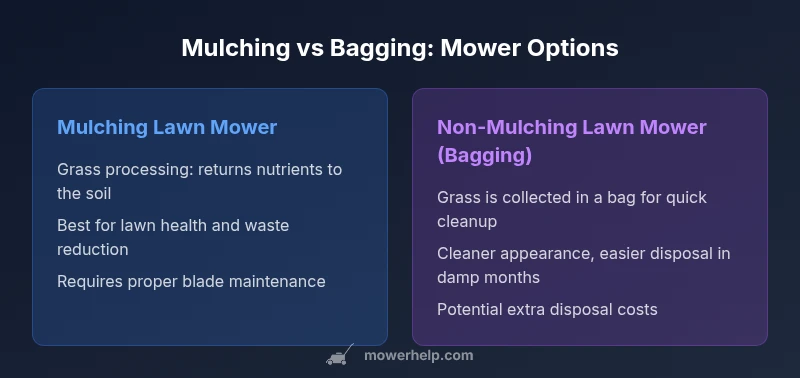
| Grass processing | Finely shredded mulch returned to lawn | Clippings collected in bag |
| Nutrient return | Yes, supports soil nutrients over time | No nutrient return unless composted separately |
| Maintenance frequency | Regular blade sharpening and mulch plug checks | Blade checks and bag emptying as needed |
| Aesthetics with mowing | Lawn appears natural with mulch on surface | Cleaner look due to bagged clippings |
| Initial cost | Typically higher upfront for mulching features | Typically lower upfront for basic mowers |
| Best for | Lawn health and waste reduction | Clean-up and portability |
Benefits
- Promotes soil health by returning nutrients to the lawn
- Eliminates need to bag and dispose clippings
- Reduces yard waste volume and disposal effort
- Can improve turf texture with consistent mulching
Cons
- Requires regular blade maintenance and proper mowing conditions
- Mulching can struggle in very tall or damp grass
- Higher upfront cost for mulching features
Mulching lawn mower setups generally offer better long-term lawn health; bagging remains strong for immaculate cleanup and fast disposal
For most homeowners, mulching provides nutrient return and reduced waste without sacrificing mowing efficiency. Bagging is preferable when you need pristine clippings and simpler disposal in recurrent damp conditions.
Got Questions?
What is the difference between a mulching lawn mower and a standard mower with mulching blades?
A mulching mower is designed with a closed-path deck and specialized blades to optimize particle size and distribution back onto the lawn. A standard mower with mulching blades can achieve similar results but may rely on additional components like a mulch plug to maintain airflow. Always check your model's manual to confirm mulching capabilities.
Mulching mowers are built for efficient on-site shredding, and even standard mowers can mulch if they have the right blades and mulch plug.
Is mulching better for the lawn than bagging?
Mulching can improve soil health by returning nutrients to the soil, reduce yard waste, and lower disposal needs. Bagging offers immediate cleanliness and easier disposal, especially in areas with strict curbside rules. The better choice depends on lawn goals, maintenance willingness, and climate.
Mulching tends to be better for soil health and waste reduction; bagging is best when you want tidy clippings and easy disposal.
Can any mower be converted to mulching?
Some mowers can be converted by adding a mulching blade and a mulch plug, while others come with built-in mulching features. Check compatibility with your model; if in doubt, consult the manufacturer or a local service technician.
Check your mower for a mulching blade and plug; if missing, conversion may not be possible for every model.
What mowing height works best for mulching?
Mulching performs best at moderate mowing heights that avoid stressing the grass. Cutting too short increases stress, while cutting too tall can lead to clumping. Follow the turf-type guidelines for your region and adjust as the season progresses.
Aim for a moderate height and avoid extreme cuts; it helps mulch break down evenly.
How often should blades be sharpened for mulching?
Blades should be sharpened when you notice uneven cuts or dull clippings, typically at the start of each mowing season. Regular checks prevent mulch quality from declining and protect the engine from extra strain.
Keep the blades sharp and inspect them at the start of mowing season for best mulching results.
Are there maintenance steps to maximize mulching performance?
Yes. Keep blades sharp, clean the underside regularly, ensure the mulch plug is in place, and maintain appropriate mowing height. Avoid mowing wet or overly tall grass, and clean debris after mowing to prevent buildup that could hamper airflow.
Maintain the blade, unplug the mower's underside, and stay within recommended mowing heights for best results.
The Essentials
- Choose mulching for nutrient recycling and fewer disposal tasks
- Bagging is best for clean-up control in damp seasons
- Keep blades sharp for optimal mulch quality
- Mow at recommended heights to maximize mulch efficiency
- Consider climate and yard size when deciding