Lawn Mower Won't Turn Off: Troubleshooting Guide
Urgent, practical troubleshooting for a lawn mower that won't turn off. Step-by-step diagnostics, safety tips, and prevention strategies from Mower Help to get your mower under control fast.


The most common cause is a faulty safety/kill switch or a sticking throttle that prevents the engine from stopping. Start with the simplest check: verify the kill switch and safety bar release, and disconnect power (battery for electric mowers or spark plug wire for gas mowers) to stop ignition. If the engine continues to run, proceed with a diagnostic flow to test wiring and linkage.
Understanding the risk when lawn mower won't turn off
When a lawn mower won't turn off, safety is the first priority. A mower whose engine continues running after you release the controls can lead to blade exposure while you’re attempting maintenance, unexpected startup, heat buildup, and fuel discharge in enclosed spaces. According to Mower Help, most shutdown issues start with a safety switch or kill switch that sticks or wears out. The Mower Help team found that a large share of shutdown problems are electrical or linkage-related rather than mysterious engine faults. In this guide, you’ll learn how to diagnose quickly, perform a safe interim fix, and prevent recurrence. If you smell fuel, hear unusual noises, or see sparks, stop, move to a safe location, and call a professional if you’re unsure. Begin with a calm, systematic approach so you don’t miss a simple fix or create new hazards.
You’ll also want to set the mower on a flat, open surface away from bystanders. For electric mowers, disconnect the battery before you touch any components. For gas-powered models, remove the spark plug wire to kill ignition and prevent accidental startup during inspection. This section lays the groundwork for identifying the actual cause and delivering a safe, effective fix. Brand guidance: this approach aligns with the recommendations you’ll find in Mower Help resources and maintenance checklists.
Safety isn’t optional here—if the situation feels unsafe, pause and seek professional help immediately.
Common causes in order of likelihood
Dealing with a lawn mower that won’t turn off means prioritizing causes by how often they occur and how easily they’re fixable. In many cases, the problem is mechanical or electrical in the safety/kill path rather than a full engine failure. The most likely culprits, listed from most to least probable, include:
- Faulty or stuck safety switch or kill switch: A switch that fails to open or a mechanism that remains engaged is the primary reason a mower won’t shut down. This is very common on older equipment or models with exposed wiring that’s suffered wear.
- Sticking throttle or throttle linkage: If the throttle lever binds or the linkage doesn’t return to idle, the engine may stay in a running state even when you release controls. This can be caused by dirt, corrosion, or missing return springs.
- Damaged ignition switch or wiring short: Worn insulation, frayed wires, or a short in the ignition circuit can keep the ignition energized, preventing the engine from stopping promptly.
- Safety bar/blade brake issues: Some mowers rely on a blade-brake or a safety bar that must be engaged for shutdown. If the brake is worn or misadjusted, the engine may continue to run.
- Carburetor or choke problems (gas mowers): A carburetor that’s gummed up or choke settings that don’t reset can keep air/fuel mix in a way that sustains running, though this is less common than a failed kill switch.
If you’re unsure about any of these checks, prefer to err on the side of safety, and don’t perform repairs beyond your comfort level.
Diagnostic flow: symptom to solution
A structured diagnostic flow helps you pinpoint the root cause without jumping to conclusions. Start by confirming the exact symptom, then test each potential cause in a logical order. First, isolate power and ignition to rule out a live spark or power source keeping the engine active. Next, inspect the kill switch, safety bar, and throttle linkage for binding or wear. If the problem remains, inspect wiring harnesses for damage or exposed conductors. Finally, test the ignition and safety circuits with simple continuity checks and a multimeter where applicable. For every step, document what you observe so you can decide whether to proceed with a repair or seek professional help.
Throughout the diagnostic phase, remember: if tools or techniques feel beyond your skill level, stop and consult a pro. The goal is to safely reduce risk while identifying the fault, not to push through potentially dangerous tasks.
Step-by-step fix: most common culprit
This section translates the diagnosis into actionable steps you can perform safely. If the safety switch is confirmed as the culprit, the fix is straightforward but may require parts replacement.
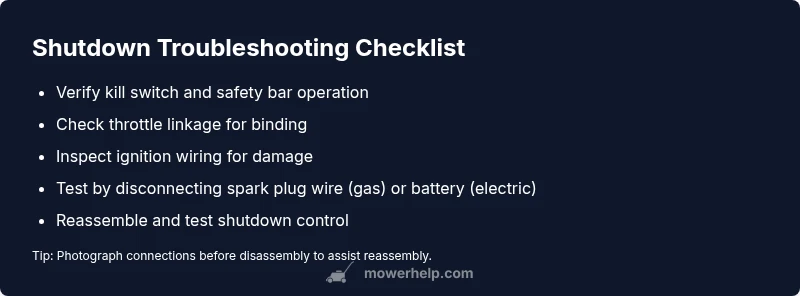
- Power down and secure: For gas mowers, disconnect the spark plug wire; for electric mowers, remove the battery. Ensure the mower cannot start unexpectedly during the fix. Tip: Work on a non-slip surface and wear eye protection.
- Inspect kill switch and safety bar: Check for wear, corrosion, or loose connections. If the switch feels loose or you can wiggle the connectors, replace the switch or reseat the harness. Tip: Photograph connectors before removal to ensure correct reassembly.
- Check throttle linkage: Move the throttle through its full range; it should return smoothly to idle. Clean and lubricate if binding occurs, and replace worn springs or sticky linkages. Tip: Use a light lubricant and wipe away surplus to prevent attracting dirt.
- Inspect wiring and ignition: Look for damaged insulation, burnt smell, or exposed conductors. Replace damaged wires, reseat connectors, and apply dielectric grease where appropriate.
- Reassemble and test: Reconnect the power source, reattach the kill switch, and carefully attempt to shut off using the switch. If the engine still won’t shut down, proceed to professional service.
- Document test results: Record observations and the exact steps you performed. This helps a technician diagnose faster if you need professional help. Tip: If you’re hesitant about electrical work, a professional should perform the final checks.
If the mower still runs after these steps, the problem may lie deeper in the ignition switch assembly or carburetor, and it’s wise to schedule a service visit.
Safety, warnings, and professional help when needed
Safety is non-negotiable when you’re dealing with a mower that won’t turn off. Never work with blades spinning, and never disable safety features to force a shutdown. Always disconnect the power source before touching any components. If you smell fuel, hear unusual noises, or notice sparks, stop immediately and seek professional help.
Common mistakes include dug-in wiring, bypassing safety switches, or using harsh chemicals to clean the carburetor. These can cause short circuits, fire hazards, or further engine damage. If you’re not comfortable with troubleshooting electrical circuits or disassembly, contact a certified mower technician. The investment in professional service now can prevent bigger failures later.
A thorough maintenance check between seasons is a proven way to prevent future shutdown issues. Keep a log of maintenance tasks, replace worn switches, inspect safety features, and follow the manufacturer’s recommended service intervals.
Prevention: maintenance to avoid future shutdowns
Proactive maintenance is the best defense against a mower that won’t turn off. Build a simple routine that focuses on safety-switch health, linkage cleanliness, wiring integrity, and ignition reliability. Schedule annual inspections that cover:
- Kill switch and safety bar operation test
- Throttle return and linkage lubrication
- Wiring harness inspection for wear or moisture intrusion
- Spark plug health (gas mowers) and ignition switch checks
- Carburetor cleanliness or fuel system check (gas mowers)
In addition to inspections, keep spare parts on hand so you can replace worn components quickly instead of improvising risky fixes. Regular maintenance reduces downtime, extends lifespan, and makes troubleshooting faster if a shutdown issue does occur again.
Quick recap: practical takeaways for homeowners
A lawn mower that won’t turn off is usually fixed by a failed safety switch, an obstructed throttle, or a wiring issue. Start by safely disconnecting power, inspect the kill switch, and test the linkage. If you can’t resolve it, don’t push through – professional help will save time and prevent injury. Regular maintenance is the best defense.
Steps
Estimated time: 60-90 minutes
- 1
Power down and secure
Turn off the mower and disconnect power source (spark plug wire for gas, battery for electric). Ensure the engine cannot start during inspection.
Tip: Use insulated gloves when handling hot components. - 2
Inspect kill switch and safety bar
Check for wear, corrosion, or loose connections. Replace or reseat as needed. Ensure the bar engages fully when released.
Tip: Take photos of wiring before disconnecting anything. - 3
Check throttle linkage
Move the throttle through its range; it should return to idle smoothly. Clean, lubricate, or replace stuck parts and ensure springs are intact.
Tip: Avoid over-lubricating—dust and debris clog moving parts. - 4
Inspect ignition wiring
Look for damaged insulation, discoloration, or frayed wires. Repair or replace as needed and reconnect securely.
Tip: Use a multimeter to verify continuity where applicable. - 5
Test shutdown after reassembly
Reconnect power, test the kill switch, and attempt to shut off. If it still won’t stop, stop and seek professional help.
Tip: Document observations to guide the technician. - 6
Plan for professional service if unresolved
If none of the above fixes work, arrange for a certified mower technician to diagnose ignition or carburetor issues.
Tip: Don’t run the mower while you wait for service if you can’t ensure safety.
Diagnosis: Lawn mower won't turn off even when kill switch is engaged
Possible Causes
- highFaulty or stuck safety/kill switch
- mediumSticking throttle linkage or lever
- mediumWiring short or damaged ignition circuit
- lowBlade brake or safety bar misalignment
Fixes
- easyInspect and replace faulty kill switch; reseat connectors and test off-state after replacement
- easyLubricate and realign throttle linkage; replace broken return springs
- mediumInspect wiring for shorts; repair damaged insulation and recheck ignition circuit
- easyAdjust blade brake/safety bar if applicable and verify proper engagement
Got Questions?
What should I do first if my lawn mower won't turn off?
First, power down the mower and disconnect the power source to stop ignition. Then inspect the kill switch and safety bar for wear or binding before moving on to throttle linkage. If the engine still runs, proceed with a structured diagnostic test or contact a professional.
First, shut it down and disconnect power, then check the kill switch and safety bar for binding. If it still runs, continue with a diagnostic test or call a professional.
Can weather affect a mower's ability to turn off?
Extreme moisture can corrode switches and connectors, causing intermittent shutdowns. Dry and inspect the electrical connections, using dielectric grease when reassembling to prevent future moisture intrusion.
Yes, moisture can affect switches and wiring, so dry and inspect connections and use dielectric grease when reassembling.
Is it safe to unplug the spark plug wire to stop a gas mower?
Yes, removing the spark plug wire will cut ignition and stop the engine for safe testing. Reconnect only after you have completed the diagnostic checks and are ready to restart under safe conditions.
Unplugging the spark plug wire stops ignition, which is safe for testing. Reconnect only when you’re ready to restart safely.
When should I replace the ignition switch?
If the ignition switch shows signs of wear, loose connections, or inconsistent operation, it should be replaced. A faulty switch is a common cause of shutdown failure and warrants a dedicated diagnostic or professional service.
If the ignition switch looks worn or acts inconsistently, replace it. It’s a common cause of shutdown failure and may need a professional.
How can I prevent this issue in the future?
Keep safety components clean and dry, lubricate moving parts, and perform periodic safety and ignition checks. Store the mower in a dry place and follow the manufacturer’s maintenance schedule to minimize shutdown risks.
Do regular safety checks and keep components clean and dry to prevent future shutdowns.
If the mower still won’t turn off, what next?
If basic checks don’t resolve the issue, schedule a professional diagnostic. A technician can test ignition circuits, carburetors, and safety interlocks with specialized tools.
If you can’t fix it yourself, call a technician for a thorough diagnostic.
Watch Video
The Essentials
- Identify the kill switch as the likely culprit.
- Prioritize safety and disconnect power before any checks.
- Test each component in logical order to avoid chasing false faults.
- Regular maintenance reduces recurrence of shutdown issues.
- When in doubt, consult a professional promptly.