Lawn Mower Won't Crank: Complete Troubleshooting Guide
Urgent, practical troubleshooting guide to diagnose and fix a lawn mower that won't crank, from safety checks to spark plugs, fuel, and carburetor issues.


The most common reason a lawn mower won't crank is a safety switch or brake circuit preventing crank. Quick fix: disengage the blade brake or PTO, ensure the switch is in RUN, and reconnect the spark plug boot. If it still won't crank, follow the diagnostic flow below.
Why a Lawn Mower Won't Crank: Common Symptoms and What They Mean
If you hear nothing when you turn the key or push the electric start, your lawn mower won’t crank. This symptom signals that the engine is not turning over, which can be triggered by safety systems, power supply, or ignition problems. The phrase lawn mower won’t crank is a clue—it's telling you that the starter system isn't delivering motion, even though the battery or fuel may be fine. You need to diagnose whether the issue is a trivial safety miscue or a real mechanical fault. Common culprits include a disengaged blade brake, a dead battery (for electric starts), stale fuel, a fouled spark plug, or a blocked carburetor. In many cases, the problem can be solved with a few simple checks and adjustments rather than a full rebuild. Throughout this guide, we’ll use practical, homeowner-friendly tests and safe practices to get you back to mowing quickly.
First Quick Checks You Can Do Safely
Before you dive into tools, take a quick safety-oriented inventory of potential blockers. Always work on a cool engine in a well-ventilated area. Start with the simplest explanations first and move to the more involved tests if needed:
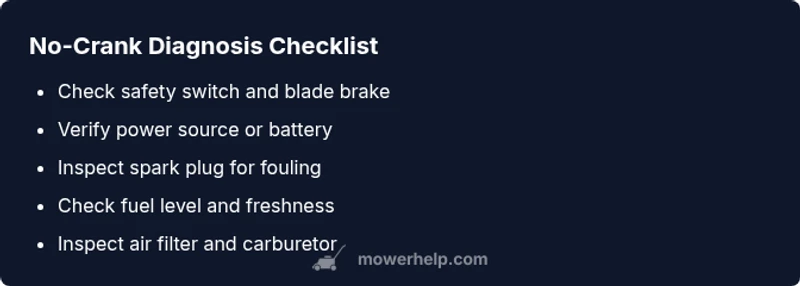
- Confirm the blade brake or PTO is disengaged and the ignition switch is in RUN. A single, tiny misposition can stop cranking entirely.
- For electric-start mowers, inspect the battery connections and ensure the battery has charge. A weak or corroded battery can fail to deliver the necessary cranking torque.
- Check that the spark plug boot is firmly attached to the plug. A loose connection can cut power to the ignition system and prevent cranking.
- Verify fuel presence and freshness. Stale fuel or empty tanks are obvious culprits that stop the engine before it even starts.
The Most Common Causes in Everyday Mowers
Lawn mowers rarely fail to crank due to a single mysterious fault. More often the issue folds into a few predictable categories. Understanding these helps you triage effectively without guessing:
- Safety switch or blade brake engaged: Some mowers won’t crank until the brake is released and the PTO is off. This is the top reason beginners struggle to start.
- Power issues and battery (for electric starts): If the battery is dead or terminals are corroded, you’ll hear nothing when attempting to crank.
- Spark plug problems: A fouled, worn, or improper gap spark plug can stop the ignition system from delivering a spark, preventing cranking.
- Fuel system problems: Empty tank, old fuel, clogged carburetor, or stale fuel can stall starting even if the spark is good.
- Air and carburetor issues: A clogged air filter or dirty carburetor can choke the engine and keep it from turning over.
- Oil and mechanical conditions: Low oil or a seized engine due to neglect can also prevent cranking, though this is less common.
Each of these causes has a straightforward, homeowner-friendly fix. The goal is to move from quick fixes to targeted repairs only when needed.
A Systematic Diagnostic Flow: From Symptom to Solution
Approach the problem with a step by step mindset. Treat cranking as a system with several subsystems: safety, electrical, fuel, air, and mechanical integrity. Start with the low-effort checks, then escalate to component-level tests. If a single test reveals a fault, you can usually address it with a replacement part or a clean, simple repair. If all basic checks pass and the mower still won’t crank, it’s time to test the ignition circuit and fuel delivery more deeply, and consider professional service for engine internals.
Step-By-Step Fixes for the Likeliest Cause
The most common no-crank culprit is an engaged safety switch or brake, coupled with a weak ignition signal. Here is a concise sequence you can follow:
- Disconnect power and safety wiring: Remove the spark plug boot or disconnect the battery for electric starts to eliminate accidental cranking.
- Release safety interlocks: Ensure PTO blade engagement is fully off and the blade brake is disengaged.
- Check ignition components: Inspect the spark plug for fouling; replace if worn or dirty and re-gap correctly.
- Inspect fuel system: Confirm fresh fuel and proper fuel flow; drain and replace stale fuel if needed. Clean or replace clogged lines or filters.
- Clean air and carburetor: Check the air filter; replace if dirty. If fuel still won’t reach the engine, clean the carburetor passages.
- Perform a controlled restart: Reconnect spark plug, ensure choke position appropriate for starting, and attempt to start with normal throttling.
- Reassess and escalate: If there is no improvement, test the ignition circuit with a test spark, check wiring continuity, and consider professional service for internal engine faults.
Safety, Warnings, and Maintenance to Prevent No-Crank Issues
Safety is non-negotiable when troubleshooting a lawn mower. Always disconnect power before touching any electrical or ignition components. Wear eye protection and work in a ventilated area when dealing with fuel. Common mistakes include skipping the blade brake release test, using old fuel, and neglecting routine maintenance. Establish a simple maintenance routine: check oil level and quality, inspect the spark plug, replace the air filter, and use fresh fuel at the start of each season. These practices reduce the risk of no-crank problems and extend the life of your mower.
Steps
Estimated time: 30-45 minutes
- 1
Verify safety and power isolation
Turn off the mower, unplug the ignition, and disconnect the spark plug boot or battery. This prevents accidental starting while you work.
Tip: If you can't disconnect the spark plug boot safely, use insulating gloves. - 2
Disengage safety interlocks
Make sure the blade brake is fully released and that the PTO switch is off. A stuck interlock is the most common root cause.
Tip: Double-check under the cutting deck for any obstruction that might trigger the interlock. - 3
Inspect ignition components
Remove and inspect the spark plug for fouling or wear. If necessary, replace and set the correct gap.
Tip: Use a spark plug wrench to avoid damaging threads. - 4
Check fuel delivery
Confirm there is fresh fuel in the tank and that fuel lines are clear. Replace fuel if it smells old.
Tip: Do not mix old fuel with fresh; drain the tank before filling. - 5
Air and carburetor check
Inspect the air filter and clean or replace if dirty. If the carburetor is suspected, perform a thorough cleaning or consult a repair guide.
Tip: Avoid forcing spray cleaners into restricted passages; use appropriate carb cleaner. - 6
Attempt a controlled restart
Reconnect the spark plug, set the choke and throttle to starting position, and attempt re-cranking in a controlled manner.
Tip: Do not run the starter for extended periods; allow short attempts to prevent overheating. - 7
Evaluate and escalate
If there is still no crank, test ignition with a spark tester and inspect wiring continuity. If unresolved, professional service may be needed.
Tip: Document symptoms and tests to share with a technician.
Diagnosis: Lawn mower won't crank
Possible Causes
- highSafety switch engaged or blade brake engaged
- highBattery dead or weak (electric start)
- mediumSpark plug fouled or faulty
- mediumFuel system issues or stale fuel
- lowCarburetor or fuel lines clogged
- lowOil level low or engine seized
Fixes
- easyDisengage blade brake, set PTO off, and verify RUN on the ignition
- easyCharge or replace the battery and clean/secure all connections
- easyInspect, clean, or replace the spark plug; check gap alignment
- easyDrain stale fuel, fill with fresh fuel, and inspect fuel lines/filters
- mediumClean carburetor passages or replace fuel filter; check air intake
- mediumCheck oil level and assess engine health; seek pro help if seized
Got Questions?
What is the first thing I should check when my mower won't crank?
Begin with safety interlocks and power. Ensure the blade brake is released, PTO is off, and the ignition is in RUN. If electric, verify battery connections and charge.
First, check safety interlocks and power. Release the blade brake, turn off PTO, and make sure the ignition is in RUN. If you have an electric start, confirm the battery is charged and connected.
Can a bad spark plug cause no crank even if the engine has fuel?
Yes. A fouled or worn spark plug can prevent ignition, stopping cranking. Inspect, clean, or replace as needed and confirm correct gap.
Yes. A bad spark plug can stop cranking. Check it, clean or replace, and ensure the gap is correct.
Should I replace old fuel if the mower won't start?
Old or stale fuel can cause starting problems. Drain and replace with fresh fuel, and consider using a fuel stabilizer for storage.
Yes. If fuel smells stale, drain and refill with fresh fuel. Add a stabilizer if you store the mower.
What about electric-start mowers that won't crank?
Check the battery voltage and connections first. A weak battery or corroded terminals can prevent cranking; replace or clean as needed.
For electric starts, check the battery and connections. A weak battery or corroded terminals can stop cranking.
When should I call a professional?
If basic checks fail to restore cranking, you may have internal engine issues. A professional diagnosis will protect against further damage.
If basic checks don’t fix it, consider a professional diagnosis to prevent damage.
How often should I replace the spark plug?
Inspect the spark plug each season; replace if worn, fouled, or has a widened gap. Regular replacement improves starting reliability.
Inspect yearly, replace if worn or fouled. Regular changes help starting reliability.
Watch Video
The Essentials
- Start with safety and power checks
- Address spark plug and fuel issues early
- Follow a systematic diagnostic flow
- Keep maintenance up to date to prevent no-crank problems
- Know when to call a professional