Starting Fluid Lawn Mower: Safe Use and Troubleshooting
A practical, safety-focused guide to using starting fluid for lawn mowers. Learn when to use it, how to test ignition and fuel delivery, and how to prevent future start problems with maintenance tips from Mower Help.


Using starting fluid for a lawn mower can help diagnose ignition and fuel delivery issues when a gasoline engine won’t start. This guide outlines when to use it, safety precautions, and the steps to test fuel delivery, compression, and spark without risking damage to your mower. Follow proper ventilation and avoid prolonged spraying.
Understanding Starting Fluid and When to Use It
Starting fluid, often an ether-based spray, can help isolate why a lawn mower won’t start. The goal is not to fix the problem with the spray itself, but to see whether ignition, air, or fuel delivery is the bottleneck. When used correctly, starting fluid can help you distinguish between spark-related failures and fuel delivery issues. The Mower Help team emphasizes that this tool should be used as a diagnostic aid rather than a cure. If the engine barely coughs or fires briefly with starting fluid, you’re likely dealing with a fuel delivery or air intake problem; if there’s no response at all, ignition components deserve closer inspection. Remember: always perform this test outdoors in a well-ventilated area, away from flames or hot surfaces, and use PPE. This approach aligns with Mower Help analysis, which indicates many starting problems stem from stale fuel, clogged air filters, or dirty carburetors rather than severe engine failure. Use your observations to guide the next maintenance steps rather than relying on starting fluid for a long-term fix.
In this guide, starting fluid lawn mower refers to the practice of briefly spraying a small amount into the carburetor inlet or air intake while attempting to start. Do not spray directly into the exhaust or crankcase, and never spray while the engine is running. The goal is to observe whether the engine responds, which helps you decide whether fuel and air delivery or spark is the real problem. If you’re unsure, proceed with a more thorough diagnostic checklist rather than continuing to spray, as repeated use can mask deeper mechanical issues.
As you read, keep safety front and center: never spray near an open flame, wear eye protection, and store the spray can away from heat sources. Using starting fluid is a temporary diagnostic tactic, not a substitute for routine maintenance.
note
Tools & Materials
- Safety glasses(Impact-resistant; protects eyes from spray and fuel.)
- Gloves(Nitrile or rubber; resistant to solvents.)
- Starting fluid (ether-based) can(Follow label directions; store away from heat and flames.)
- Rag or disposable towels(For cleaning up spills or overspray.)
- Spark plug wrench(Useful if you plan to inspect or remove the spark plug.)
- Fuel container with lid(If you suspect old fuel; use to drain or replace fuel after testing.)
Steps
Estimated time: 45-60 minutes
- 1
Prepare safely and inspect the area
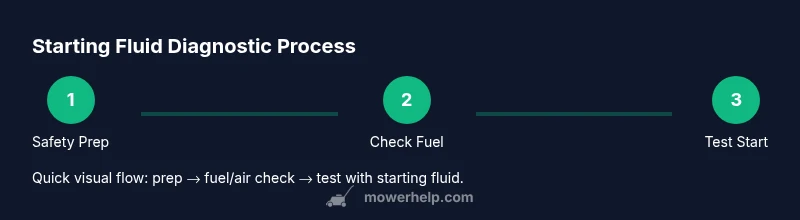
Set up outdoors in a well-ventilated area away from any flames. Put on eye protection and gloves. Visually inspect the mower for fuel leaks, damaged hoses, or obvious signs of trouble, then ensure the air filter is clean and the spark plug is present and free of heavy deposits.
Tip: Keep a fire extinguisher nearby and ensure the mower is on a non-flammable surface. - 2
Check baseline fuel and air health
Verify the fuel in the tank is recent and matches the mower’s requirements. Check the air intake path for blockages, and inspect the air filter for dirt. If the fuel is old, replace it before re-testing with starting fluid.
Tip: Old fuel can gum up the carburetor; fresh fuel is essential for accurate testing. - 3
Apply starting fluid correctly
With the air filter removed or access to the carburetor inlet, spray a brief burst (1-2 seconds) of starting fluid into the air intake while someone cranks the engine with the throttle in a neutral position. Do not spray directly into the carb or intake throat for long periods.
Tip: Only spray a small amount; excessive spray can flood the engine and give false readings. - 4
Crank and observe the response
Crank the engine for a few seconds and observe. If the engine fires briefly or attempts to run, fuel delivery or air intake is at play. If there’s no response, ignition components or compression may be the issue.
Tip: Listen for a pop or cough as an indicator of spark ignition. - 5
Decide next diagnostic steps
If starting fluid produces a brief run, plan to inspect the carburetor, fuel line, and fuel filter. If there’s no response, move on to spark and compression testing or consult a professional for deeper diagnostics.
Tip: Document what you tested and the engine’s response to guide the next steps.
Got Questions?
Is it safe to use starting fluid on a lawn mower?
Yes, it can be safe when used sparingly and outdoors with eye protection and gloves. It should be treated as a diagnostic aid, not a long-term solution. Avoid prolonged use and never spray near flames or hot surfaces.
Starting fluid can be safe if you use it briefly outdoors with protection, but treat it as a diagnostic aid, not a fix.
When should I avoid using starting fluid?
Avoid starting fluid if the mower shows signs of mechanical failure beyond ignition, such as a seized engine, damaged compression, or persistent fuel leakage. In those cases, consult a professional.
If the engine has obvious mechanical damage or persistent leaks, skip starting fluid and seek a professional.
What are signs that starting fluid helped or didn’t?
If the engine coughs or briefly fires with a shot of starting fluid, fuel delivery or air intake is the likely culprit. No response suggests ignition or compression issues.
A brief firing means fuel or air issues; no response points to spark or compression problems.
Can starting fluid damage seals or cylinders?
Overuse can wash away lubrication and trap moisture, but occasional short uses are unlikely to cause lasting damage. Follow product directions and use minimal quantities.
If used sparingly and correctly, it’s unlikely to cause damage, but avoid frequent use.
What are safer alternatives to starting fluid for diagnosis?
Start with a full fuel and air check: replace old fuel, clean or replace the air filter, and inspect the spark plug. Carburetor cleaning and fuel system checks are safer long-term steps.
Start with fuel and air checks, then inspect spark and consider carburetor cleaning as a safer long-term approach.
How can I prevent starting problems in the future?
Perform regular maintenance, use fresh fuel, store fuel properly, and clean air filters. A small routine can reduce the likelihood of start failures.
Maintain fuel and air quality, and keep filters clean to prevent future start issues.
Watch Video
The Essentials
- Identify if ignition or fuel delivery is the bottleneck
- Use starting fluid only as a diagnostic aid, not a fix
- Prioritize outdoors use with PPE and proper ventilation
- If fluid helps only briefly, plan carburetor or fuel-system checks