Where is the carburetor on a lawn mower
This guide explains where is the carburetor on a lawn mower, highlights common locations, and provides a safe, step-by-step process to access, inspect, and maintain the carburetor for reliable engine performance.


When you ask where is the carburetor on a lawn mower, the carburetor is the small fuel‑air mixer mounted on the engine. In most push mowers, it sits beneath the air filter cover and intake shroud, often toward the front of the engine. Remove the air filter housing to expose the carburetor for inspection or cleaning.
Where is the carburetor located on common mower designs
If you’re asking where is the carburetor on a lawn mower, the carburetor is the small metal device that meters fuel into the engine. In most push mowers, it sits beneath the air filter cover, attached to the engine block, often toward the front or side. On many riding mowers, the carburetor may be tucked behind the air intake and near the throttle linkage. The exact position varies by model, but you’ll usually access it by removing the air filter housing and any shrouds. Knowing this location helps you perform quick checks, diagnose rough starts, and prepare for maintenance without disassembling the entire engine.
How carburetors work in lawn mowers
A lawn mower carburetor blends air and fuel before delivering it to the intake manifold. The venturi constricts air flow to draw fuel through a nozzle, while the float bowl maintains a steady fuel level. Throttle linkage and the idle screw control engine speed. When the carburetor is dirty, gummed fuel, or has a clogged jet, symptoms like hard starting, high idle, or stalling appear. Regular inspection helps you catch these problems early and preserve engine performance.
Common locations by mower type
Push mowers commonly place the carburetor under the air filter housing at the front of the engine. Some compact push models mount it on the side of the carb intake for easier access. Riding mowers and garden tractors often have the carburetor tucked behind the air intake, near the throttle linkage or on the opposite side of the engine compartment. Always consult the owner's manual for model-specific diagrams, since layouts vary widely between manufacturers and engine types.
Step-by-step overview to locate safely
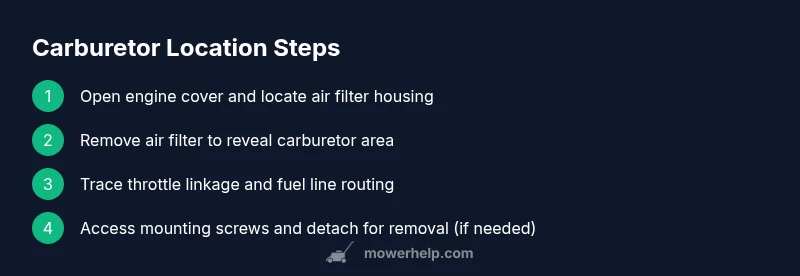
- Step 1: Park the mower on a level surface and shut off fuel supply if present. - Step 2: Disconnect the spark plug cap to prevent accidental starting. - Step 3: Remove the engine cover or shroud to expose the air filter housing. - Step 4: Open the air filter housing and note the position of the carburetor behind it. - Step 5: Identify the throttle linkage and fuel line routing to avoid damage during inspection. This overview helps you plan the task without rushing to disassemble the wrong components.
Safety first: handling fuel and hot components
Always work in a well‑ventilated area away from open flames. Let the engine cool before touching any fuel‑system parts. Wear safety glasses and gloves, and keep fuel in a sealed container if you must drain or reposition lines. Never smoke or use ignition sources near gasoline. These precautions reduce the risk of fire or injury.
How to inspect the carburetor without removing it entirely
With the air filter housing opened, inspect the carburetor for visible signs of trouble: dull or gummed fuel residue, deposits around the jets, or a loose throttle linkage. Gently move the throttle to feel smooth operation and check for any binding. If you notice fuel leaks or hard spots, consider cleaning the exterior and assessing the gasket, seal, and fuel line integrity.
Cleaning and maintenance considerations
Cleaning a carburetor requires careful handling of small parts. Use a dedicated carburetor cleaner and avoid blasting jets with compressed air from unintended angles. Keep track of small screws, gaskets, and diaphragms. If you suspect a clogged jet, remove and clean it following model‑specific guidance, then reassemble with clean seals and a fresh gasket.
Reassembly and test start procedure
Reinstall the carburetor or reattach it to the mounting studs in the reverse order of removal, ensuring all screws are snug but not overtightened. Reconnect the fuel line and throttle linkage, reassemble the air filter housing, and reattach the spark plug cap. Prime the system if required, then start the mower in a well‑ventilated area to verify smooth idling and normal acceleration.
Troubleshooting signs of a failing carburetor
Common signs include difficulty starting, frequent stalling, erratic idle, and reduced power. You may also notice rich or lean running symptoms, visible deposits, or fuel smells near the engine. If problems persist after cleaning, you may need a rebuild kit or professional service to resolve worn gaskets or diaphragm damage.
Common mistakes to avoid when locating the carburetor
Avoid forcing parts or prying near delicate fittings. Do not mix up fuel lines or misplace screws—keep a small container to hold fasteners. Never clean jets with metal probes that can score passages. Finally, avoid using strong solvents near rubber diaphragms—these parts require gentle, model‑specific cleaners.
Tools and parts checklist
This quick reference helps ensure you have what you need. Organize parts and tools before you start to minimize spills and misplacement. A clean workspace reduces risk and speeds up the process.
Tools & Materials
- Safety gloves(Chemical‑resistant gloves recommended)
- Safety glasses(Goggles provide splash protection)
- Screwdriver set (Phillips and flathead)(Varied blade sizes)
- Pliers(Needlenose or locking pliers)
- Socket wrench set(Low‑torque sockets for mounting screws)
- Rags or shop towels(Wipe spills and clean surfaces)
- Carburetor cleaner spray(Specialized cleaner for jets and bowls)
- Small container for drained fuel(Contain used fuel safely)
- Replacement gasket/diaphragm kit(Keep as backup)
- Owner's manual or model service sheet(Model‑specific diagrams)
Steps
Estimated time: 45-60 minutes
- 1
Prepare and ensure safety
Park on level ground, disconnect spark plug, and (if present) shut off the fuel valve. Remove the spark plug boot to prevent accidental cranking while you work. Gather all tools before starting.
Tip: Double‑check that the engine and fuel system are cool to touch before handling any parts. - 2
Expose the air filter housing
Open the engine cover or shroud and locate the air filter assembly. Loosen any fasteners and lift the cover to reveal the carburetor area behind the filter.
Tip: Keep track of screws in a labeled tray to avoid misplacing them. - 3
Remove the air filter and housing
Carefully lift out the air filter and remove the housing components to access the carburetor. Inspect the intake boot for cracks or leaks as you go.
Tip: Place filters in a clean area to prevent debris contact. - 4
Identify the carburetor and throttle linkage
Locate the carburetor body behind the air port and trace the throttle linkage to the governor or throttle cable. Note routing of the fuel line and any clamps.
Tip: Take a photo for reference before disassembly. - 5
Disconnect the fuel line if needed
If you plan to remove the carburetor, gently detach the fuel line at the fitting. Expect some fuel drips—keep rags handy and work over a container.
Tip: Do not yank; twist gently to loosen the connection. - 6
Remove mounting screws and lift the carburetor
Unfasten the screws securing the carburetor to the intake or engine block. Lift the carburetor straight up to avoid bending linkages.
Tip: Support the carb with a hand to prevent it from falling onto the work surface. - 7
Inspect and clean the carburetor components
Check the bowl, jets, and float for varnish or debris. Use carburetor cleaner to flush passages; avoid metal probes that can scratch passages.
Tip: Replace gaskets and diaphragms if you see wear or cracking. - 8
Reassemble, reattach fuel, and test
Reinstall the carburetor with seals in place, reconnect the fuel line and throttle linkage, reassemble the air filter housing, and reconnect the spark plug. Start the mower and observe for smooth operation.
Tip: Start with a cold engine and run through a complete throttle range to confirm proper operation.
Got Questions?
Where is the carburetor typically located on most lawn mowers?
Most mowers place the carburetor near the air filter housing, either at the front of the engine or just behind the intake. Model-specific diagrams in the manual will confirm exact placement.
Typically, the carburetor sits behind the air filter housing at the front of the engine. Check the manual for your exact model.
Can I locate the carburetor without removing the air filter?
In many cases you can peek behind the air filter housing to identify the carburetor. Fully exposing it usually requires removing the filter and shroud.
Often you can see part of the carburetor behind the air filter housing, but full access needs removing the filter and housing.
What are common signs of a dirty or failing carburetor?
Symptoms include hard starting, poor idling, stalling, or inconsistent power. Fuel smells, black smoke, or visible varnish around jets also indicate issues.
Look for hard starting, rough idle, or stalling as signs of a carburetor problem, plus fuel smells near the engine.
Is it safe to clean the carburetor while it is mounted on the engine?
Light external cleaning is usually safe with the engine off. For jets and internal passages, remove the carburetor as needed and follow model‑specific guidance.
You can clean the outside while it’s mounted, but for internal cleaning you should remove the carburetor following the manual.
Do all lawn mowers use carburetors, or have electric systems?
Most gas‑powered mowers use carburetors, but some modern units incorporate different fuel systems or electric options. Check your model specs for the fuel system type.
Most gas mowers use a carburetor, but some newer models may have alternative fuel systems depending on design.
Watch Video
The Essentials
- Identify common carburetor locations before disassembly.
- Inspect fuel lines, gaskets, and throttle linkage for wear.
- Clean jets and passages with proper carb cleaner only.
- Test run the mower after reassembly to verify operation.