Why Does My Lawn Mower Stop Running When It Gets Hot
Discover why a lawn mower stops when it overheats and learn practical fixes, safety steps, and prevention tips to keep your mower running smoothly in hot weather.


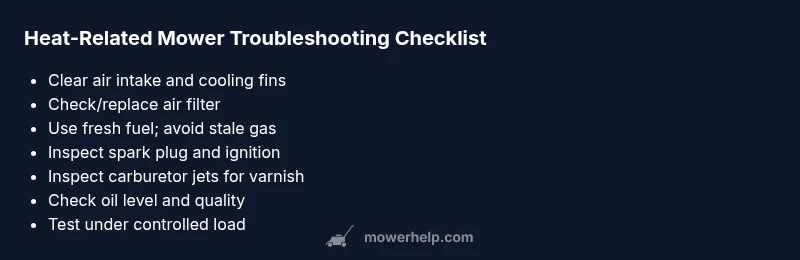
When the mower overheats and stalls, the likely culprits are restricted airflow, dirty air filters, stale fuel, or a failing spark plug. Start with quick steps: clear the air intake, inspect and replace the air filter if dirty, fill with fresh fuel, and inspect the spark plug for wear or fouling. If the problem persists, move to deeper diagnosis.
Understanding Why Your Lawn Mower Stops When Hot
When a lawn mower gets hot, the engine may stall as a protective measure. The question why does my lawn mower stop running when it gets hot is common among homeowners, especially during summer or after a long cut. The most frequent culprits are overheating due to restricted airflow, old fuel turning to varnish, or a misadjusted carburetor. In many cases, a simple check of air intake, cooling fins, and fuel quality resolves the issue quickly. The Mower Help team notes that heat-related stalls can be prevented with basic maintenance and mindful operation. By systematically inspecting each subsystem, you can confirm whether the problem is a temporary heat soak or a sign of a deeper failure. Safety should be your first priority: disconnect the spark plug, wait for the blade to stop, and work on the mower only with the engine cool.
If you are asking why does my lawn mower stop running when it gets hot, know that most cases originate from heat buildup rather than a catastrophic engine failure. Start by simple checks and monitor how the mower behaves as it warms up. With the right approach, you can identify the root cause within a short session and avoid costly repairs later. This is especially true for homeowners following a regular maintenance routine prescribed by mower manufacturers.
For homeowners and DIY enthusiasts, recognizing the pattern of heat-induced stalling helps you decide whether you can fix it with basic maintenance or if professional service is needed. The most common outcome is a straightforward fix such as cleaning debris from cooling passages or replacing a dirty air filter, but some situations call for more careful carburetor cleaning or fuel system work. Remember: safety first, and never run a hot mower without adequate cooling and protective gear.
Common Heat-Driven Failure Modes
Overheating can result from several interrelated issues that escalate under load. The most common heat-driven failure modes include blocked cooling air flow (air intake or fins clogged with grass clippings), dirty or failing air filter, old or ethanol-laden fuel that boils and creates varnish, low oil level or degraded oil increasing friction, and a carburetor that sticks or gums up from varnish. In some cases, a lingering spark plug residue exacerbates heat. Understanding these modes helps you triage quickly and avoid unnecessary repairs. When you notice sudden stalling after 5–10 minutes of operation, start with air flow and fuel checks before moving to ignition components. The goal is to reproduce the symptom under safe, controlled conditions so you can observe which subsystem is failing under heat.
Note that high ambient temperatures can amplify existing issues. If your mower is older or has sat with stale fuel, the symptoms may be more severe as the engine struggles to shed heat. Documenting when the stall occurs—after how long and under what load—gives you a clear trail to follow or to share with a repair tech. Keeping notes helps you distinguish a temporary heat soak from a recurrent failure.
From a maintenance perspective, addressing heat-related stall symptoms early prevents minor problems from becoming major engine repairs. A consistent approach to cleaning, inspecting, and replacing worn parts is more affordable than reactive fixes after a breakdown. The guidance below outlines practical checks that align with common mower maintenance schedules.
For homeowners following Mower Help recommendations, adopting a steady routine of checks during peak mowing season dramatically reduces the frequency of stalls caused by overheating. This proactive approach also extends the life of components such as the carburetor, spark plug, and fuel system, contributing to a more reliable mower overall.
Airflow and Cooling System: Quick Checks
The engine relies on ample cooling air, especially air-cooled engines common on residential mowers. Grass buildup around the cooling shroud, clogged fins, or a loose deck can trap heat. Start by cleaning the cooling area with the spark plug disconnected. Inspect the air intake and ensure no obstructions. Check the cooling fins for damage and remove any grass or debris. If you notice that heat builds up after short mowing sessions despite clean surfaces, you may have an airflow restriction or a fan issue. Replacing a damaged shroud or fan is sometimes necessary, but many times cleaning suffices and resolves the heat problem. If the mower still overheats after these steps, move to fuel and ignition checks.
A practical habit is to perform a quick cooling check after every mowing session: inspect around the blades and discharge chute for grass clippings that could block air pathways. Keeping this area clear helps prevent heat buildup during extended cuts. If you see consistent overheating after a cooldown, you should examine other subsystems before replacing major components.
In addition to cleaning, confirm that the air filter is intact and seated properly in its housing. A clogged or mis-seated filter restricts air flow, contributing to overheating and rough running. Always replace a dirty filter with the same model recommended by the manufacturer or compatible equivalent. Checking the air filter is one of the simplest, most impactful steps you can take when diagnosing heat-related stalls.
Fuel Quality and Carburetor Issues
Fuel quality significantly influences running temperature. Old fuel or ethanol-drenched blend can boil under heat, leaving varnish that gums jets and throttles. Drain old fuel from the tank and refill with fresh gasoline, ideally stabilized for storage. While you're at it, inspect the fuel cap vent; a blocked vent creates a vacuum and starving the engine under load. Carburetor jets can also become clogged; a thorough cleaning with carb cleaner sprays and proper disassembly may be required. After restoring clean fuel pathways, start the engine and test performance at different throttle positions. Poor fueling is a leading contributor to heat-induced stalling.
If you have persistent overheating, consider a full carburetor rebuild or professional cleaning. Some carburetors use micro jets that can be challenging to clean without the right tools, so weigh the costs vs. a replacement if multiple cleanings fail to restore performance. Be mindful of fuel compatibility with your mower model and the environment. Avoid storing gasoline in the mower’s fuel system for extended periods, especially in heat.
Finally, avoid refueling while the engine is hot. Let the engine cool for a few minutes before opening the fuel cap to prevent fuel vapors from igniting or causing pressure-related leaks. Good fuel management helps your engine stay cooler under high heat conditions.
Ignition System and Electrical Factors
Weak spark or worn ignition components can cause misfiring as engines heat up. Check the spark plug for fouling, gap, and wear; replace if necessary. Inspect the spark plug boot and ignition coil for cracks and corrosion. A hot engine can feel more sensitive to a marginal spark. Ensure grounding is solid and that there are no oil leaks around the electrical area. If the ignition system remains unreliable after these checks, you may be dealing with a failing coil or a need for professional testing.
Routine inspection of ignition components, especially on older mowers, helps prevent heat-induced stalls. When replacing parts, verify compatibility with your mower’s model and service manual recommendations. If you’re uncertain about testing ignition coils, a certified technician can diagnose misfires with a spark tester and proper equipment.
Before you test, confirm the battery (if equipped) is in good condition and the wiring harness is intact. A poor electrical connection can amplify heat sensitivity and lead to intermittent stalling as temperatures rise.
Oil, Filters, and Exhaust Considerations
Low oil level or deteriorated oil increases engine friction, causing heat and reduced performance. Check oil level with the mower on a level surface and add or change oil as recommended by the manufacturer. Replace the oil filter if your mower has one. A clogged air filter or exhaust can also trap heat; inspect and replace if dirty. Clean exhaust areas and ensure there is no obstruction to exhaust flow. These steps often resolve heat-related stalling when combined with air and fuel checks.
Maintaining the right oil viscosity is essential for heat management. In hotter climates, you may need a slightly different oil grade if the manufacturer allows it. Always refer to the owner’s manual for the correct oil specification and change intervals. If you notice smoke from the exhaust or unusual burning smells, stop operation and inspect for a leak or internal engine trouble.
A consistent oil change routine not only reduces overheating risk but also protects your engine internals from excessive wear during hot mowing sessions.
How to Test Under Safe Conditions
Before testing, always disconnect the spark plug and wear eye protection. Start with a cold engine, then gradually bring it to temperature via light mowing or a controlled choke. Note how quickly it starts to overheat and what changes when you adjust throttle, load, or incline. If the engine stalls only under load, the issue is likely fuel delivery or carburetion rather than ignition. If it stalls even at idle, suspect ignition or oil-related problems. Document symptoms so you can communicate clearly if you seek professional help.
A practical testing approach is to reproduce the stall in a controlled environment—start the mower, run briefly at idle, then apply a consistent load and monitor temperature rise. Record the outcomes of each change you make, such as a richer/leaner fuel setting, tighter/larger throttle, or a slight incline. This method helps you isolate the root cause and decide whether to service components yourself or consult a technician.
If you suspect a serious issue like a compromised head gasket or warped cylinder, do not continue running the engine. The risks include severe engine damage and personal injury.
Prevention: Build a Simple Cool-Down and Maintenance Routine
A proactive routine reduces the risk of overheating dramatically. Schedule regular air filter cleanings, fuel system checks, and oil changes according to your mower’s manual. Keep the cooling fins clear year-round, remove built-up grass from under the deck, and store fuel safely. Many overheating issues are preventable with a 15–20 minute post-mow cooldown check, ensuring all moving parts are cooled before storage. By staying on top of maintenance, you minimize the chance of sudden stalls on hot days.
Additionally, establish a habit of inspecting the mower before storage: bleed heat through a safe cooldown, perform a final visual check for loose hardware, and clean any residual grass or debris. In hot climates, consider scheduling maintenance more frequently—every 25–40 hours of operation—as recommended by Mower Help guidelines. A well-maintained mower rarely stalls when hot and remains reliable across seasons.
Steps
Estimated time: 60-90 minutes
- 1
Power down and cool before work
Disconnect the spark plug boot and allow the engine to cool completely. Safety is non-negotiable when you’re dealing with hot machinery. This initial step prevents accidental starts and reduces the risk of burns during inspection.
Tip: Use a spark-proof tool and work in a ventilated area. - 2
Clear the cooling path and inspect the air intake
Remove grass buildup from around the cooling shroud and the air intake. Check for damaged or clogged fins. A clean cooling path is essential to prevent heat buildup and engine stalling.
Tip: Use a soft brush or compressed air to avoid bending fins. - 3
Check air filter and fuel quality
Inspect the air filter; replace if dirty. Drain old fuel and refill with fresh, stabilized gas. Poor air or fuel quality is a common cause of overheating and stalling under load.
Tip: Never run with a dirty air filter; it dramatically reduces airflow. - 4
Examine ignition components
Inspect the spark plug for wear or fouling; replace if necessary. Check the ignition coil connections for corrosion. A marginal spark becomes critical as the engine heats up.
Tip: Use the correct spark plug type and gap for your model. - 5
Inspect the carburetor and fuel system
If stalling persists, clean the carburetor jets and ensure the fuel line and cap vent are clear. Vapors can form under heat and clog fuel delivery.
Tip: Carburetor work may require specialized cleaners and tools. - 6
Check oil level and condition
Verify the oil level on a level surface and change if dark or degraded. Oil that’s too thin or too old increases friction and heat.
Tip: Follow manufacturer recommendations for oil viscosity. - 7
Test run with controlled load
Reassemble and start with a light load, gradually increasing to normal mowing conditions. Observe for continued overheating and note any patterns.
Tip: Test in a shaded area, away from anything flammable. - 8
Decide on next steps
If overheating persists after all checks, consult a professional technician. Some issues may require expert testing or component replacement.
Tip: Keep a maintenance log and schedule a professional check if symptoms recur.
Diagnosis: Engine stops or stalls after several minutes of operation when ambient or engine temperature rises
Possible Causes
- highRestricted airflow / blocked cooling fins or air intake
- mediumOld fuel or fuel with ethanol varnish
- mediumLow oil level or degraded oil
- lowCarburetor issues (gumming, jets clogging)
- lowWeak or fouled spark plug
Fixes
- easyClean air intake, oil cooling surfaces, and remove debris around the shroud
- easyReplace stale/fuel with fresh gasoline; add fuel stabilizer for storage
- easyCheck oil level and change oil if needed; verify oil type matches spec
- mediumDisassemble and clean carburetor jets; replace gaskets if worn
- easyInspect/replace spark plug; ensure proper gap and grounding
Got Questions?
Why does my lawn mower stop running when it gets hot?
Common causes are restricted airflow, clogged air filter, stale fuel, or a weak spark. A systematic check of air intake, fuel quality, and ignition usually reveals the culprit.
Common causes are restricted airflow, clogged air filter, stale fuel, or a weak spark. Check air intake, fuel, and spark plug to diagnose.
Can overheating permanently damage the engine?
Yes. Prolonged overheating can lead to warped components, scored cylinders, or degraded oil. Address heat symptoms promptly to avoid costly repairs.
Yes. Prolonged overheating can damage the engine; fix the issue quickly to avoid costly repairs.
What is the quickest fix to stop overheating?
Clear debris from cooling fins, replace dirty air filter, and put fresh fuel in the tank. These are the fastest wins and often resolve the stall.
Clear debris, replace a dirty air filter, and add fresh fuel for a quick fix.
Should I run the mower to test if the problem persists after fixes?
Yes, after performing checks, run the mower under light load to verify it doesn’t overheat. If it does, stop, recheck components or seek professional help.
Run it briefly under light load to test, but stop if it overheats again.
When is professional help needed?
If overheating continues after basic maintenance, if you hear knocking or see leaks, or if you’re unsure about carburetor or ignition work, consult a technician.
If it keeps overheating after basic checks or you’re unsure, get a professional diagnostic.
Can fuel quality affect overheating?
Absolutely. Poor or stale fuel can boil under heat and varnish fuel pathways, worsening overheating. Use fresh stabilized fuel and store properly.
Yes—bad fuel can cause overheating by clogging fuel pathways.
Watch Video
The Essentials
- Diagnose heat stalls with a methodical airflow, fuel, and ignition check
- Keep cooling passages clear and use fresh fuel to prevent varnish buildup
- Regular maintenance reduces overheating risk and extends mower life
- Inspect ignition and carburetor if stalls occur under load
- Never ignore signs of persistent overheating; seek professional help when needed