Why My Lawn Mower Keeps Cutting Off: An Urgent Troubleshooting Guide
Urgent guide to fix why my lawn mower keep cutting off. Learn top causes, quick checks, and a step-by-step plan to restore reliable mowing and prevent future stalls.


Stalling is most often caused by fuel or air-system problems. Quick fixes: inspect and clean or replace the air filter, drain and refill with fresh gas, and check the carburetor for grime. If the engine still cuts out, follow the diagnostic flow and perform the step-by-step fix for the most common cause.
Why stalls happen and what you should do first
If you've ever asked why my lawn mower keep cutting off, you're not alone. Stalling typically happens when the engine can't receive the right mix of air and fuel or when a safety switch triggers early. In practice, the quickest path to a stable mower is a targeted check of the intake and fuel path, followed by a simple clean or replacement. The Mower Help team emphasizes that many stalls are preventable with a routine maintenance habit and a tidy fuel system. Start by confirming you have fresh fuel, a clean air intake, and no loose safety connections. Observe how the mower behaves: does it stall during load, or at idle, or after a short run? Each pattern points to different culprits. For homeowners, the goal is to perform small, safe checks first, before committing to deeper repairs. If you stay calm and follow a structured checklist, you can often restore reliable operation in a single weekend session.
Quick checks to run before deeper work
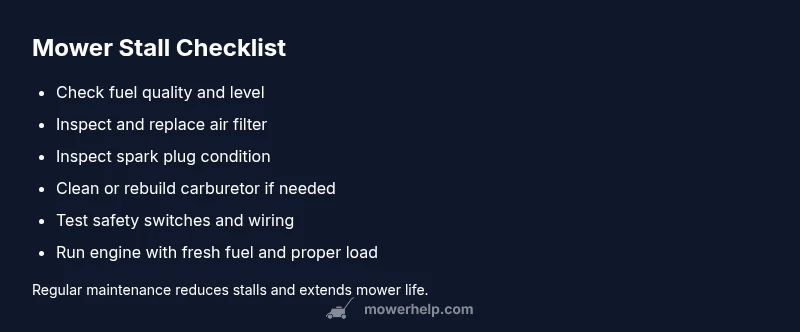
- Verify fuel quality and level; stale gas is a frequent stall trigger. Refill with fresh gasoline and a clean container if possible. - Inspect the air intake and replace a dirty air filter. A clogged filter robs the engine of air and causes rich fuel conditions that stall the motor. - Check the spark plug for fouling or wear and replace if needed. A weak spark can cause misfires and stalling under load. - Look for loose safety switches or a faulty kill switch that might cut power unexpectedly. Tighten connections and test with the mower in a safe position. These quick checks often resolve many stalls without tools or disassembly.
When stalling persists: sample symptoms and what they mean
Different stall patterns point to different culprits. If the mower stalls only when you engage the blade or mower deck, the issue may be in the carburetor or air intake under load. If it stalls during startup or idle, ignition or airflow problems are more likely. If the engine dies after a few minutes of running, fuel delivery or overheating could be at fault. Documenting symptoms helps you and any technician pinpoint the fix more quickly and safely.
Common safety and maintenance mistakes to avoid
Avoid forcing the mower to run with a dirty air filter or old fuel. Don’t attempt aggressive carburetor cleaning without proper tools if you’re unsure; a wrong move can worsen the problem. Always disconnect the spark plug before touching the engine, and never work on hot components. Use proper protective gear—gloves and eye protection—when inspecting fuel lines or the exhaust.
The maintenance mindset: prevention is your best fix
A regular maintenance routine dramatically reduces stalls. Schedule periodic air-filter replacements, fuel-system checks, and spark-plug inspections. Use fresh gasoline and a stabilizer if you store fuel between mowing sessions. Keep the engine clean and free of grass clippings that can block cooling fins. A proactive approach—from cleaning to inspection—keeps your mower reliable and ready for mowing season.
Summary of the path forward
Start with quick checks, then use a structured diagnostic flow to identify the root cause. If the fix is simple, complete it with basic tools and test the mower. If you’re unsure about carburetor work or ignition diagnosis, seek professional help. This approach minimizes downtime and maximizes safety.
Steps
Estimated time: 1 hour
- 1
Power down and prep safely
Disconnect the spark plug, remove the protective cover, and ensure the area is clear. Gather tools and a container for old fuel. This keeps you safe while inspecting fuel and air pathways.
Tip: Always disconnect spark plug before any internal work. - 2
Inspect the air filter
Remove the air filter and check for dirt, oil, or clogging. Replace if dirty or damaged. A clean filter improves air flow and engine efficiency.
Tip: Keep a spare air filter on hand for quick swaps. - 3
Check the fuel system
Drain old gas from the tank and fill with fresh gasoline. Inspect fuel lines for cracks or leaks. A clean, uninterrupted fuel path prevents stalling.
Tip: Use a funnel and a clean container to avoid contamination. - 4
Examine the spark plug
Remove and inspect the spark plug for fouling, glazing, or wear. Clean or replace as needed; ensure the gap is correct for your model.
Tip: Wear safety glasses when inspecting spark plugs. - 5
Inspect the carburetor
Lightly spray carb cleaner into the choke and idle circuits if you’re experienced; otherwise, consider a professional carburetor service. Avoid over-cleaning to prevent damage.
Tip: Do not disassemble sensitive carb components if you’re unsure. - 6
Test and adjust safety switches
Engage the blade engagement and bail lever to test for proper shutoffs. Ensure clutches and switches return to their normal position.
Tip: Worn switches can cause immediate shutdowns—replace if needed.
Diagnosis: Engine stalls under load or at idle
Possible Causes
- highFuel quality issues (stale fuel, dirty fuel)
- highClogged air filter or dirty carburetor
- mediumFaulty spark plug or ignition switch
- lowSafety switch stuck or misadjusted
Fixes
- easyReplace air filter and drain/refill with fresh fuel; inspect spark plug
- mediumClean or rebuild carburetor and check fuel lines
- easyInspect safety switches/wiring and replace faulty components
Got Questions?
Why does my lawn mower stall after starting?
A stall after starting often points to ignition, air, or fuel delivery issues. Check the air filter, spark plug, and fuel quality first, then inspect the carburetor and safety switches for faults.
Stalling after start usually means ignition, air, or fuel delivery needs a quick check. Start with the air filter, spark plug, and fuel quality, then inspect the carburetor and safety switches.
Can old gasoline cause stalling?
Yes. Old or contaminated fuel can clog jets and restrict fuel flow, causing the engine to cut out under load. Drain the tank and refill with fresh fuel, ideally with a fuel stabilizer for storage.
Old fuel can clog carb jets and cause stalling. Drain it, refill with fresh fuel, and consider stabilizer for future storage.
Is a dirty air filter a common stall cause?
A dirty air filter restricts airflow and disrupts the air-fuel mixture, leading to rough running and stalling. Replace the filter regularly as part of routine maintenance.
Yes, a dirty air filter often causes stalls. Replace it during routine maintenance to keep airflow smooth.
When should I replace the spark plug?
If the spark plug is fouled or worn, the engine can misfire and stall. Replace with the correct gap setting for your mower model.
Replace a fouled or worn spark plug to prevent misfires that lead to stalls.
Do I need a professional for carburetor work?
Carburetor work can be tricky. If cleaning or rebuilding doesn’t solve the stall, seek a professional service to avoid damaging sensitive parts.
If cleaning doesn’t fix the carb, a pro can safely diagnose and repair it.
Watch Video
The Essentials
- Check fuel quality before deeper fixes
- Keep air path clear with a clean air filter
- Test after each fix to confirm stability
- Regular maintenance prevents stalls