Broken Lawn Mower Blade: Quick Troubleshooting Guide
Learn how to diagnose, repair, and prevent a broken lawn mower blade with safe, step-by-step guidance. Quick fixes, plus prevention tips for lasting sharpness and safer mowing.


A broken lawn mower blade is a serious safety risk. Immediately stop the mower, disconnect power, and remove the blade for inspection. If you see cracks, chips, or a bent edge, replace the blade and check the mounting hardware and spindle for wear. This quick check helps prevent dangerous vibrations.
The danger of a broken lawn mower blade
A broken lawn mower blade is more than a minor nuisance. It can throw debris, cause excessive vibration, and damage the deck or spindle if used in that condition. The risk increases when you continue mowing with a compromised edge, because jagged edges can sling rocks or ricochet metal. According to Mower Help, safety starts with turning off the engine, removing the spark plug boot, and letting the blade come to a stop before you approach the deck. Once you’re safe, inspect for obvious damage like cracks, bending, or missing chunks. Even a blade that looks okay on the surface may be structurally compromised, so treat any sign of damage as needing a closer look. Regular maintenance, a cautious mindset, and proper blade selection are essential for keeping your yard cleanly cut and your mower running smoothly.
wordCount":210},
Steps
Estimated time: 60-90 minutes
- 1
Power down and secure the mower
Turn off the engine, remove the spark plug cap or disconnect the battery, and wait for all moving parts to stop. This is the foundational safety step before any blade work. Gather protective gloves and eye protection.
Tip: Never work with a running mower; even a small slip can cause serious injury. - 2
Access the blade area
Disconnect the spark plug wire again for extra safety, tip the mower to expose the blade, and remove any safety shields or covers as required by your model. Take note of blade orientation for reinstallation.
Tip: Photograph the setup as you go to avoid confusion later. - 3
Remove the blade bolt
Use the correct socket wrench to loosen and remove the blade bolt. Hold the blade with a cloth-wrapped hand to prevent it from kicking out, and slowly lift the blade away from the spindle.
Tip: Apply a penetrating oil if the bolt is stubborn, but avoid getting oil on bearings. - 4
Inspect the blade and spindle
Check for cracks, chips, warping, and signs of bending. Also inspect the spindle shaft and mounting hole for wear or damage that could require replacement.
Tip: If you see any crack or deep bend, do not reuse the blade. - 5
Decide on replacement vs sharpening
A severely damaged blade should be replaced. If the blade is nicked but structurally sound, you can carefully sharpen it, then re-balance and test.
Tip: Balanced blades reduce vibration and prolong mower life. - 6
Install the new or sharpened blade
Position the blade correctly and reinstall the bolt with the proper torque. Tighten evenly to avoid warping, and ensure the blade is centered and straight.
Tip: Use a torque wrench if possible to meet manufacturer specs. - 7
Test the mower safely
Reattach covers, reconnect power, and perform a gentle test cut on a small area to verify smooth operation. Listen for unusual noises or vibrations.
Tip: If anything sounds wrong, stop and re-check the setup before full use. - 8
Clean up and reset maintenance
Wipe down the deck, dispose of the old blade properly, and note any maintenance tasks for the next season. Store tools safely away from children.
Tip: Keep a blade replacement schedule to prevent future emergencies.
Diagnosis: Mower vibrates abnormally or you notice visible cracks/chips on the blade after contact with a hidden object or hard surface
Possible Causes
- highBlade is cracked or bent from impact or fatigue
- mediumBlade bolt loosened or worn
- lowSpindle or mounting hardware damaged
- lowForeign object lodged in blade or under deck
Fixes
- easyStop the mower, disconnect power, remove the blade, and replace it with a new one; ensure correct blade orientation
- easyTighten or replace the blade bolt and check torque to manufacturer specs; re-check balance
- hardInspect the spindle assembly and mounting hardware; if damaged, replace or consult a professional
- easyClear debris from under the deck and inspect for additional damage before reassembling
Got Questions?
Can I sharpen a cracked or bent blade?
A blade with visible cracks or bending should not be sharpened. Sharpening can worsen structural damage and cause failure during operation. Replace the blade instead and inspect the spindle and mounting hardware for wear.
A cracked or bent blade should not be sharpened; replace it and check the spindle for wear.
How do I know when a blade should be replaced vs sharpened?
If the blade has cracks, chips, or is bent, replace it. If the edge is dull but intact and no cracks are present, sharpening may be appropriate followed by rebalancing.
If there are cracks or bends, replace the blade; otherwise you may sharpen if it’s otherwise sound.
What torque should blade bolts be tightened to?
Torque specifications vary by mower model. Check the user manual or manufacturer’s website for the exact torque. Use a torque wrench when possible.
Check your manual for the exact torque and use a torque wrench if you can.
What safety gear should I wear while replacing a blade?
Wear cut-resistant gloves, safety glasses, and sturdy footwear. Keep hands away from the blade path and secure the mower on a flat surface.
Wear gloves and eye protection, and make sure the mower is stable before you start.
Can I reuse an old blade if it looks fine after a quick check?
If there’s any doubt about cracks, bending, or fatigue, replace the blade. Reusing a damaged blade can be dangerous and cause further damage.
If you’re unsure about the blade’s integrity, replace it for safety.
Watch Video
The Essentials
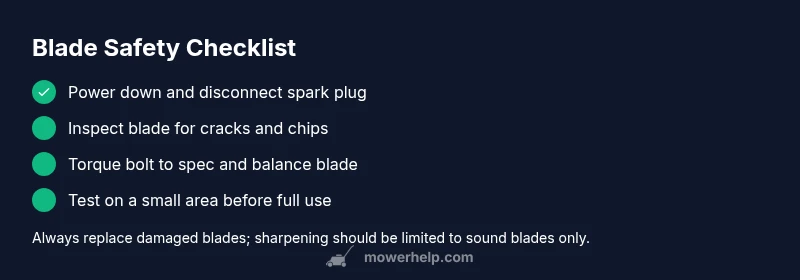
- Inspect blades for cracks or chips before mowing
- Always disconnect power before blade work
- Torque bolts to spec and balance the blade
- Replace damaged blades promptly to prevent damage
- Proper maintenance reduces future blade failures