How to Tell If Your Lawn Mower Carburetor Is Bad (DIY Guide)
Urgent guide: identify carburetor failure signs on a lawn mower, diagnose causes, and follow a safe, step-by-step fix to get your mower running again.


If your lawn mower won’t start or runs poorly, a failing carburetor is a common culprit. How to tell if carburetor is bad on lawn mower: look for hard starts, flooding, black smoke, surging RPMs, or engine dying after brief run. Quick checks include inspecting jets, float needle, and air filter, plus ensuring fresh fuel flow.
What You Need to Know Before Testing the Carburetor
If you’re trying to diagnose issues with your gas-powered mower, understanding how a carburetor affects performance is essential. This section addresses the question of how to tell if carburetor is bad on lawn mower and what you should inspect first. Common failure modes start with fuel quality and air delivery, then move to internal components like the float, needle valve, and jets. Before digging in, be clear about safety: disconnect the spark plug, work in a well-ventilated area, and keep fuel away from hot surfaces. According to Mower Help, many carburetor problems trace back to old, ethanol-blended fuel that varnishes passages and gums up the needle. This quick reality check helps you separate symptoms caused by the carburetor from those caused by the fuel system or air intake. The keyword here is prevention: a clean fuel system minimizes recurring carburetor issues and keeps your mower reliable season after season.
Common Signs Your Carburetor May Be Bad
The most telltale signs of carburetor trouble align with changes in how the engine starts, idles, and runs. Look for: hard starting or no starting at all, irregular idle or stalling, rich or lean running (black smoke or white exhaust), backfiring, and flooding with a strong fuel smell. If you notice fuel leaks around the carburetor or a camera-stable varnish crust on the exterior, those are red flags. Remember, other components can mimic carburetor problems, including a clogged air filter, a faulty spark plug, or a worn fuel line. The goal is to connect symptoms to the carburetor’s role in mixing air and fuel. Mower Help notes that varnish buildup from stale ethanol fuel is a frequent cause of reduced performance, especially in older machines.
Quick Checks You Can Do Without Dismantling
You don’t need to pull the carburetor apart to start diagnosing. Begin with the basics: drain old fuel and replace with fresh gasoline, check the air filter for dirt or oil, and inspect the fuel line for cracks or kinks. With the mower cool, inspect the carburetor for varnish around the exterior and look for fuel seepage at gaskets. A simple indicator is starting fluid: if there’s no improvement after basic checks, it may be time to look deeper at the internal components. These quick checks help you decide whether to proceed with cleaning or a full rebuild.
Diagnostic Flow: Symptom to Suspect to Solution
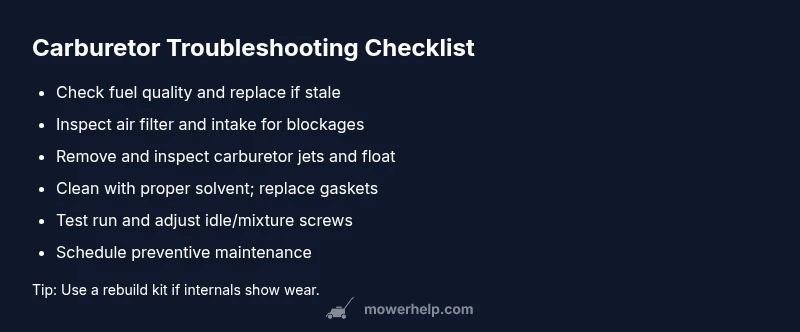
If symptoms persist after basic checks, move to a structured diagnostic flow. Start by confirming fuel quality, air intake, and spark via a quick spark plug check. Then, evaluate carburetor internals: jets, float, needle valve, and passageways. The flow moves from external checks to internal inspection, then to cleaning or rebuilding as needed. If the symptoms align with fuel mixture problems (rich/lean running), suspect jet or float issues first. Always document what you test and the outcome so you can retrace steps if needed.
Step-by-Step: Cleaning a Dirty Carburetor (High‑level Overview)
In many cases, cleaning the carburetor fixes throughput issues caused by varnish and gum. The overview here maps the essential steps and helps you prepare for the detailed Step-by-Step below. You’ll remove the carburetor, disassemble it carefully, clean jets and passages with approved cleaners, inspect the float and needle, reassemble with fresh gaskets, and reinstall. After reassembly, test engine operation at idle and under load. If performance is unchanged, you may need a rebuild kit or professional service.
Reassembly, Test Run, and Tuning
After reassembly, perform a careful test run: prime fuel, choke as appropriate, and start the engine in a ventilated area. Listen for smooth idle, consistent acceleration, and stable RPM. If the engine dies or surges, adjust the idle screw or mixture screw according to your mower’s model, and recheck for air leaks around gaskets. Tuning is a small adjustment that can yield big improvements, but avoid over-adjusting, which can cause flooding or lean running. Document any changes to replicate the successful setup in the future.
Safety Warnings and Common Mistakes to Avoid
Carburetor work involves fuel and small, sharp parts. Always disconnect the spark plug and work in a clean, well-ventilated area. Wear eye protection and gloves. Common mistakes include rushing reassembly, tearing gaskets, over-torquing screws, or using the wrong cleaner that can degrade rubber components. When in doubt, consult the repair guide for your mower model and stop if you encounter broken linkage or severely corroded parts.
Maintenance Tips to Prevent Carburetor Problems
Prevention is better than fix. Use fresh, ethanol-free gas when possible or stabilize fuel for longer storage. Run your mower long enough to burn off moisture after storage, and check for varnish inside the carburetor periodically. Replace fuel lines and gaskets as part of a routine maintenance schedule, and clean the air filter monthly during heavy mowing. A small maintenance habit reduces the likelihood of carburetor issues and extends the life of your mower.
Steps
Estimated time: 60-90 minutes
- 1
Power off and prep safely
Disconnect the spark plug, drain fuel, and move to a well-ventilated area. Gather tools: screwdrivers, wrenches, carburetor cleaner, a small brush, and a clean tray.
Tip: Label screws by location to ease reassembly. - 2
Remove the carburetor
Loosen mounting screws and detach the linkage and fuel line carefully. Cap the fuel line to prevent spillage.
Tip: Keep track of small parts with a magnetic tray. - 3
Disassemble with care
Note how parts fit together before removing; take pictures if needed. Remove the bowl, jets, and float; inspect gaskets for cracks.
Tip: Avoid forcing parts apart; rubber diaphragms are fragile. - 4
Clean and inspect
Soak parts in carburetor cleaner; brush varnish away gently. Check the jets for clogs and confirm the float moves freely.
Tip: Do not use metal tools on brass jets to avoid scoring. - 5
Replace worn parts
Install new gaskets, diaphragms, and, if available, a rebuild kit. Reassemble in the reverse order of disassembly.
Tip: Carefully align the float and needle valve to avoid leaks. - 6
Reinstall and connect
Reattach the carburetor to the intake, reconnect the fuel line and linkage, and ensure all screws are snug but not overtight.
Tip: Check for fuel leaks at all connections after start. - 7
Test start and tune
Start the engine in a safe area; check idle smoothness and response to throttle. Adjust idle and mixture screws per model to achieve stable RPM.
Tip: Make small adjustments and test, don’t overdo it. - 8
Document results
Note what was done and the engine’s response. Schedule maintenance to prevent recurrence (fuel stabilization, air filter care, etc).
Tip: Keep a simple maintenance log for quick future reference.
Diagnosis: Engine starts poorly or stalls after starting, with irregular idle
Possible Causes
- highOld or contaminated fuel causing varnish buildup in jets and passages
- highStuck float needle or clogged jets
- mediumClogged air filter or intake restricting air flow
Fixes
- mediumDrain old fuel, fill with fresh gas, and clean carburetor jets and passages
- mediumInspect/replace float needle and gaskets; check for varnish buildup
- easyReplace air filter and check for intake leaks; ensure seal is intact
- easyInspect fuel lines and primer bulb for cracks or leaks; replace as needed
Got Questions?
What are the most common signs of a bad carburetor on a lawn mower?
Hard starting, rough idle, stalling, backfiring, and flooding odors are typical signs of a faulty carburetor. If basic checks don’t resolve these symptoms, a deeper inspection of jets and float is warranted.
Common signs include hard starting and rough idle. If these persist after basic checks, a deeper carburetor inspection is needed.
Can a dirty carburetor still run with fresh fuel?
Yes, a dirty carburetor can restrict fuel flow and cause poor performance even if the fuel is fresh. Cleaning or rebuilding the carburetor often resolves the issue more effectively than fuel replacement alone.
A dirty carburetor can still cause problems even with fresh fuel. Cleaning usually helps.
Do I need to remove the carburetor to clean it?
In many cases you can clean the exterior and accessible jets without full removal, but removing the carburetor gives you better access to internal passages and a thorough cleaning.
Sometimes you can clean it without removing it, but full access helps a deeper clean.
Is it safe to run the mower with a carburetor leak?
No. Fuel leaks pose fire risks and can cause engine damage. Stop using the mower and fix leaks before running again.
No. A fuel leak is dangerous; fix it before you run the mower again.
When should I replace the carburetor vs. clean it?
If cleaning and rebuilding do not restore performance or if the internals are worn, replacing the carburetor is often the better long-term fix. Start with cleaning, then consider replacement if the issue persists.
If cleaning doesn’t fix it, replacement is usually the next step.
Can ethanol fuel cause carburetor varnish?
Yes. Ethanol fuel can lead to varnish buildup in passages and gum up the jets, especially in older mowers. Use ethanol-free fuel or fuel stabilizers when storing for extended periods.
Ethanol can varnish carburetor passages; use stabilizers or ethanol-free fuel when possible.
What maintenance helps prevent carburetor problems?
Regularly replace air filters, use fresh fuel with stabilizer, clean the carburetor as part of routine maintenance, and inspect lines and gaskets for cracks. A proactive schedule minimizes downtime.
Keep filters clean and fuel fresh to prevent carburetor problems.
Watch Video
The Essentials
- Identify signs early to prevent bigger problems
- Fresh fuel and clean air intake are foundational
- Carburetor cleaning fixes most varnish-related issues
- Only rebuild or replace parts if cleaning is ineffective
- Consult professional help for complex repairs