How to Stop a Lawn Mower from Backfiring: DIY Guide
Learn practical steps to stop a lawn mower from backfiring, including ignition checks, carburetor cleaning, fuel system fixes, and simple maintenance for homeowners and DIY enthusiasts.


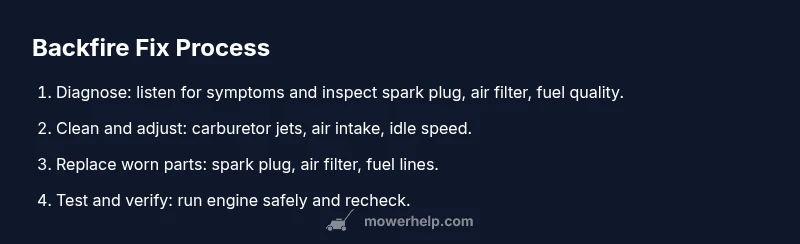
In this guide you will learn how to stop a lawn mower from backfiring by diagnosing ignition, fuel, and air issues, and performing safe, step-by-step fixes. You’ll start with a quick safety check, then inspect the spark plug, air filter, and carburetor, followed by fuel-system adjustments. The goal is a smooth idling, clean exhaust, and reliable starting.
Common causes of lawn mower backfires
Backfiring is a loud symptom of unburned fuel igniting in the exhaust. In small engines like lawn mowers, backfires are usually caused by issues in the fuel-air mix, ignition timing, or exhaust flow. According to Mower Help, backfires are most often preventable with routine maintenance. The common culprits include a carburetor that is dirty or out of adjustment, a spark plug that is worn or fouled, a clogged air filter that restricts air, and old or ethanol-laden fuel that doesn’t burn cleanly. Other factors include starting in the wrong gear, a choke left on too long, or a hot engine that cools too slowly after a run. Temperature can exacerbate backfires, especially in engines that run lean or with an overly rich fuel mixture. Additionally, a damaged muffler or exhaust where unburned fuel collects might ignite when it reaches the hot metal. Finally, ignition timing drift or a failing kill switch can cause the spark to fire at the wrong moment, which increases the chance of backfire during startup or acceleration. Understanding these causes helps you plan a safe, systematic repair approach rather than guessing. In this guide, you’ll learn a practical, step-by-step process to identify and fix the most common culprits, with safety as the top priority. The Mower Help team emphasizes staying within safe limits and using proper tools throughout the repair.
Quick diagnostic checklist before you start
Before you touch anything, ensure you are in a safe, well-ventilated area and that the mower is cool. Disconnect the spark plug boot to prevent accidental starting. Then inspect:
- Fuel quality and freshness; avoid old or ethanol-heavy fuel that can varnish passages.
- Air intake and filter; a clogged filter restricts air and can cause rich fuel mixture.
- Spark plug condition and gap; a fouled or misgapped plug can misfire and contribute to backfiring.
- Choke position and idle setting; leaving the choke on too long or setting the idle too high can lead to unburned fuel in the exhaust.
- Exhaust condition and muffler; a damaged or restricted exhaust can trap exhaust gases and lead to backfires.
According to Mower Help analysis, the majority of backfires stem from ignition or fuel-system issues, so start with those areas and document any changes you observe after each fix.
Ignition system and timing: what to check
The ignition system is a common culprit when a mower backfires. Start by inspecting the spark plug: remove it and check for fouling, glazing, or oil contamination. If the electrode is worn or the ceramic is cracked, replace the plug. Set the gap to the manufacturer’s specification using a feeler gauge. Inspect spark plug wires and the kill switch for wear or loose connections; a loose ground or damaged wire can cause irregular firing. If your mower has a flywheel key, a sheared key can throw timing off, leading to backfires during startup or throttle changes. In most consumer mowers, timing is fixed, but a worn key or misalignment can mimic timing issues; reseating or replacing the key is a specialized repair that may require a service manual. After these checks, reconnect the spark plug boot and prepare for a controlled test run. The goal is a clean ignition sequence with no ignition delays that would allow fuel to escape unburned to the exhaust. The Mower Help team notes that many timing-related backfires are due to a damaged flywheel key after impact or improper maintenance.
Carburetor and fuel system: cleaning and adjustment
Carburetor health is a frequent source of backfiring. Start by ensuring fuel lines are secure and not cracked. Remove the air-fuel intake area and inspect the carburetor for varnish, gum, or sludge on the jets and passages. Use a can of carburetor cleaner to spray jets and passages; avoid forcing anything that could bend jets. If your mower uses a float-type carburetor, check the float level and replace a saturated float or a worn needle valve. Reset the idle speed to the manufacturer’s recommended RPM; an idle too high can pull excess fuel into the exhaust. For powdered ethanol-blended fuels, a simple fuel stabilizer and fresh gasoline can reduce varnish and improve combustion. If adjustments don’t yield a crisp throttle response, consider a complete carburetor rebuild or professional cleaning. The goal is to achieve consistent fuel metering so unburned fuel isn’t dumped into the exhaust during throttle transitions. Regular maintenance reduces backfiring risk over time and extends engine life.
Air intake and exhaust considerations
A restricted air intake or exhaust system can cause backfiring by creating pressure imbalances that force unburned fuel into the exhaust. Inspect the air filter; replace a dirty or damaged filter with the correct OEM or compatible part. Check intake gaskets for leaks; even small leaks can alter air-fuel ratios. Inspect the muffler and exhaust outlet for obstructions or carbon buildup that can trap hot exhaust gases; a blocked exhaust can cause backup ignition. If your mower uses an air intake duct, ensure it is sealed and intact. After replacing filters or cleaning passages, run the engine at a fast idle to verify smooth acceleration and teal exhaust with no bangs or puffs. The goal is a balanced air-fuel mix and free exhaust flow to eliminate backfire triggers.
Testing, verification, and a proactive maintenance plan
After performing fixes, test the mower in a safe, open area. Start at low throttle, then gradually rev to operating speed while listening for any popping or backfires. If backfires persist, stop and recheck the most recent fix; sometimes multiple components must be addressed together. Keep a maintenance log, noting fuel type, air-filter condition, spark plug replacements, and carburetor cleanings to detect patterns over time. Establish a simple maintenance schedule: replace spark plug annually or every 100 hours, change air filter every 25-50 hours or monthly in dusty environments, and run a carburetor cleaner cycle every 6-12 months. The Mower Help team recommends aligning your plan with your mower’s manual and performing routine checks before each mowing session to prevent backfires before they start.
When to seek professional help and what to expect
If backfires persist after you’ve completed the basic maintenance steps, or if you notice damaged wiring, a warped flywheel, or a leaking carburetor, it’s time to call a professional. A mower repair technician can diagnose timing, compression, and carburetor issues with specialized tools. When you bring the mower in, provide a brief history of the problem, include recent maintenance actions, and list all observed symptoms. For homeowners, a proactive maintenance plan focused on ignition and fuel quality is the most cost-effective way to minimize backfires and extend the engine’s life.
Safe testing and verification (final check list)
Perform a final test in a clear outdoor area. Start the mower with the choke on briefly, then advance the throttle to mid-range and finally to full speed. Listen for pops, bangs, or backfires; any sound indicating unburned fuel is still present means re-checking ignition, carburetion, and air intake sections. If you observe smoke or a flame puff near the muffler, shut off the engine immediately and re-evaluate fuel delivery and exhaust flow. Use a clean rag to inspect the spark plug after each test to confirm consistent firing. When everything runs smoothly, document your steps and continue with routine maintenance to prevent future backfires and ensure optimal performance. Remember, the safety priority is to avoid hot exhaust and moving parts while testing.
Tools & Materials
- Spark plug wrench(to remove or tighten spark plugs)
- Replacement spark plug(match OEM spec and gap)
- Gap tool / feeler gauge(set precise spark plug gap)
- Carburetor cleaner spray(clean jets and passages)
- Screwdrivers (flat & Phillips)(carburetor and cover screws)
- Rags and gloves(keep hands clean and safe)
- Fresh gasoline & fuel stabilizer(avoid varnish and moisture)
- Air filter replacement(match model for proper fit)
- Pliers or small clamps(handle hoses or clamps if needed)
- Safety glasses(eye protection during maintenance)
Steps
Estimated time: 45-90 minutes
- 1
Disconnect spark plug and prepare safety
Cool the engine completely and disconnect the spark plug cap to prevent accidental starts. Remove any loose clothing and wear gloves. This first step protects you from sparks and moving parts while you inspect essential components.
Tip: Double-check that the spark plug boot is fully disconnected before touching the plug. - 2
Inspect and replace spark plug if needed
Remove the spark plug and inspect for fouling, oil, or heavy wear. If the electrode is worn or the ceramic cracked, replace it with a correctly gapped plug. Reconnect the cap after reinstalling.
Tip: Gap the new plug to the mower’s spec before installation. - 3
Check ignition wiring and kill switch
Inspect the ignition wires for cracks or corrosion. Ensure the kill switch grounds properly when engaged; a sticking switch can cause misfires. If wiring looks damaged, replace or repair it before testing again.
Tip: A loose ground can mimic ignition timing problems; fix ground connections first. - 4
Inspect and clean air filter
Remove the air filter and inspect for dirt and oil; replace if dirty or damaged. A clogged air filter restricts airflow, causing a lean misfire that can backfire. Clean or replace and reassemble.
Tip: Consider replacing every mowing season or more often in dusty environments. - 5
Clean carburetor jets and adjust idle
Remove the carburetor cover if accessible and spray jets with carb cleaner; avoid bending internal components. Check idle speed; set to manufacturer guidelines to prevent excessive fuel delivery at idle.
Tip: Use a light touch when cleaning jets to avoid damage. - 6
Evaluate fuel quality and lines
Drain old fuel if it smells sour or contains varnish; fill with fresh gasoline and a fuel stabilizer. Inspect fuel lines for cracks or signs of wear; replace as needed to ensure clean delivery to the carburetor.
Tip: Avoid ethanol fuel in hot weather or long storage; stabilize fuel if storage is expected. - 7
Test run and verify backfire absence
Reconnect all components and start at a low throttle, then gradually ramp up to normal operation. Listen for bangs or puffs; if they continue, recheck the most recently adjusted components. If success, proceed to a brief field test.
Tip: Test in an open area away from buildings and dry vegetation.
Got Questions?
What causes backfire in a lawn mower?
Backfires are typically caused by ignition timing issues, dirty or worn spark plugs, a clogged air filter, or a dirty carburetor that delivers an improper fuel-air mix. Poor fuel quality and an improper choke can also contribute to backfiring.
Backfires usually come from timing or fuel-air mix problems, like a dirty spark plug or clogged air filter. A quick check of these parts often fixes the issue.
Can backfiring damage the engine?
Repeated backfiring can indicate ongoing ignition or fuel-system problems that may stress exhaust components or the muffler. It’s best to address the root cause promptly to prevent further wear.
Yes, frequent backfiring can stress the exhaust and other components if left unchecked. Fixing the root cause is important.
Is backfiring normal when starting in cold weather?
A small backfire during cold starts can happen if the mixture is too rich or the choke is left on too long. If backfires persist after the engine warms up, investigate ignition, fuel, and air components.
A brief backfire at cold start can happen, but if it keeps happening after warming up, you should check the usual suspects.
Should I adjust the idle before checking the spark plug?
It’s usually better to check ignition components first and then adjust idle to spec. An incorrect idle can mask underlying problems with fuel metering.
Check the spark plug and ignition area first, then adjust idle to the recommended setting.
How often should I clean the carburetor?
Carburetors should be cleaned as part of preventive maintenance, typically every 6–12 months depending on use, or whenever performance drops. A clogged carburetor is a common backfire source.
Clean the carburetor as part of your regular maintenance, usually every 6 to 12 months.
Can ethanol fuel cause backfire?
Yes, ethanol blends can varnish passages and cause lean conditions that lead to backfires. Using fresh fuel and stabilizers helps prevent this.
Ethanol can contribute to backfires if it gums up carburetor passages; use fresh fuel and stabilizers.
Watch Video
The Essentials
- Identify whether ignition, fuel, or air issues trigger backfires
- Inspect spark plug, air filter, and carburetor in sequence
- Use fresh fuel and proper idle settings to prevent backfires
- Test safely after each adjustment to verify results
- Maintain a routine to prevent future backfires