Lawn Mower Starts But Does Not Stay Running: Troubleshooting Guide
A practical, step-by-step guide to diagnose and fix a lawn mower that starts but dies quickly. Focus on fuel, air, ignition, and maintenance to restore reliable startup and running.


Most often, a lawn mower that starts but does not stay running is choking on fuel or air. Begin with fresh fuel and a clean air filter, then inspect the spark plug and carburetor for varnish or clogs. Check the primer bulb and safety shutoffs, and ensure the choke isn’t stuck. If the problem persists, follow the diagnostic flow in this guide.
Overview: Why a lawn mower starts but does not stay running
If your lawn mower starts but does not stay running, you’re not alone. The symptom points to a problem with how fuel, air, and ignition reach the engine during operation. According to Mower Help, the most frequent culprits are simple, testable issues rather than complex failures. By approaching the problem in a logical order, you can identify root causes without tearing the machine apart. The keyword lawn mower starts but does not stay running is a signal to check three core systems first: the fuel system, the air intake, and the ignition circuit. Start with the easiest, least invasive checks—fuel quality, air filter condition, and spark plug gap—to rule out the obvious. Then move to the carburetor and safety interlocks, which are common sources of intermittent stalling.
This article mirrors a practical, homeowners-first approach: test, verify, and fix, not guess. As you work, keep safety in mind and test after each adjustment. The guidance here applies to most gas-powered mowers, regardless of brand, age, or model. Regular maintenance reduces the chance of stalling and teaches you a repeatable process for future issues.
Common Causes
- Stale or contaminated fuel
- Gasoline loses volatility and can varnish fuel passages, starving the engine after initial start. Always use fresh, properly labeled fuel and add a fuel stabilizer if storage times are longer than a few weeks.
- Dirty air intake or clogged air filter
- A restricted air path forces the engine to run rich, leading to rough running and stalling. Replace or clean the filter and check the housing for debris.
- Faulty or worn spark plug
- A weak or fouled spark plug can misfire after starting, causing the engine to die or misfire. Inspect gap, wear, and cleanliness; replace if in doubt.
- Clogged carburetor or varnish in fuel passages
- Carbon deposits can block jets and float needle operation, causing lean or rich running that won’t sustain idle. Carburetor cleaning or rebuilding may be necessary.
- Faulty primer bulb or fuel line issues
- A leaky or cracked primer bulb or a kinked line can cut off fuel delivery as soon as momentum is lost. Inspect lines for cracks, resistance, and proper seating.
- Ignition and safety interlocks
- Faulty kill switches or safety levers can cut ignition unexpectedly. Check that all switches are aligned and functioning, and ensure safety features aren’t stuck.
- Choke linkage and throttle misadjustment
- If the choke stays engaged or lever is out of sync, the engine can stall after initial start. Verify linkage movement and correct settings for run mode.
- Vacuum leaks and gasket wear
- A loose air seal or cracked gasket can lean the mixture after start, causing shutdown. Inspect carb boot and gaskets for wear.
Quick Checks You Can Try Right Now
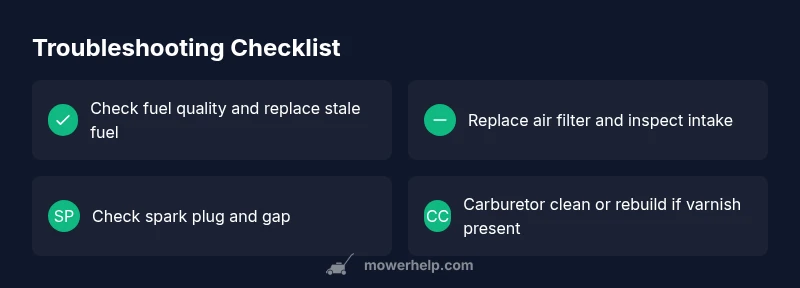
- Verify fuel quality: drain a small amount from the carburetor bowl if you know how, and replace with fresh fuel.
- Inspect the air filter: remove, clean, or replace if dirty; a clogged filter is a common cause of stalling.
- Check the spark plug: remove and inspect for fouling, replace if necessary, and gap to spec.
- Confirm safety interlocks: press and release the operator presence control and ensure it resets properly.
- Test the choke: ensure the choke opens properly after engine fires and doesn’t remain engaged.
- Listen for carburetor symptoms: a hissing sound or strong idle drop suggests air intake or fuel flow issues; these require deeper inspection.
Diagnostic Flow: Symptom → Diagnosis → Solutions
When the engine starts but stalls, begin with the simplest checks (fuel and air) and move toward ignition components. If fresh fuel and a clean filter don’t fix the issue, you’re likely looking at carburetor varnish or a faulty safety shutoff. Each step should be followed by a quick test to confirm whether the issue is resolved. This flow helps prevent unnecessary disassembly and guides you to the right repair path with confidence.
STEP-BY-STEP: Most Common Fix (Gas Mowers)
- Safety first: disconnect the spark plug wire and ensure the mower is on a clean, flat surface. Inspect fuel and air components.
- Replace stale fuel with fresh fuel and stabilize if you store the mower long-term. Run the engine briefly to check if it stays running.
- Clean or replace the air filter; if the filter is new but the engine still stalls, inspect the carburetor for varnish and clean jets.
- Inspect the spark plug; replace if fouled or worn, and verify proper gap.
- Check the safety interlocks and choke linkage for sticking or misalignment; adjust or replace if needed.
- Perform a controlled test run; if the mower still dies, you may need a carburetor rebuild or professional service.
Tip: Work methodically and re-test after each fix to isolate the contributing factor.
TIPS & WARNINGS
- Safety first: always disconnect the spark plug wire before working on the mower.
- Use protective gloves and eye protection when handling fuel and the carburetor.
- Do not bypass safety interlocks; faulty switches should be repaired, not ignored.
- Work in a well-ventilated area when dealing with fuel and exhaust.
- If you’re unsure about carburetor cleaning, seek professional help to avoid internal damage.
- Regular maintenance reduces the likelihood of stalling and extends mower life.
Steps
Estimated time: 30-45 minutes
- 1
Ensure safety and prep
Shut off the mower, disconnect the spark plug wire, and place the mower on a flat, stable surface. Gather basic tools and fire-safe lighting. This prevents accidents and makes testing safer.
Tip: Always visually confirm the spark plug is disconnected before working near the engine. - 2
Test fuel and fuel system
Check fuel in the tank, confirm it's fresh, and drain any old fuel from the carburetor if possible. Refill with fresh gasoline and start the mower for a quick test.
Tip: Use a fuel stabilizer if you know you’ll store fuel longer than a couple weeks. - 3
Inspect air filter and intake
Remove the air filter and inspect for dirt, oil, or debris. Clean or replace the filter and ensure the air intake is clear of obstructions.
Tip: A clean air filter can dramatically improve running consistency. - 4
Check ignition components
Remove and inspect the spark plug; clean or replace if fouled. Gap the electrode to the manufacturer's specification and reconnect safely.
Tip: A weak spark is a common cause of stalling after initial start. - 5
Evaluate carburetor and choke
Inspect the carburetor for varnish and blockages; clean jets and passages. Confirm the choke linkage moves freely and returns to run position.
Tip: Avoid forcing components; use appropriate carburetor cleaner and follow service manual. - 6
Test run and safety verification
Reassemble, prime as needed, and start the mower. Observe whether it stays running, then perform a quick test cut to confirm stability.
Tip: If it dies again, you may need a carburetor rebuild or professional service.
Diagnosis: Engine starts and then stalls or dies shortly after ignition
Possible Causes
- highFuel quality or stale fuel
- highClogged air filter or air intake
- mediumDirty or worn spark plug
- highCarburetor varnish or clogged jets
- mediumFaulty safety switch or kill switch
- lowChoke linkage out of adjustment
Fixes
- easyDrain old fuel and fill with fresh fuel, add stabilizer if storing
- easyClean or replace air filter; inspect housing for debris
- easyInspect/replace spark plug; gap to specification
- mediumClean carburetor jets and passages; rebuild if varnish persists
- mediumInspect safety interlocks; repair or replace faulty switches
- easyAdjust choke linkage to ensure proper run position
Got Questions?
Why does my lawn mower start but die after a few seconds?
Common causes are stale fuel, a clogged air filter, dirty carburetor, or ignition issues. Start with fuel, air, and spark checks before considering carburetor work.
If your mower starts but dies, check fuel, air, and spark first; ignition or carburetor issues may follow.
Can a bad spark plug cause stalling?
Yes. A worn or fouled spark plug can cause misfiring and shutdown after initial ignition. Replace and gap to spec.
A bad spark plug can cause the engine to stall after starting.
Is stale fuel the main reason for this issue?
Stale or varnished fuel can clog fuel passages and disrupt running. Replacing fuel and cleaning the carburetor often resolves the problem.
Stale fuel is a common culprit; fresh fuel often fixes it.
When should I call a professional?
If cleaning and basic replaces do not restore steady running, a carburetor rebuild or interlock diagnostics may require professional service.
If basic fixes fail, consider professional carburetor service or interlock diagnosis.
How can I prevent this problem in the future?
Schedule regular filter and spark plug checks, use fresh fuel with stabilizer when needed, and perform seasonal carburetor maintenance.
Regular maintenance keeps it from stalling in the future.
What safety checks are essential during troubleshooting?
Always disconnect the spark plug, wear eye protection, and work on a stable surface. Never bypass safety interlocks.
Prioritize safety: disconnect spark plug and use proper PPE.
Watch Video
The Essentials
- Check fuel and air delivery first when stalling occurs
- Clean or replace carburetor and air filter as needed
- Inspect spark plug and safety switches for failures
- Follow a step-by-step diagnostic flow to isolate the cause
- Prevent future stalls with regular mower maintenance