Lawn Mower Restart Troubleshooting: Quick Guide for 2026
Learn proven, safe steps to diagnose and fix a lawn mower that won’t restart after running. Systematic checks, practical fixes, and prevention tips for homeowners and DIYers.


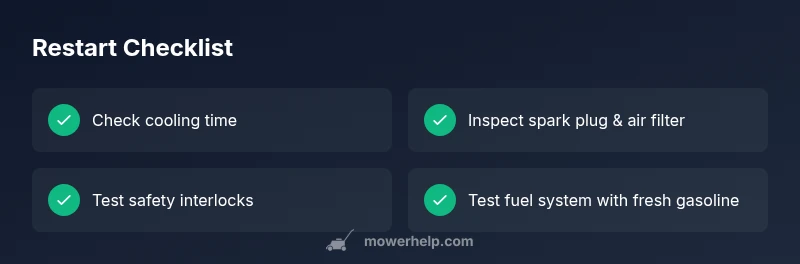
Most often, a lawn mower won't restart after running due to overheating or a flooded carburetor, or a faulty safety/kill switch. Start by letting the engine cool for 5–10 minutes, then inspect the spark plug, air filter, and fuel supply. If it still won’t start, follow the diagnostic flow below.
Why your lawn mower won't restart after running
If you're troubleshooting a lawn mower won't restart after running, you're not alone. In many cases the issue starts with a safety shutdown triggered by overheating, a flooded carburetor, or a faulty kill switch. This guide explains how to approach the problem quickly and safely. Start by letting the engine cool for 5–10 minutes, then inspect the spark plug, air filter, and fuel supply. If the mower still won't restart, continue with the diagnostic flow to isolate the root cause and apply the correct fix. The guidance is written for homeowners and DIY enthusiasts who want to resolve the problem without a shop visit. Document what you observe and proceed methodically.
Check the basics before you power on again
Before you rush to restart, ensure you follow safety protocols and the mower is in a stable environment. Allow the engine to cool completely to avoid scalds or fire risk, then verify the safety interlocks are functioning. Confirm the ignition switch, PTO lever (or blade engagement), and kill switch are in the correct positions and not stuck. A simple mispositioned switch is a frequent cause of a restart failure. Also check for loose battery connections on electric-start models. Document symptoms (noise, smells, and smells), which helps narrow down the cause and speeds up the repair.
Common culprits: overheating, carb flooding, and fuel issues
Overheating remains a top culprit: engines have safety protections that shut down to prevent damage, and that shutdown can prevent immediate restart. Carb floods often occur when choked too long or restarted soon after shutdown, leaving fuel in the intake. Fuel quality matters: stale gasoline or varnish buildup can clog jets and reduce spark efficiency. Air flow affects starting as well; a dirty air filter or blocked intake reduces combustion. Finally, ignition components like spark plugs and ignition coils degrade over time, reducing the chance of a successful restart. Understanding these factors helps you triage quickly.
The role of safety switches and ignition components
Modern mowers rely on interlocks to prevent injury. If a safety switch, blade brake, or kill switch fails, the mower may not restart even after cooldown. Check that all safety features engage when the handle is released and that no tarp or debris interrupts interlocks. Inspect the spark plug for wear, fouling, or incorrect gap. On electric-start models, test the battery, solenoid, and wiring for corrosion or loose connections. A faulty interlock is a common yet overlooked restart blocker.
Diagnostic mindset: symptoms guide your diagnosis
Approach troubleshooting like a scientist: observe, hypothesize, test, and verify. Note symptoms such as whether the engine turns over but sputters, whether it clicks, or if there is no response at all. Correlate symptoms with conditions (hot vs. cold, choke position, fuel freshness). Use a process of elimination: start with low-effort checks (cooling, interlocks) and move toward component tests (spark plug, fuel, carburetor). Safety first—disconnect spark plug wires and drain fuel when testing parts that could move unexpectedly.
Simple fixes you can try today
Tackle fixes in a logical order, starting with the simplest. Let the engine cool, then check the spark plug and replace if fouled. Inspect and clean the air filter; replace if damaged. Confirm fuel is fresh and properly mixed (for two-stroke) or clean and stable (for four-stroke). If the carburetor might be flooded, drain the bowl and allow the correct level of fuel to resume. Check safety interlocks and wiring, ensuring nothing is loose or damaged. Re-attempt starting with the choke in the proper position. If you can start but it dies quickly, you may need a more thorough carburetor cleaning.
When to seek professional help
If the mower still won't restart after trying the above steps, it's wise to contact a qualified small-engine technician. Persistent issues may involve internal carburetor damage, ignition coil failure, or electrical problems that require professional diagnostics. Don't ignore unusual smells, smoke, or fuel leaks. A pro can diagnose and replace worn components accurately and safely.
Prevention: maintain to prevent restart problems
Preventive maintenance reduces restart problems and extends engine life. Create a simple routine: change oil and filter at recommended intervals, use fresh fuel and a fuel stabilizer, replace air filters regularly, inspect spark plugs, and test safety interlocks. Keep carburetor clean by running the mower with a small amount of carburetor cleaner if recommended by the maker. Store fuel properly and follow a seasonal maintenance schedule so the mower remains reliable when you need it most.
Steps
Estimated time: 30-60 minutes
- 1
Power down and secure the mower
Shut off the engine, unplug the spark plug wire, and remove the battery if your mower uses electric start. Move to a well-ventilated area and wear gloves to protect your hands. Confirm the blade is not moving and keep bystanders away.
Tip: Always disconnect spark plug wire before touching moving parts. - 2
Let it cool and verify safety interlocks
Allow the engine to cool for at least 10 minutes to prevent burns and damage. Check that all safety interlocks are intact and unblocked by debris. Ensure you can engage and release the blade brake or PTO safely.
Tip: If interlocks feel sticky, do not force them; note their condition for maintenance. - 3
Check spark plug and air filter
Remove the spark plug and inspect for fouling or wear; replace if necessary. Remove and clean or replace the air filter so the engine can breathe properly. Re-gap the spark plug to factory specs if you know the correct gap.
Tip: Keep spare spark plugs and a small gap gauge on hand. - 4
Inspect the fuel system and carburetor
Check for stale fuel; drain and refill with fresh gasoline. If you suspect a flooded carburetor, drain the bowl and allow fuel to settle before attempting restart. Clean visible fuel lines and check for cracks or leaks.
Tip: Use fresh fuel and stabilize it for storage. - 5
Test starting with proper choke position
Reconnect the spark plug, set the choke to the recommended position, and attempt a safe, controlled start. If the engine coughs or dies, adjust the choke and try again with a lighter touch to the throttle.
Tip: Do not force a start if you hear unusual noises or smells. - 6
Final verification and note-taking
If the mower starts, run it for a few minutes to ensure steady operation. If it stalls again, record exactly what you did and observed. This log helps you or a technician diagnose the issue faster.
Tip: Keep a simple troubleshooting log for future references.
Diagnosis: Lawn mower won\'t restart after running
Possible Causes
- highEngine overheating triggering safety shutoff
- mediumFlooded carburetor due to improper restart or excessive choking
- mediumFaulty kill switch or safety interlock
- lowDegraded fuel system or stale fuel
Fixes
- easyLet the engine cool completely (10 minutes minimum) before attempting to restart
- easyInspect and replace the spark plug if fouled; clean or replace air filter
- easyTest safety interlocks and kill switch; ensure PTO/clutch is engaged properly
- easyCheck the fuel: drain stale fuel, refill with fresh gasoline, and replace stale fuel if needed
Got Questions?
Why does my lawn mower stall and not restart after running?
Stalling after running is commonly caused by overheating, a flooded carburetor, or a faulty safety switch. Cooling the engine, inspecting the ignition components, and verifying safety interlocks usually resolves the issue. If problems persist, follow the diagnostic flow for deeper checks.
Overheating, a flooded carburetor, or a faulty safety switch often cause stalling after running. Let it cool, inspect key components, and check safety interlocks to identify the issue.
Can bad fuel cause restart problems?
Yes. stale fuel or varnish can clog jets and reduce starting reliability. Drain old fuel, refill with fresh gasoline, and consider using a stabilizer for storage to prevent future issues.
Old fuel can clog carb jets and cause starting trouble. Drain it, refill with fresh fuel, and use stabilizer in storage.
What safety switches could prevent restart?
Interlocks on handles, blades, and PTO systems can prevent restarting. Ensure all switches engage correctly and are not blocked by debris or damaged wiring.
Interlocks like handle and blade switches can block restart if they don\u2019t engage. Check that they operate freely and aren\u2019t damaged.
Should I clean the carburetor?
Carburetor cleaning is often needed if fuel varnish or debris blocks jets. Start with a basic carburetor spray and inspection; deeper cleaning may require professional service.
Carburetor cleaning is common when jets are varnished or blocked. Start with a cleaner spray and inspect jets; deeper cleaning might need a pro.
Is a dead battery a common cause for electric-start mowers?
Yes. A weak or dead battery can prevent starting. Check the battery voltage, connections, and replace if it doesn\'t hold a charge.
A weak battery can stop an electric-start mower from starting. Check voltage and replace if needed.
How often should I perform maintenance to prevent restart issues?
Follow the manufacturer\'s schedule for oil changes, air filter replacement, spark plug checks, and fuel system maintenance. Regular care reduces restart problems and extends engine life.
Stick to the maker\'s maintenance schedule to keep restart problems rare and the mower reliable.
Watch Video
The Essentials
- Cool the engine before troubleshooting
- Check spark plug and fuel first
- Interlocks and safety switches are common restart blockers
- Maintain regular service to prevent future restart problems