What petrol does lawn mower use? A practical guide for homeowners
Learn the fuel requirements for common lawn mowers, including octane, ethanol limits, storage tips, and model-specific notes to keep your mower reliable season after season.


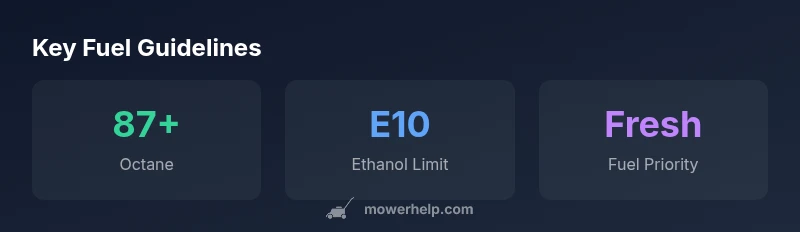
For most petrol lawn mowers, use regular unleaded petrol with an octane rating of 87 or higher. Store fuel fresh, and avoid gasoline with ethanol content above 10% (E10) unless your manual confirms compatibility. Some newer models tolerate higher ethanol blends, but always verify in your mower’s user guide. Failing to follow these guidelines can cause starting problems, deposits in the carburetor, and reduced engine life.
What petrol does lawn mower use: core principle
Most walk-behind and ride-on lawn mowers run on petrol (gasoline) designed for small engines. The essential rule is simple: use fuel that matches the engine’s specifications and avoid shortcuts that can cause starting issues, reduced power, or carburetor deposits. The keyword what petrol does lawn mower use is not a fixed brand rule; instead, it reflects general guidance across most manufacturers. In practice, this means choosing regular unleaded gasoline with a minimum octane rating of 87 and limiting ethanol content to what the manual permits. Mower engines are built to tolerate everyday gasoline, but they are sensitive to fuel quality, moisture, and long storage periods. For homeowners, this translates into using fresh, properly stored fuel and avoiding extended storage of mixed or contaminated gasoline. The Mower Help team emphasizes that sticking to the recommended fuel type, keeping the storage area clean, and labeling fuel containers helps prevent avoidable issues.
Octane rating and fuel quality
Octane rating is not a speed rating; it indicates resistance to knocking and pre-ignition. For most petrol lawn mowers, 87 octane regular unleaded is perfectly adequate. Some premium brands advertise higher octane fuels, but using them does not automatically increase mowing performance. What matters more is fuel quality: clean gasoline without water, particulates, or severe ethanol blends. Ethanol absorbs moisture, which can lead to phase separation in older engines and attract gum and varnish deposits in the carburetor. If you live in a humid climate or store fuel for months, consider using an ethanol-fighting approach: purchase fresh fuel, rotate stock, and, if you choose, stabilize with a fuel additive that your mower’s manual approves. Always follow the mower manufacturer’s octane and ethanol guidance to avoid warranty concerns.
Ethanol in gasoline and mower compatibility
E10, a gasoline blend containing up to 10% ethanol, is widely available and typically compatible with most modern small engines. However, not all engines tolerate ethanol equally well. Some older or high-mileage mowers may experience soft gaskets, clogged carburetors, or degraded fuel lines when exposed to ethanol blends for long periods. Always check your owner's manual; it will specify whether the engine supports ethanol blends and if any maintenance steps are required after storage. If in doubt, opt for ethanol-free fuel or use a trusted stabilizer as directed by the manufacturer. Remember that ethanol can alter fuel volatility and air-fuel mixture, especially in cold-start conditions or during quick engine warmups.
Ethanol-free fuels: pros, cons, and practical tips
Ethanol-free gasoline is preferred by some owners because it minimizes moisture absorption and reduces the risk of carburetor varnish. The downside is cost and limited availability in some regions. If you decide to use ethanol-free fuel, ensure you still meet the engine’s octane requirements. For many homeowners, a standard E10 blend provides a reasonable balance of price, availability, and performance, with the caveat that ethanol can still attract moisture if stored poorly. When storing any fuel, keep it in an approved container, away from heat sources, and out of reach of children. Label containers clearly and rotate stock to maintain freshness. In short, there is no universal best choice; the right decision depends on your mower model, climate, and storage habits.
Fuel storage, freshness, and stabilizers
Fuel freshness is critical for starting reliability and engine longevity. Gasoline starts to degrade while sitting in a can or tank, especially in warm conditions. If you store fuel for more than a month, consider using a fuel stabilizer and seal the container tightly. A stabilizer helps minimize gum formation and phase separation, but it cannot restore fuel that has already degraded. Always add stabilizer at the recommended dose and dispose of old fuel according to local rules. Label your fuel canisters with the date and octane rating so you can rotate stock effectively. When you refuel, wipe the cap and keep spills away from hot surfaces. By treating fuel with care, you reduce the risk of starting issues and power dips during mowing sessions.
Choosing fuel for different mower types and warranties
Gas mowers and small engines share fuel requirements, but riding mowers in heavier usage scenarios may have stricter recommendations or warranty conditions. Some manufacturers specify a minimum octane, a permitted ethanol range, and a disclaimer about additives. Always verify with the manual or dealership if your mower is under warranty. If your model has a carburetor with ethanol compatibility notes, follow those directions precisely. In many cases, using the wrong petrol can void warranties or increase maintenance needs. Take time to read the label, choose a reputable retail source, and avoid cheap or unknown brands. This careful approach helps ensure reliable starting and smooth operation across seasons.
Common mistakes and fueling pitfalls
One of the most common mistakes is using gasoline past its prime or not sealing containers properly. Old fuel can cause hard starting, rough idling, and poor acceleration. Another pitfall is failing to address ethanol-related effects, such as swollen gaskets or degraded rubber hoses. Always fill the mower outdoors after checking the fuel cap for proper sealing and ensure you’re not introducing moisture into the tank. Overfilling can lead to spills, which pose safety hazards; always brim the tank to the recommended level. Finally, do not mix oil with gasoline in four-stroke engines; add oil separately as required by the engine’s design. By avoiding these mistakes, you improve reliability and reduce maintenance time.
Model-specific fuel recommendations and warranty notes
Consult your mower’s owner manual for model-specific fuel requirements. Some models explicitly state compatibility with E10 or higher ethanol blends, while others recommend ethanol-free fuels. If you are unsure, contact the manufacturer or a qualified service center before refueling. Fuel-related warranty considerations vary by brand and region, so keep receipts and document your fueling choices if a warranty claim arises. In practice, following the official guidance minimizes risk and helps maintain performance across seasons.
Quick-start fueling checklist for homeowners
- Locate the manual specification for octane, ethanol tolerance, and recommended fuel type. 2) Choose a fresh batch of petrol within those limits and shake off any stored concerns about price. 3) If storing, add a compatible stabilizer and label the container. 4) Check for water or sediment in the fuel can and use a clean funnel when refueling. 5) After refueling, run the mower for a few minutes to ensure a clean operation and warm-up. This practical checklist helps ensure reliable starts and consistent mowing performance.
Fuel guidelines for common lawn mowers
| Aspect | Recommendation | Notes |
|---|---|---|
| Octane rating | 87+ octane | Regular unleaded is standard for most mowers. |
| Ethanol content | Up to E10 | Most manufacturers support up to 10% ethanol; check manual. |
| Fuel storage | Fresh fuel; stabilizer | Stabilizers extend life; store away from heat. |
| Additives | OEM-approved only | Avoid unverified additives that could damage carburetors. |
Got Questions?
Can I use premium gasoline in a lawn mower?
Premium gasoline (higher octane) is not necessary for most mowers; 87 octane is sufficient and does not guarantee better performance. If your manual specifies otherwise, follow those instructions.
Premium gas isn’t usually needed; 87 octane covers most mowers.
Is ethanol-free fuel required for my mower?
Most modern mowers tolerate up to E10. Ethanol-free fuel is optional but can reduce moisture-related issues in some engines.
E10 works for most mowers; ethanol-free is only necessary if your manual says so.
What happens if I use old fuel in my mower?
Old gasoline can cause hard starting, rough idle, and reduced performance. Drain and replace with fresh fuel and ensure proper storage.
Old fuel can make starting hard and reduce performance.
How long can I store petrol for my mower?
Storage duration depends on stabilizers and conditions. Use stabilizers and rotate stock; avoid long-term storage of untreated fuel.
Store with stabilizers and rotate stock to keep fuel fresh.
Should I mix oil with gasoline for 4-stroke engines?
No. Four-stroke engines have separate oil systems. Do not mix oil with gasoline unless the engine is designed for it.
Don’t mix oil with gas in 4-stroke engines.
“Fuel quality and compatibility are foundational to mower reliability; using the wrong petrol can lead to starting problems, reduced power, and accelerated wear.”
The Essentials
- Use 87+ octane regular unleaded gasoline.
- Keep ethanol content at or below E10 unless the manual allows higher blends.
- Prefer fresh fuel and stabilize if storing for months.
- Check model-specific fuel requirements to protect warranty.
- Avoid ethanol-related carburetor issues by following manufacturer guidance.