What Type of Gas for Lawn Mower
Discover the best fuel options for lawn mowers, including octane, ethanol content, and storage tips, so you can start reliably and protect your engine over time.


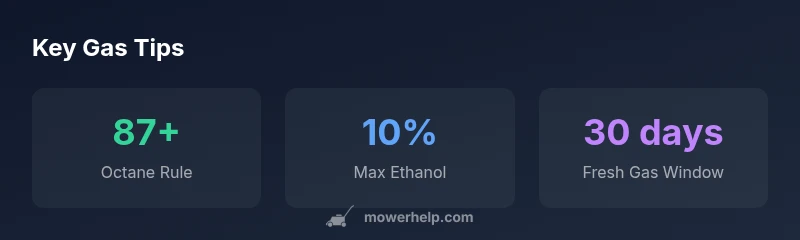
Gas for lawn mowers typically means regular unleaded gasoline with at least 87 octane. For best results in most modern four-stroke mowers, choose gasoline with low ethanol content (ideally ethanol-free or E10) and avoid stale fuel. Use a fuel stabilizer if you expect delays, and always check your owner's manual for engine-specific recommendations.
Understanding Gas for Lawn Mowers
According to Mower Help, the question what type of gas for lawn mower is foundational to reliable starting and smooth operation. Most modern lawn mowers run on four-stroke engines that require gasoline with air for combustion, not oil mixtures like two-stroke engines. The goal is clean combustion with minimal varnish and deposits in the carburetor. Gas quality matters as much as maintenance: fuel with high ethanol content or gas that’s sat unused for months can cause hard starts, stalling, and reduced power. In short, choose fresh gasoline with adequate octane and a preference for low-ethanol blends, and avoid gasoline stored for long periods without stabilizers.
How to Choose the Right Gas
Choosing the right gas starts with understanding your engine requirements and regional fuel options. For most four-stroke mowers, regular unleaded gasoline with an octane rating of 87 or higher is sufficient. If you research your model, you’ll often see a recommendation to keep ethanol content low—ethanol-free gas or blends with 10% ethanol or less (E10) are common targets. Avoid older gas that has oxidized or gummed up in a can, and consider buying only as much as you’ll use within a month or so. Use a trusted fuel stabilizer if you’re storing fuel between seasons, and always verify any manual notes on fuel type for your mower.
Fresh Gas vs Stale Gas: Storage and Usage
Gas freshness matters for smooth operation. Fresh gas burns more cleanly and reduces the risk of varnish formation in the carburetor. If you have to store gasoline, keep it in a sealed, labeled container away from heat, and use a stabilizer to preserve volatility. Rotate stock—buy small quantities more often rather than pushing fuel to months of storage. If in doubt, drain old fuel from the carburetor before starting in spring and refill with fresh gas.
Ethanol-Free Gas vs Ethanol-Blend: Pros and Cons
Ethanol-free gasoline minimizes moisture absorption and reduces varnish formation, which is especially helpful for older carburetors or engines with ethanol-resistant parts. Ethanol-blended fuels (like E10) are more common and affordable but can corrode some gaskets and attract moisture over time. If your mower has a carburetor known to be sensitive to ethanol, or if you store fuel seasonally, ethanol-free options are often worth the extra cost.
Gas Storage, Stabilizers, and Handling
Always store fuel in approved containers, away from direct sunlight and heat. Add a fuel stabilizer to extend freshness, especially if you won’t be using the mower for several weeks. Use weather-appropriate containers and cap them tightly. When refilling, wipe the filler neck to avoid contaminants entering the tank. These small steps help maintain a clean fuel system and consistent starting performance.
Special Considerations for Two-Stroke vs Four-Stroke Engines
Two-stroke engines require a fuel-oil premix, typically in a specified ratio, and are common in trimmers and leaf blowers rather than most walk-behind mowers. Four-stroke lawn mowers require straight gasoline with no added oil in the fuel. Always consult the owner's manual to confirm whether your engine is two-stroke or four-stroke and follow the recommended fuel mix or lack thereof.
Maintenance Practices to Preserve the Fuel System
Regular maintenance reduces fuel-related problems. Change out fuel filters if your mower has one, clean the choke and carburetor from varnish deposits, and lubricate moving parts as directed. Run the mower long enough after refueling to ensure the entire system circulates fresh gasoline. Periodically test starting performance and listen for sputtering, which can indicate fuel or carburetor issues requiring cleaning.
Troubleshooting Fuel-Related Starting Issues
If your mower won’t start, first check fuel level and freshness, then confirm the gas is not stained or sour-smelling. Inspect the air filter, spark plug, and carburetor for signs of clogging. If the fuel seems suspect, drain it and replace with fresh gas. Stabilizers can help when fuel sits for longer periods, but replacing questionable fuel is often the quickest fix.
Quick Reference and Best Practices
For most mowing tasks, start with regular unleaded gasoline (87 octane or higher) and aim for low ethanol content or ethanol-free gas. Keep fuel stored safely, rotate stock, and use stabilizers. Always follow the mower’s manual for engine-specific guidance to ensure reliability and engine longevity.
Comparing common gasoline options for lawn mowers
| Gas Type | Best For | Pros | Cons |
|---|---|---|---|
| Regular unleaded gasoline (87 octane) | Most modern four-stroke mowers | Widely available; affordable | Contains ethanol in most markets; can cause varnish buildup |
| Premium gasoline (89-93 octane) | High-compression engines or manuals that specify higher octane | Higher knock resistance; smoother performance | More expensive; not always necessary |
| Ethanol-free gasoline (no ethanol) | Older engines or sensitive carburetors | Minimizes varnish and moisture; better for storage | Less available; higher cost in some regions |
| Gasoline with ethanol (E10) | Common in many regions | Widely available; cheaper fuel | Moisture absorption; can accelerate carburetor wear over time |
Got Questions?
What octane rating does my lawn mower need?
Most lawn mowers run well on regular unleaded gasoline with an octane rating of 87 or higher. Always check your owner's manual for engine-specific recommendations, as some high-performance models may call for higher octane. Using the recommended octane helps prevent knocking and improves starting reliability.
Most mowers are fine with 87 octane or higher; check your manual for any exceptions, and use the fuel it specifies.
Can I use gasoline with ethanol in my lawn mower?
Ethanol is common in many fuels and is generally acceptable in many modern engines at low percentages (like E10). However, ethanol can attract moisture and cause varnish or corrosion in older carburetors or certain models. If possible, use ethanol-free gas or maintain fuel with a stabilizer to minimize problems.
Yes, but if your mower is older or has a sensitive carburetor, ethanol-free gas or stabilized fuel is safer.
Is premium gasoline worth buying for a typical mower?
For most standard lawn mowers, premium gasoline does not provide a noticeable performance improvement over regular 87 octane. Unless your manual specifies higher octane, regular unleaded is sufficient and more cost-effective. Save premium fuel for engines that explicitly require it.
Usually not necessary; check your manual, but 87 octane is fine unless your mower calls for higher.
How should I store mower fuel during off-season?
Store gas in a properly labeled, sealed container away from heat and sunlight. Add a fuel stabilizer to slow oxidation and evaporation. Run the mower briefly after refueling to circulate stabilized fuel through the system before storage. If you can, drain old fuel before long-term storage.
Use a proper container, a stabilizer, and drain old fuel if you won’t be using the mower for a while.
How old can gas be before it should be discarded?
Gas that smells sour, looks cloudy, or has separated should be discarded and replaced. When storing fuel, rotate stock and use fresh gas whenever possible. A stabilizer can extend freshness, but it cannot make old gas perform like new.
If it smells off or looks cloudy, it's time to replace it.
Do two-stroke mowers use fuel mix?
Two-stroke engines require a premixed fuel-to-oil ratio, unlike most walk-behind four-stroke mowers that use straight gasoline. Always follow the model’s manual for the correct mix ratio or confirm that your mower is a four-stroke and uses gasoline only.
Two-stroke engines need a gasoline-oil mix per the manual; four-stroke mowers use gasoline only.
What about fuel additives and stabilizers?
Fuel stabilizers can help preserve gasoline during storage and prevent varnish buildup. Detergent additives can also keep carburetors cleaner. Always choose products compatible with small engines and follow the manufacturer’s dosing directions.
Stabilizers help extend fuel life; detergents keep carburetors clean.
“"Fuel quality and storage habits directly affect starting reliability and engine longevity in small engines. A simple fuel plan can save you time and expense."”
The Essentials
- Start with 87 octane gas or higher
- Choose ethanol-free or low-ethanol fuel when possible
- Store fuel properly and use stabilizers
- Always follow the mower manual for engine-specific guidance