Balance Lawn Mower Blade: Step-by-Step Guide
Learn to balance a lawn mower blade for smoother operation, reduced vibration, and safer mowing with a step-by-step guide, essential tools, and maintenance tips.


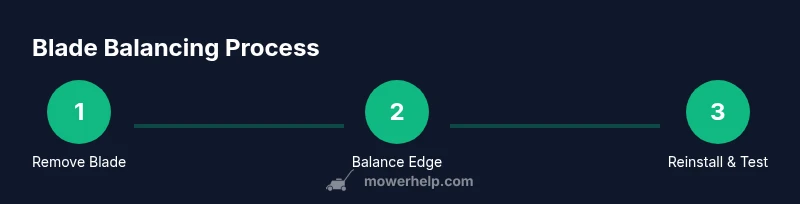
To balance a lawn mower blade, remove the blade, inspect for damage, and balance or replace as needed, then reinstall with even torque and test for vibration. For a precise, step-by-step process, see our full guide.
What blade balance means for mower performance
A balanced blade minimizes vibration, reduces wear on the spindle, and delivers a cleaner, more even cut. The balance of the blade directly affects how smoothly the mower runs, especially under load. According to Mower Help, properly balanced blades also extend blade life and lower noise. The Mower Help team found that neglecting balance often leads to more frequent maintenance and frustrating cut quality issues, particularly in tall or damp grass. In this guide, we’ll walk through practical steps to check, balance, and verify your blade’s balance, using safe methods and common tools available to DIY homeowners in 2026.
The goal is a blade that spins true with minimal wobble. A well-balanced blade reduces engine and bearing stress, improves cut quality, and makes routine maintenance easier. Throughout this article we’ll cover why balance matters, how to assess it, and the best tools and techniques for accurate results.
Common causes of unbalance
Blades can become unbalanced for several reasons: bending from impact with rocks or roots, warping from heat, or wear that creates uneven weight along the edge. Dull edges can also feel heavy on one side, mimicking an unbalance and causing extra vibration. Over time, a neglected balance distributes stress to the spindle and bearings, which may shorten the mower’s lifespan. If you notice louder operation, increased vibration, or uneven cut, start with blade balance as a first diagnostic step.
Tools and safety basics
Balancing a blade safely requires a few essential items and protective gear. Always wear gloves and eye protection when handling sharp blades. A dedicated blade balancer is ideal, but a simple DIY method can work with caution. Before starting, disconnect power (spark plug wire for gas mowers or unplug batteries for electric mowers) and secure the mower on a flat surface. Keep your workspace clean to prevent dropped bolts or lost parts.
Pre-check: blade health and orientation
Remove the blade from the mower and inspect both sides for nicks, cracks, or bends. A faulty blade should be replaced, not balanced. If the blade edges are dull, sharpening is a separate maintenance task that should precede balancing, as a sharp edge balances differently than a blunt one. Note the blade’s orientation so it can be reinstalled in the same position, preserving the mower’s cut geometry.
Step-by-step balancing approach
Use a dedicated blade balancer whenever possible. If not available, a simple DIY method involves placing the blade flat on a nail or rod to see which edge is heavier, then adding material to the lighter side until the balance is achieved. Throughout balancing, test for wobble by rotating the blade by hand and listening for inconsistent thuds or resistance. After balancing, re-check the blade’s weight distribution with the balancer to confirm accuracy.
Reinstalling and validating balance
Reinstall the blade with the correct orientation, then torque the mounting bolts evenly in a star pattern to manufacturer specs. A snug, even torque prevents bolt loosening during operation. Once installed, spin the blade by hand to feel for a true rotation, then run a brief, low-load test to observe any residual wobble or vibration. If vibration persists, re-check the edges, torque, and orientation; small adjustments can make a big difference.
Maintenance to keep blades balanced
Balance is not a one-time task. Regularly inspect for damage, re-sharpen when needed, and balance after any impact event. Clean the blade face and spindle area to prevent debris from skewing weight distribution. Store blades properly to avoid warp. Routine checks save time and keep mowing sharp and efficient.
Common mistakes and warnings
Avoid balancing a blade that is damaged or bent; this can give a false sense of balance and risk failure during use. Do not attempt to balance with the blade still mounted if the mower is not securely positioned. Always use proper torque and avoid shortcuts that compromise safety or blade integrity.
Tools & Materials
- Blade balancer(A dedicated balancer or a tested DIY balancing tool.)
- Socket wrench or nut driver(To remove and reinstall the blade bolts.)
- Gloves(Protect hands from sharp edges.)
- Safety glasses(Eye protection in case of chips or sparks.)
- Torque wrench(Tighten bolts to mower manufacturer spec.)
- Flat file or sharpening stone(Remove burrs and smooth edge after balance check.)
- Rags or small tray(Keep hardware organized and clean.)
Steps
Estimated time: 45-60 minutes
- 1
Disconnect spark plug
Power off the mower and disconnect the spark plug wire to prevent accidental starting. This is a critical safety step that keeps you safe while handling the blade.
Tip: Keep the plug wire away from the blade and working area. - 2
Position mower on a flat surface
Move the mower to a stable work area and chock the wheels if needed. A level surface reduces risk of slips and helps you work precisely.
Tip: Use a rubber mat under the mower to prevent slipping. - 3
Remove the blade bolt
Using the socket wrench, loosen and remove the bolt that secures the blade. Keep the blade supported to prevent it from dropping.
Tip: Hold the blade with a gloved hand or a block to prevent rotation. - 4
Extract the blade
Carefully lift the blade away from the spindle. Note the blade orientation for correct reinstallation.
Tip: Take a quick photo of the blade’s orientation before removal. - 5
Inspect for damage and burrs
Check for cracks, bends, or nicks. If damaged, replace the blade. If edges are dull or burred, deburr or sharpen as needed.
Tip: Wear gloves; blades can be razor-sharp along the edges. - 6
Balance the blade
Place the blade on a balancer or use a DIY method to identify the heavy side and adjust accordingly. This step ensures an even weight distribution for smooth operation.
Tip: If using a DIY method, add a small weight to the lighter side in small increments. - 7
Reinstall blade and torque
Reinstall the blade in the correct orientation and torque bolts evenly in a star pattern to the manufacturer specification.
Tip: Double-check the torque spec in your mower’s manual. - 8
Test balance and observe
Manually spin the blade to check for wobble, then perform a short engine run to verify vibration levels. If necessary, re-check alignment and balance.
Tip: Start with a low-load test to avoid debris damage.
Got Questions?
Do I need to balance after every mowing season?
Not every season, but check for imbalance if you notice vibration, uneven cutting, or changes in performance after impact events. Regular inspection helps prevent bigger issues.
Check for imbalance if you notice vibration or changes in cut quality; balance as part of seasonal maintenance if you mow heavily or frequently hit debris.
Can I balance a blade without a balancer?
Yes, but accuracy decreases. A simple DIY method can help identify the heavy side, but a proper balancer yields the best results. Always validate with a test spin.
You can try a DIY method, but a balancer gives you the most accurate balance and a safer mower.
What if the blade is bent or cracked?
A damaged blade should be replaced rather than balanced. Continuing to use a bent blade can cause further damage and pose safety risks.
If the blade is damaged, replace it instead of trying to balance it.
How tight should the blade bolts be?
Tighten bolts to the manufacturer’s torque specification using a torque wrench. Uneven torque can lead to bolt loosening and blade failure.
Always torque to spec; uneven tightening can be dangerous.
Is sharpening required after balancing?
Balancing focuses on weight distribution; sharpening improves cutting efficiency. Sharpen the blade as part of routine maintenance and balance afterward if needed.
Sharpen the blade as part of maintenance, then balance if necessary.
Watch Video
The Essentials
- Inspect blade health before balancing.
- Use a proper balancer for accuracy.
- Tighten bolts evenly to spec.
- Test by running and observe wobble.