How Often to Sharpen Lawn Mower Blades: A Homeowner's Guide
Learn how often to sharpen lawn mower blades, identify dullness signs, and follow a safe, step-by-step sharpening process to keep your mower cutting cleanly and efficiently.


To keep cutting cleanly and extend blade life, sharpen lawn mower blades whenever you notice dullness or uneven cuts. Regular inspection is key; your mower performs best when edges remain sharp and balanced. This guide explains signs, frequency considerations, and a safe, step-by-step sharpening process, including safety tips and proper reinstallation.
Why Sharpening Lawn Mower Blades Matters
Understanding how often to sharpen lawn mower blades is essential for yard health. When blades stay sharp, you achieve clean, even cuts, promote healthier grass, and reduce strain on the engine. The Mower Help team notes that consistent blade maintenance improves performance and can prevent more costly repairs down the line. In this guide, we explore why sharp blades matter, how dull edges affect cutting, and the basics of maintenance without getting lost in numbers.
Dull blades tear grass rather than slicing through it, which can stress the turf and invite disease. A sharp edge reduces stress, improves mulching, and helps your mower run more efficiently. Regular inspection and timely sharpening also prevent excessive pitch and vibration, which wear on bearings and seals. By thinking about how often to sharpen lawn mower blades, homeowners can schedule checks that fit their yard, mower type, and mowing frequency. According to Mower Help, a sharp edge slices cleanly and reduces the workload on the mower, leading to smoother starts and longer blade life.
Signs Your Blade Needs Sharpening
Not every dull cut requires a full sharpen; some edges can be touched up. Look for common signs: grass that’s torn rather than cut, brown tips on healthy turf, increased mowing effort, and a visible dull edge along the blade. If you notice clumps of grass being left behind, or if you hear a louder, more laborious engine note during cutting, the blade likely needs attention. Inspect both edges for chips, nicks, or bending, and check for uneven wear around the bolt hole. Remember, bent or cracked blades should be replaced rather than sharpened.
If you’re unsure, test the blade by gently pressing a blade edge against a soft piece of cardboard; a sharp edge will shave or slice easily, while a dull edge will drag. Dull blades can ruin your lawn by creating jagged cuts that invite moisture loss and disease. Regular checks help you catch dullness early and plan sharpening before it impacts turf health.
How Often to Sharpen Lawn Mower Blades
The question of how often to sharpen lawn mower blades depends on usage, grass type, and mowing conditions. For most residential yards, plan to inspect blade sharpness at the start of each mowing season and after particularly demanding cuts, such as tall or coarse grass or weedy patches. If your mower begins to leave torn grass or requires more effort, it’s time to sharpen. For lawns with fine grasses, you may get by with fewer sharpenings; for rough terrain or frequent weed ingestion, you may sharpen more often. Always balance efficiency with safety and avoid over-sharpening, which can weaken the blade edge.
Additionally, consider blade condition after storage; the edge can dull during off-seasons due to corrosion or lack of use. If you’ve never sharpened a mower blade before, start conservatively: test a small area after sharpening to ensure there’s no overheating or vibration, and adjust your schedule based on experience with your mower and yard.
Tools and Safety for Blade Sharpening
Sharpening a blade safely requires proper tools and protective gear. Before you begin, gather gloves, eye protection, and a sturdy work surface. You’ll need a wrench or socket to remove the blade, a file or low-heat grinding option to restore the edge, and a blade balancer to check balance after sharpening. Keep a rag and solvent handy to clean the blade and the deck, and a means to mark which way the blade faces so you reinstall it correctly.
Safety is non-negotiable: disconnect the spark plug, remove the battery (for electric mowers), and never work under a loaded mower deck. Use a clamp or vise to secure the blade if available, and keep hands away from the sharp edge. Dispose of a severely damaged blade safely and replace it with a properly rated part for your mower model.
Step-by-Step Sharpening Process Overview
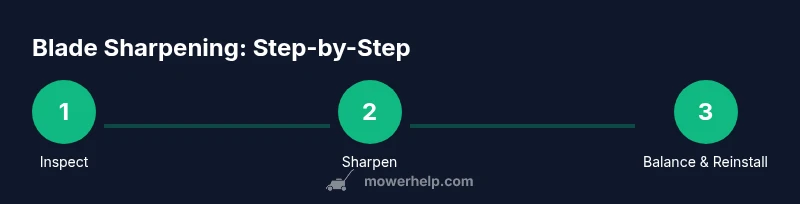
This section gives the core actions you’ll take to sharpen a mower blade safely and effectively. Start with a plan: identify a suitable sharpening method (hand file for control or a grinder for speed) and prepare your workspace. The goal is to restore a sharp, even bevel without removing too much material or overheating the steel.
Maintenance, Balance, and Reinstallation
After sharpening, balance the blade to avoid vibration and wear on the engine. Reinstall the blade securely, follow your mower’s torque specification, and reconnect the spark plug. Finally, run the mower for a brief test cut to verify smooth operation and proper clearance from the deck. Regularly clean the blade area to prevent debris buildup that can dull the edge.
Common Mistakes and How to Avoid Them
Avoid grinding too aggressively, which can overheat and lose temper, or sharpening when the blade is mounted. Never use a dull or nicked blade; replace it instead. Keep track of maintenance, including date and hours of use, to plan future sharpenings.
Tools & Materials
- Safety gear (gloves and eye protection)(Protect hands from sharp edges; safety glasses protect eyes from flying debris.)
- Socket wrench or adjustable wrench(To remove the blade from the spindle.)
- Screwdriver (flathead/Phillips as needed)(Optional for certain blade guards or mounting hardware.)
- Blade sharpening tool (file or low-heat grinder)(Maintain original bevel; avoid overheating steel.)
- Blade balancer(Checks that the blade is balanced after sharpening to prevent vibration.)
- Replacement blade(Use if blade is cracked, bent, or severely worn.)
- Rags and solvent(Clean the blade and deck surface before reinstalling.)
- Wheel chocks or blocks(Stabilize the mower on a flat surface during setup.)
Steps
Estimated time: 45-75 minutes
- 1
Disconnect power and secure the mower
Park on a flat surface, set the parking brake, and disconnect the spark plug or unplug the battery for electric mowers. This prevents accidental starts while you work. If your mower has a blade engaged by a safety switch, double-check that switch is released.
Tip: Never work on a hot blade; wait for it to cool before handling. - 2
Remove the blade from the spindle
Carefully tip the mower and use a wrench to loosen the blade bolt. Hold the blade with a cloth or wooden block to prevent it from turning as you loosen the bolt. Remove the bolt, then slide the blade off the spindle.
Tip: Keep the blade orientation noted so you reinstall it correctly. - 3
Inspect the blade for damage
Look for cracks, bends, or excessive nicks. If any damage is present, replace the blade rather than sharpening it. A damaged blade can fail during use and cause injury or mower damage.
Tip: If in doubt, replace the blade rather than risk a failure. - 4
Choose your sharpening method
Decide between a hand file for control or a grinder for speed. A lower-speed file helps you preserve the bevel angle and avoid overheating the blade steel. Clamp the blade securely so it doesn’t move during sharpening.
Tip: Maintain the original bevel angle; do not grind flat or unevenly. - 5
Sharpen the edge evenly
Work the file or grinder along the blade edge in short, steady strokes, following the existing bevel. Check frequently for a consistent edge and avoid taking off too much metal on one side.
Tip: Keep strokes uniform to avoid creating an uneven edge. - 6
Balance the blade
Place the sharpened blade on a blade balancer or a nail to test balance. An unbalanced blade can cause vibration and wear bearing components. Adjust by removing tiny amounts of metal if needed or re-flattening the edge.
Tip: A well-balanced blade reduces vibration and improves cut quality. - 7
Reinstall and test
Reattach the blade with the correct orientation and torque the bolt to the manufacturer spec. Reconnect the spark plug or battery, lower the mower, and start it to listen for abnormal noise or vibration. Perform a short test cut on a patch of grass.
Tip: If you hear rattling or see vibration, stop and recheck blade seating and torque. - 8
Document maintenance
Note the date and conditions of sharpening in a maintenance log. Record the blade type, model, and any observed issues. This helps you plan future sharpenings and replacements.
Tip: Keep blades in a safe, dry location to prevent corrosion.
Got Questions?
How often should I sharpen lawn mower blades?
Sharpen when you notice dull cuts or increased mowing effort. Signs like torn grass indicate dull edges. Inspect blades at the start of each mowing season and after tough cuts to determine a sharpening schedule.
Sharpen when you notice dull cuts or extra effort. Start with a season-based check and reassess after tough mowing.
Can I sharpen blades with a bench grinder?
Yes, a bench grinder can be used safely if you keep the blade cool and maintain the original bevel. Avoid overheating, which weakens the steel, and ensure you balance the blade afterward.
A grinder works if you keep the blade cool and preserve the bevel; balance afterward.
What if the blade has cracks or dents?
Cracks or severe dents mean the blade should be replaced. Sharpening a damaged blade is unsafe and can cause breakage.
Replace a cracked or badly dented blade—sharpening isn’t safe.
How tight should the blade bolt be?
Torque the blade bolt according to your mower manufacturer’s specification. Use a torque wrench if available and verify that the blade sits flat against the spindle.
Torque to spec and ensure the blade sits flat against the spindle.
Will sharpening affect my warranty?
Most warranties aren’t voided by sharpening blades, but always check your mower’s manual. Follow approved procedures and use manufacturer-recommended parts.
Check your manual; follow approved sharpening methods to avoid warranty issues.
Is it okay to skip sharpening and replace blades instead?
If a blade is beyond repair or has persistent damage after multiple sharpenings, replacement is the safer option for performance and safety.
If sharpening isn’t restoring performance, replace the blade.
How do I know if my blade is balanced after sharpening?
A balanced blade should rotate evenly on a balancer or nail without tilting. If it tips to one side, remove a small amount of metal and recheck.
Balance by rotating on a balancer; adjust until it sits evenly.
The Essentials
- Inspect blades regularly for dullness and damage.
- Sharpen when you notice signs of wear to maintain cut quality.
- Balance the blade to avoid vibration and engine wear.
- Follow safety steps: disconnect power, wear protection, and secure the blade.
- Reinstall with correct orientation and torque; test before full use.