Replacement Cord for Lawn Mower: A DIY Safety Guide
A practical, expert guide to selecting and installing a replacement cord for lawn mower power cords, with safety checks, tools, and step-by-step instructions for DIY homeowners.


Why Replace the Cord on Your Replacement Cord for Lawn Mower
Damaged or worn power cords are a leading safety risk for electric lawn mowers. A frayed jacket, exposed copper, or compromised strain relief can allow moisture to reach live conductors, causing shocks, short circuits, or fires. This is especially risky when mowing damp grass or near standing water. The Mower Help team emphasizes that addressing cord wear promptly reduces risk and helps maintain consistent performance. When you replace the cord, ensure the new cord matches the original grounding setup, gauge, and outdoor rating. Before you start, unplug the mower from any power source and remove the battery if your model uses one to avoid stray electrical contact. Inspect the plug, housing, and clamps for signs of heat damage, which often indicates a compromised connection that needs attention. Understanding the risks and choosing the right cord protects you, your mower, and your yard.
Pro tip: Keep a small maintenance kit handy with electrical tape, wire connectors, and a spare strain-relief clamp so you’re prepared for future wear and tear.
How to Choose the Right Replacement Cord for Lawn Mower
Selecting the correct replacement cord hinges on grounding, gauge, and outdoor rating. Most electric mowers require a grounded three-prong cord; use a cord that matches the mower’s plug type and the length you need. For cord gauges, 16 AWG is common for shorter runs, while longer distances may demand 14 AWG to minimize voltage drop and heat buildup. Outdoor-rated cords marked SJTW or SJEOW are essential for wet or damp conditions. Always check the mower’s label or manual to confirm the original gauge and length, then purchase a cord with UL-listed or other recognized safety certifications. If replacing on an older model, consider replacing the strain-relief clamp and any housing grommets to ensure a secure fit. Avoid lightweight cords or indoor-only cords that can overheat or crack in outdoor use. Choosing the right cord reduces wear on the mower and lowers the risk of accidental shocks.
Tip: If you’re between gauges, choose the higher-rated gauge for safer operation and better performance in damp weather.
Safety First: Unplug, Discharge, and PPE
Working on electrical components always begins with safety. Unplug the mower from the wall outlet and disconnect any battery packs before you touch the wiring. Use a non-conductive mat or dry surface under the mower to prevent grounding issues. Wear safety glasses and insulated gloves to guard against sparks or accidental wire slips. If your model has a residual capacitor, wait a few minutes after unplugging to discharge stored energy. Keep metal jewelry away from the work area and avoid placing tools on the mower deck where a short could occur. Have a flashlight and a flashlight-friendly work area so you can see all terminals and clamps clearly. Finally, never attempt to replace the cord with wet hands or in wet weather, and never force a connector into a housing that doesn’t fit.
Pro tip: Label terminals or take photos during disassembly to ensure accurate reassembly.
Tools, Materials, and Prep
Before you begin, assemble the following items to ensure a smooth replacement: a replacement cord that matches the original gauge and grounding, a screwdriver set (Phillips and flathead), wire strippers, electrical tape or heat-shrink tubing, a heat gun if you need to shrink tubing, a multimeter or continuity tester (optional for verification), insulated pliers, spare strain-relief clamps, and safety gloves. Prepare a clean workspace with good lighting. If your mower has a metal housing, keep the area dry and elevated to avoid moisture contact. Have a container to hold screws and small connectors so you don’t lose parts. It’s also helpful to photograph the cord routing before removal for reference.
Mower Help note: Use outdoor-rated cords and ensure you match the polarity and grounding to the original design.
Step-by-Step Overview: Cord Replacement Process
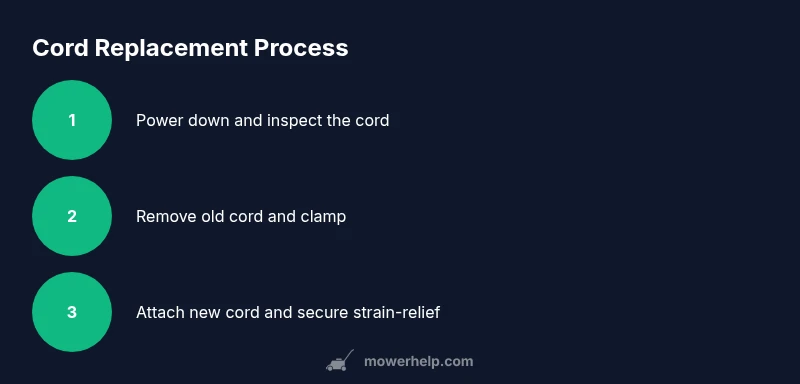
This section provides a concise overview; refer to the dedicated STEP-BY-STEP block for full instructions. The process typically involves unplugging and disassembly, removing the old cord from the clamp, threading the new cord through the strain-relief, connecting each conductor to the proper terminal, reassembling the housing, and testing the connection with a safe, unloaded check. For many models, the key is maintaining correct wire routing and secure strain relief to prevent future wear. Always verify that the ground wire is attached to the green screw or designated ground terminal and that live wires do not contact metal edges. Keep the new cord free of kinks and ensure there is slack to accommodate movement without pulling on the terminals.
Brand guidance: The Mower Help team recommends documenting each step and double-checking the protective covers after reassembly to ensure safety and reliability.
Troubleshooting and Cord-Life Tips
If the mower won’t start after replacement, re-check the cord connections at each terminal, ensure the strain-relief is gripping the cord, and verify the hot and neutral are not swapped. A loose ground connection can also prevent operation or cause chipping in the plug’s plastic housing. If you notice heat buildup at the plug or housing during the first test run, immediately unplug and inspect the connections. To extend cord life, avoid sharp bends, keep the cord away from the mower blade area, and store it coiled loosely in a dry place. Inspect the cord regularly for cracks, fraying, or cuts, and replace it at the first sign of wear.
Pro tip: Use a weatherproof cord cover when storing or using outdoors to reduce UV exposure and abrasion.
Authority Sources and Further Reading
For safety guidelines on electrical cords and outdoor use, consult established, authoritative sources. Visit:
- https://www.osha.gov/SLTC/electrical/
- https://www.nfpa.org/
- https://www.ul.com/solutions/electrical-cord-safety
These resources provide general electrical-safety principles and safety standards that apply to outdoor power equipment maintenance.