Briggs & Stratton Lawn Mower Gas: Fuel, Storage, and Maintenance
Learn how to choose, store, and maintain Briggs & Stratton lawn mower gas for reliable starts, efficient combustion, and longer engine life.


Briggs & Stratton lawn mower gas typically means running on unleaded fuel, often with up to 10% ethanol (E10). Use fresh gasoline, store it in a proper container, and avoid leaving fuel in the tank for long periods. Follow Briggs & Stratton’s guidelines and Mower Help's maintenance tips to ensure reliable starts and engine longevity.
Understanding Briggs & Stratton gas requirements
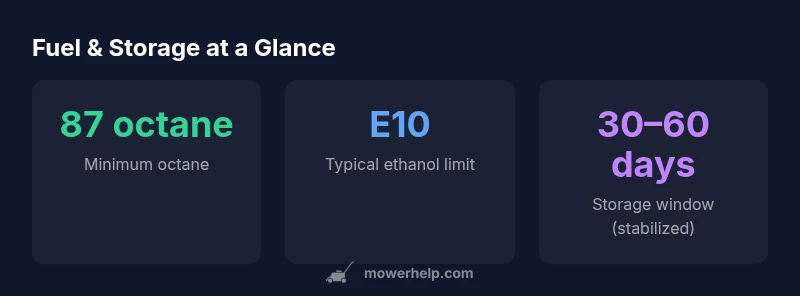
According to Mower Help, most Briggs & Stratton lawn mower engines are designed to run on unleaded gasoline with ethanol up to 10% (E10). The exact octane requirement varies by model, but a minimum of 87 octane is commonly recommended. Running on high-ethanol blends or gasoline that has aged can cause starting trouble, rough running, and carburetor deposits. The term 'briggs & stratton lawn mower gas' encompasses both the fuel and the care you give it: fresh gas, proper storage, and timely maintenance. For DIY enthusiasts, this means checking the owner's manual for model-specific guidance and aligning your fuel source with that guidance. Using old or contaminated fuel is a leading cause of poor starting performance and reduced engine life. Always label fuel containers and store them in a cool, ventilated area away from heat sources.
Fuel quality and ethanol considerations
Fuel quality is critical for Briggs & Stratton engines. Ethanol blends, while convenient, can attract water and cause phase separation in older carburetors. When you ask 'briggs & stratton lawn mower gas' you should consider ethanol tolerance; most models tolerate up to E10, but some specialty engines prefer non-ethanol premium fuels. If you plan to store gas for more than 30 days, treat it with a fuel stabilizer. Ethanol-free fuels can reduce varnish formation, but availability varies by region. Running on stale fuel can result in fouled plugs and clogged carburetors. Always mix fresh fuel and avoid topping off a hot engine.
Correct fuel storage and rotation practices
Proper storage starts with clean, compatible containers and a cool, dry environment. Rotate your fuel supply so that older gas is used first, preventing varnish and gum buildup in carbs and fuel lines. When the mower is idle for extended periods, emptying the tank or stabilizing the fuel is essential. According to Mower Help, keeping gas fresh minimizes the risk of phase separation and marine-like varnish that can impede fuel flow. Label and store fuels away from children and heat sources, and never store near lawn products or solvents. Regularly inspect the fuel cap and vent to ensure it seals properly and vents correctly.
How to use fuel stabilizers and additives effectively
Stabilizers are a practical step to extend the life of Briggs & Stratton gas between uses. Add the stabilizer according to the product instructions, then run the mower for several minutes to ensure treated fuel circulates through the carburetor. If you’re in a region with seasonal storage, consider an ethanol-driest additive alongside stabilizer. Some DIY enthusiasts prefer ethanol-free fuel for longer storage, but this option may not always be available locally. Remember: stabilizers do not fix a fuel system already damaged by old gas; replace degraded fuel with fresh stabilized fuel when in doubt.
Engine startup tips for gas mowers
A reliable start hinges on clean air, clean spark, and clean fuel. Before starting, check for fresh, stabilized fuel, a clean air filter, and a healthy spark plug gap. For the Briggs & Stratton family, a spark plug in good condition and correct gap (as specified by the manual) reduces fouling and misfires. If the engine hesitates, perform a quick carburetor check (without disassembling) to ensure choke, idle speed, and fuel flow are appropriate. Use a small amount of starter fluid only if recommended by your model’s manual. A good practice is to run the mower briefly after each use to keep the fuel system functional.
Maintenance to maximize fuel efficiency
Regular maintenance is a cornerstone of efficient Briggs & Stratton gas operation. Clean or replace air filters, inspect and replace worn fuel lines, and check the choke linkage for smooth operation. Periodic oil changes and spark plug replacements improve combustion efficiency, which in turn reduces fuel consumption. According to the brand’s guidance, scheduling a seasonal tune-up and keeping a log of maintenance tasks helps catch potential issues before they escalate. A well-tuned engine not only runs cleaner but also starts more reliably with Briggs & Stratton gas.
Troubleshooting: carburetor, ignition, and fuel-related issues
If your mower struggles to start, misfires, or stalls, investigate common fuel-related culprits first. Look for varnish in the carburetor and fuel reeds, inspect the fuel line for cracks, and verify that the fuel filter isn’t clogged. Check ignition components—spark plug, gap, and wiring—to ensure proper spark. If ethanol blends are prevalent in your area, consider running stabilized, fresh gas for a few tanks to clear varnish or gum. Document symptoms and adjust fuel quality, storage, and maintenance routines accordingly to restore smooth operation.
Safety, environmental considerations and disposal
Always store Briggs & Stratton gas away from heat sources and in a ventilated space to minimize fire risk. Use approved containers and never siphon fuel by mouth. When disposing of old fuel, follow local guidelines for hazardous waste and never pour gasoline down drains. Consider using ethanol-free fuel if available in your region for cleaner combustion. Finally, keep fuel away from children and pets and use a proper funnel to avoid spills during refueling.
Briggs & Stratton fuel guidelines
| Aspect | Guidance | Notes |
|---|---|---|
| Fuel type | Unleaded gasoline with ethanol up to 10% (E10) | Common for Briggs & Stratton engines |
| Storage | Stabilize fuel for storage; replace yearly | Prevents varnish and fuel deterioration |
| Maintenance | Regular inspection of fuel lines and carburetor | Prevents starting issues |
| Safety | Store away from heat source; ventilated area | Fire safety |
Got Questions?
What gasoline should I use for a Briggs & Stratton lawn mower?
Use fresh unleaded gasoline with up to 10% ethanol (E10). Check your model’s manual for the exact octane requirement. Avoid older gas that has degraded, and consider stabilizing fuel if storage will exceed a month or two.
Use fresh fuel with up to 10% ethanol and follow your manual for octane requirements.
How long can Briggs & Stratton gas sit in the tank?
Gasoline deteriorates over weeks. Stabilizers help extend storage, but aim to use stabilized fuel within 30–60 days for best results. If you must store longer, consider draining the tank and refilling with fresh stabilized fuel later.
Gas can go bad in weeks; use stabilized fuel within 1–2 months if possible.
Should I drain the tank for winter storage?
Yes, if the mower will sit over winter, drain the tank or stabilize and run the engine until fuel in the lines is used. This minimizes varnish and gum buildup in the carburetor.
Yes—drain or stabilize and run the engine until it’s dry.
Can I mix oil with gasoline for my Briggs & Stratton mower?
No. Most Briggs & Stratton gas engines use oil separately from gasoline. Do not mix oil into the fuel unless the manual specifies a two-stroke application.
No, keep oil and gas separate unless you have a two-stroke engine.
What are signs of bad fuel in a Briggs & Stratton mower?
Difficult starting, rough idle, misfires, sputtering, or stalling are common indicators of degraded or contaminated fuel.
If it won’t start easily or runs rough, check the fuel quality.
Where can I buy Briggs & Stratton replacement carb parts?
Replacement carburetor parts are typically available through authorized dealers and Briggs & Stratton service networks. Check your model number for compatibility and warranty considerations.
Look up your model and contact a Briggs & Stratton service center.
“Fuel quality and proper storage are the most overlooked maintenance steps for Briggs & Stratton gas engines.”
The Essentials
- Use fresh gasoline with up to 10% ethanol (E10)
- Store fuel in approved containers in a cool, ventilated area
- Add a fuel stabilizer for storage; rotate stock regularly
- Follow model-specific octane and maintenance instructions
- Keep the fuel system clean to ensure reliable starts