How Do Lawn Mower Batteries Stay Charged
Learn the practical steps to keep lawn mower batteries charged, including charging methods, storage practices, safety tips, and maintenance for 2026.


By design, a lawn mower battery stays charged via regular charging after use, a maintained trickle charge during storage, and the mower’s built‑in charging system when the engine runs. Homeowners keep it topped up with a compatible charger, avoid deep discharges, and store in a cool, dry spot. This combination helps maximize battery life and readiness.
How the charging cycle works for lawn mower batteries
Charging a lawn mower battery hinges on keeping cells within a healthy voltage window and preventing sulfation (for lead‑acid types) or deep discharge that can harm a battery’s ability to hold a charge. When you plug in a charger after mowing, the charger delivers controlled current that gradually restores energy to the battery. If you store the mower with the battery connected to a maintainer or trickle charger, you’re helping the cells stay at a steady state of charge. According to Mower Help, maintaining this steady state reduces stress on the plates and improves long‑term life. The mower’s engine‑driven alternator or generator system also recharges the battery during operation, but this is primarily to replace energy used during starting rather than a full recharge, so routine charging after use remains essential.
Practical takeaway: treat the battery as a small reservoir that benefits from regular top‑offs and a place to rest with a light, continuous charge when the mower isn’t in use.
Lead-acid vs lithium-ion: how charging differs
Lead‑acid batteries (the traditional type in many push mowers and older ride‑ons) tolerate trickle charging well but dislike being kept at a near‑empty state for long. They may require periodic water level checks and terminal cleaning to maintain performance. Lithium‑ion packs, common in newer models, rely on sophisticated Battery Management Systems (BMS) that regulate charging to protect cells from overcharge or overheating. When you charge lithium‑ion, always use a charger compatible with the pack, and avoid leaving it plugged in after full charge for extended periods. Clarifying these differences helps you choose the right charger and use it safely.
Pro tip: always consult your mower’s manual to confirm the recommended charger type for your battery chemistry.
The mower's charging system: how the engine powers charging
Modern mowers may charge the battery via the engine’s alternator while the engine runs, which replenishes energy used during starting and other operations. This onboard charging is convenient but typically does not provide a full, sustained recharge if the battery is deeply discharged. That’s why a separate charger is often recommended after use, especially if you operate in cold weather or routine short mowing sessions. Keeping the battery at a healthy state of charge improves starting reliability and reduces wear on the charging system.
Practical note: rely on the onboard system for maintenance charges, not long, repeated cycles of deep discharge.
Choosing and using a charger: essential guidelines
Pick a charger designed for your battery type (lead‑acid or lithium‑ion) and with auto‑shutoff or maintenance mode. Always connect with the correct polarity and ensure the charger is rated for outdoor use if you plan to operate outside. Start with a lower amperage setting for a slow, gentle charge on older or smaller batteries; higher amperage can speed charging but may cause heat buildup in some chemistries. A smart charger that detects battery state and stops when full helps prevent overcharging, sulfation, and damage.
Best practice: never force a charge on a damaged battery and always unplug the charger before touching terminals.
Storage and seasonal charging habits
If you store your mower for the off‑season, aim to leave the battery with a partial charge rather than fully charged or fully discharged. A maintained trickle charge (often 0.5–1 amp for SLA batteries) helps keep the cells balanced during storage. Store the mower in a cool, dry place away from direct sunlight and temperature extremes; heat accelerates chemical reactions that degrade capacity, while extreme cold can temporarily reduce available capacity. If you’ll store for several months, consider removing the battery and charging it periodically while stored.
Seasonal rule: treat long storage as a charging opportunity, not a renegade discharger.
Troubleshooting charging problems and common symptoms
If your mower won’t start after charging, start by inspecting the charging cable and connections for corrosion or loose terms. Use a voltmeter to confirm battery voltage at rest and after a brief load test. Look for signs of swelling, cracks, or leaks, which indicate damage and the need for replacement. Parasitic drain can also drain a battery when the mower is off; make sure accessories or aftermarket devices aren’t drawing power when not in use. If in doubt, consult a service technician.
Safety check: always disconnect power before inspecting terminals, and work in a well‑ventilated area.
Maintenance practices to maximize charge retention
Regularly clean corrosion from terminals and ensure clamps are tight and clean. For lead‑acid batteries, check water levels and add distilled water as needed (never overfill). Keep the battery and charger connections dry, and store in a temperature‑stable environment. Periodic conditioning cycles—complete discharge followed by a full recharge—can help test capacity, but only if the battery is known to be healthy. Maintain a routine charging schedule rather than waiting for a notification of low charge.
Expert tip: use a maintenance charger during off‑season storage to maintain charge without overcharging.
Safety considerations when charging and storing batteries
Always work in a ventilated area and wear eye protection and gloves when handling batteries, especially during maintenance checks. Never attempt to charge a damaged, swollen, or leaking battery; dispose of it per local regulations. Use a charger with automatic shutoff to prevent overcharging, and keep chargers away from flammables. If you smell for sulfur or see unusual heat, stop charging immediately and seek professional help. Safe handling reduces the risk of fire, gas buildup, or chemical exposure.
Practical tips and real-world scenarios (how to fix issues now)
Scenario 1: You return after a weekend and find the battery slightly discharged. Plug in a smart charger and check the voltage after a few hours. If it rises and holds, you’re good; if not, consider a battery health check.
Scenario 2: You’ve stored the mower for the winter; connect the charger every few weeks for a short maintenance cycle to prevent sulfation. This keeps the battery ready for spring use.
Scenario 3: You notice heat during charging. Stop charging, inspect for loose connections, and ensure the charger is appropriate for your chemistry. If overheating continues, replace the battery.
Tools & Materials
- 12V battery charger compatible with your battery type(Choose a smart charger with auto‑shutoff and appropriate amperage for your battery size)
- Safety gear (gloves and safety glasses)(Optional but recommended when handling batteries)
- Distilled water(Only for lead‑acid batteries with visible water level access)
- Multimeter or voltmeter(Helpful to verify voltage before and after charging)
- Wire brush or terminal cleaner(Use for corrosion removal on battery terminals)
Steps
Estimated time: 60-90 minutes
- 1
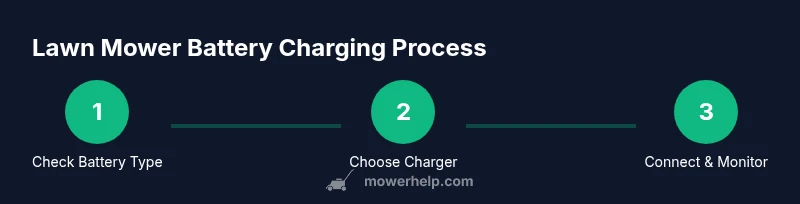
Identify battery type and safety
Inspect the battery to determine whether it is lead‑acid or lithium‑ion. Read the mower manual and wear appropriate safety gear. If the battery is swollen, cracked, or leaking, do not charge it and arrange for replacement.
Tip: Never mix different chemistries in parallel and avoid charging a damaged battery. - 2
Prepare the charger and workspace
Place the mower in a dry, well‑ventilated area. Gather the charger and ensure you have access to the battery terminals. Check that the charger is unplugged when wiring connectors and set the correct charge mode for your battery type.
Tip: Keep a clean surface and minimize metal jewelry that could cause short circuits. - 3
Connect charger with correct polarity and settings
Attach the charger’s positive clamp to the battery’s positive terminal and the negative clamp to the negative terminal. Confirm the charger is set to the appropriate charge rate for your battery chemistry and connect to a powered outlet.
Tip: Double‑check polarity before powering the charger to avoid sparks. - 4
Start charging and monitor
Power on the charger and monitor for proper operation. For lead‑acid batteries, avoid overheating and occasionally check water levels if accessible. For lithium‑ion, let the BMS manage the process and don’t override safety protections.
Tip: If the charger has a temperature alarm, stop charging if the battery feels hot. - 5
Test and top off after charging
Disconnect the charger once full or maintenance mode is reached. Use a voltmeter to verify the resting voltage and perform a light load test if feasible. For lead‑acid, check water levels and top up if needed.
Tip: Do not immediately unplug and run the mower; allow the battery to rest a bit first. - 6
Store and plan future charging
Store the mower in a cool, dry place and keep the battery charged at a maintenance level if storing long‑term. Schedule periodic top‑ups to prevent deep discharge.
Tip: Use a designated storage routine to avoid accidental drain from accessories. - 7
Periodic maintenance checks
Periodically inspect terminals for corrosion, test voltage, and ensure the charging system remains functional. Reassess the battery health when you notice starting issues or unusual performance.
Tip: Make notes of readings to detect gradual declines over time.
Got Questions?
How often should I charge my lawn mower battery?
Charge after each use or when the voltage indicates a low level. Regular topping up is better than letting it stay at a deep discharge.
Charge after each use or when you notice a low voltage. Regular topping up is best.
Is it safe to charge a swollen battery?
No. Do not charge a swollen or damaged battery. Handle with caution and replace it.
Never charge a swollen battery; replace it and seek professional help.
Can I use any charger for my mower battery?
Use a charger designed for your battery type (lead‑acid or lithium) and with auto‑shutoff to prevent overcharging.
Use a charger compatible with your battery type and auto‑shutoff.
What maintenance helps batteries stay charged longer?
Keep terminals clean, check water levels if applicable, and avoid exposing the battery to extreme temperatures.
Keep terminals clean, check water levels if needed, and avoid heat.
How long do lawn mower batteries last?
Battery life depends on usage and type; expect several years with proper care, and plan for replacements as needed.
With proper care, expect several years of service.
What should I do if the mower won’t start after charging?
Check connections, test voltage, and inspect for parasitic drain. If unresolved, consult a professional.
Check connections and voltage; if it still won’t start, seek professional help.
Is there a difference in charging lead‑acid vs lithium‑ion?
Yes. Lead‑acid benefits from balanced charging and occasional water checks; lithium‑ion relies on the BMS and proper compatible chargers.
Yes—lead‑acid and lithium‑ion require different charging approaches; always follow the manual.
Watch Video
The Essentials
- Know your battery type before charging.
- Use a compatible charger and monitor the process.
- Avoid deep discharges to extend life.
- Store the mower properly to preserve charge.