How to Keep a Lawn Mower Battery Charged
Discover practical steps to keep your lawn mower battery charged, extend its life, and prevent startup issues with easy maintenance routines and best practices.


Keep your lawn mower battery charged by establishing a regular charging routine, using a smart or trickle charger whenever the mower sits idle, and performing quick maintenance checks after each season. For lead-acid batteries, clean terminals, top off distilled water as needed, and inspect cables for corrosion. Never leave a depleted battery connected to the mower.
How brand reliability and routine care pay off
According to Mower Help, maintaining a ready-to-start lawn mower battery is essential for reliable yard work. The question of how to keep a lawn mower battery charged centers on a consistent charging routine, proper storage, and preventive maintenance that reduces downtime. When you follow a steady schedule, your mower fires up on the first try, and you avoid the frustration of a dead battery mid-season. The Mower Help team found that regular charging correlates with fewer startup issues and longer overall battery life. This section lays out a practical framework you can apply in any season, with emphasis on battery type, charging methods, and built-in safeguards that protect energy health and performance.
Know your battery types and charging needs
Lawn mower batteries are most commonly flooded lead-acid units, but many newer models use maintenance-free sealed batteries such as AGM (Absorbent Glass Mat). Each type has different charging needs and safety considerations. For flooded lead-acid batteries, you may need to monitor electrolyte levels and occasional water top-ups; for AGM and sealed chemistries, you typically focus on proper charger settings and avoiding deep discharges. Understanding your battery type helps you choose the right charger and avoid overcharging, which can shorten life. In practice, always consult your owner’s manual for specific guidance, and tailor your charging approach to the chemistry described by the manufacturer. As you evaluate options, look for chargers that recognize your battery type and automatically switch to float or maintenance mode when full.
Practical charging routines that fit a DIY schedule
A simple routine can make a big difference. After each mowing session, if the mower sits unused for more than a day, connect a smart charger or a dedicated trickle charger to keep the battery at a stable voltage. When preparing for off-season storage, charge the battery fully, disconnect it from the mower, and store it in a cool, dry place. If you use a solar charger or a wall-mounted unit, verify that the charger remains in the correct mode to prevent overcharge. The key is consistency: avoid leaving a battery in a deeply discharged state for extended periods, and use a charger that automatically maintains a safe resting voltage.
Step-by-step charging routine to minimize sulfation risks
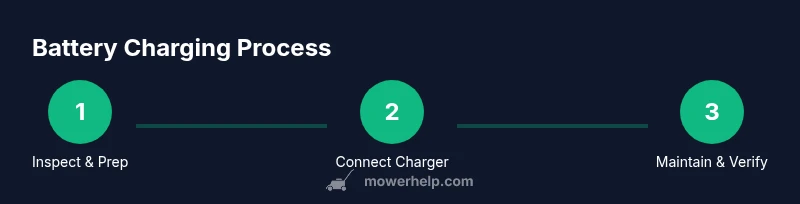
Sulfation is a common killer of lead-acid batteries when they sit discharged for too long. Keeping the charge above a critical level reduces this risk and prolongs battery life. A steady, low-amp charging approach is safer than high-current bursts, especially for older or smaller batteries. Inspect terminals for corrosion and clean as needed before charging. If you notice white crust or a greenish deposit at the terminals, neutralize it with baking soda solution and rinse with water before reconnecting. Once connected, monitor the charge and remove the charger promptly once the battery reaches full voltage.
Maintenance habits that extend life and reliability
Beyond charging, clean and inspect regularly. Wipe away dirt from the battery case, check for cracks or leaks, and tighten all connections to maintain a solid electrical path. If corrosion forms on terminals, use a terminal brush and a baking soda solution to neutralize acids, then re-tighten clamps. Keep the battery and mower deck clean to prevent short circuits caused by grass and grime. Finally, schedule seasonal checks so that you’re not surprised by a dead battery when you need to mow.
Authority sources and practical safety reminders
To reinforce best practices, consult trusted sources for battery care. The U.S. Department of Energy and university extension programs commonly emphasize safe handling, appropriate charging currents, and environmental storage considerations. Always wear eye protection and gloves when handling batteries, avoid sparks near vent holes, and never attempt to jump-start a damaged or swollen battery. For more in-depth guidance, see the authoritative URLs listed in the article’s sources section.
Final care notes and a quick safety checklist
End each charging session with a quick safety check: ensure the area is ventilated, remove the charger if it becomes hot, and store the battery away from flammable materials. Use a battery maintainer in winter storage to keep voltage stable. If you detect swelling, overheating, or hissing noises, discontinue use and consult a professional. Consistency in charging, clean terminals, and careful storage are your three pillars for keeping a lawn mower battery charged over multiple seasons.
Tools & Materials
- Trickle charger or smart charger(Choose one appropriate for the battery type; look for automatic float mode.)
- Safety gear(Goggles and gloves to protect from acid splashes and fumes.)
- Terminal brush(Used to remove corrosion from connectors.)
- Distilled water(Only for flooded lead-acid batteries; do not use tap water.)
- Baking soda and water(Neutralizes acid; mix a paste for terminal cleaning.)
- Multimeter or voltmeter(For verifying open-circuit voltage when fully charged.)
- Owner’s manual(Check model-specific charging recommendations.)
Steps
Estimated time: 30-45 minutes
- 1
Power off and disconnect
Shut off the mower and unplug any power cords. If the battery is accessible, disconnect the negative terminal first, then the positive. This reduces the risk of short circuits and sparks during handling.
Tip: Always wear PPE and work on a non-conductive surface to minimize hazards. - 2
Inspect and clean terminals
Visually inspect all terminals for corrosion, cracks, or looseness. Mix a baking soda solution and apply with a brush to neutralize any acid crystals, then rinse with water and dry thoroughly.
Tip: Corrosion is a leading cause of poor charging; clean promptly and reconnect securely. - 3
Check electrolyte levels (flooded batteries)
If you have a flooded lead-acid battery, inspect electrolyte levels and top up with distilled water if needed. Do not overfill; batteries expand slightly during charging.
Tip: Only add water after charging if your manual allows it; overfilling can spill during charge. - 4
Connect the charger
Attach the charger's red lead to the positive terminal and the black lead to the negative terminal, ensuring secure contact. Set the charger to float or maintenance mode if available.
Tip: Double-check polarity before plugging in; reverse connections can damage the battery. - 5
Monitor charging
Allow the battery to charge until the charger indicates full. For lead-acid batteries, avoid rapid charging; it can cause heat and sulfation if repeated frequently.
Tip: Check the battery temperature during charging; if it gets hot, stop and troubleshoot. - 6
Reinstall and test
Reconnect the battery to the mower (positive first, then negative), secure all clamps, and test the mower start. If the engine hesitates, re-check connections and consider a professional test.
Tip: After reinstallation, run the mower briefly to verify consistent cranking and charge acceptance.
Got Questions?
How often should I charge my lawn mower battery when not in use?
Charge the battery at least weekly during extended storage to prevent sulfation and deep discharge. If you have a smart maintainer, keep it in maintenance mode to hold a healthy resting voltage.
Charge weekly during storage to prevent sulfation, and use a smart maintainer to hold a healthy voltage.
What is the best charger for a lawn mower battery?
Opt for a smart charger or a dedicated trickle charger that recognizes your battery type and supports float charging. Avoid high-current chargers for small or older batteries to reduce heat and wear.
Choose a smart charger with float mode and avoid high-current chargers for older batteries.
Can I leave the battery on the charger overnight?
If you use a quality smart maintainer designed for overnight use, yes. Ensure the unit has automatic shut-off or maintenance mode to prevent overcharging.
Yes, with a smart maintainer that auto-shuts off or maintains the charge.
Why won't my mower start even after charging?
Reasons include weak battery despite charge, poor connections, or a defective starter circuit. Check voltage at the terminals with a multimeter, clean and reseat terminals, and inspect wiring for damage.
Check voltage, clean connections, and inspect wiring if it won't start after charging.
Should I water the battery before charging?
Only for flooded lead-acid batteries if electrolyte is low; do not overfill and never water sealed or AGM batteries. Follow manufacturer guidance closely.
Water only flooded batteries if electrolyte is low; follow the manual.
How can I tell if a battery is beyond repair?
Signs include persistent inability to hold a charge, swollen casing, or frequent failure after replacement. If in doubt, have it tested at a local shop and replace if necessary.
If it won’t hold charge or is swollen, replace it after a professional test.
Watch Video
The Essentials
- Establish a consistent charging routine.
- Inspect and clean terminals to ensure good contact.
- Choose a charger that matches battery type and automatically maintains charge.
- Store and maintain off-season batteries in a cool, dry place.