Lawn Mower Stalls After Starting: Urgent Troubleshooting Guide
Urgent, practical guide to diagnose and fix a lawn mower that stalls after starting. Step-by-step fixes, safety tips, and prevention to keep your mower running smoothly in 2026.


If your lawn mower stalls after starting, fuel quality, air intake, or ignition issues are the most common culprits. Start with quick wins: replace a dirty air filter, drain stale fuel, and clean the carburetor jets. According to Mower Help, these fast fixes often restore running performance. If the stall persists after these steps, proceed to the diagnostic flow to identify deeper causes.
Why the Lawn Mower Stalls After Starting Happens
When a lawn mower stalls after starting, it usually signals a disruption in one of three subsystems: fuel delivery, air intake, or ignition. Problems like stale gasoline, a clogged air filter, or a fouled spark plug can yank the engine out of its smooth running window within seconds. In 2026, homeowners report most stalls arise from a wellness check of simple components first, rather than diving into complex carburetor work right away. Remember, this is a symptom-driven issue, and the fix often mirrors the symptom: restore clean fuel, clean air, and a reliable spark.
In plain terms, think of the engine as needing a clean path for air and fuel. Any obstruction—whether a dirty filter or old fuel—will choke the mixture and cause the engine to stumble or stop. The goal is to return the air-fuel mix to the designed ratio and ensure a steady spark. As you work, keep in mind the 2026 guidance from the Mower Help team which emphasizes safety and systematic checks. This approach helps you quickly determine whether the problem is a quick drop-in fix or a sign of deeper wear.
Quick, Safe First Checks
Before you reach for carburetor cleaners or disassembly, perform these non-invasive checks:
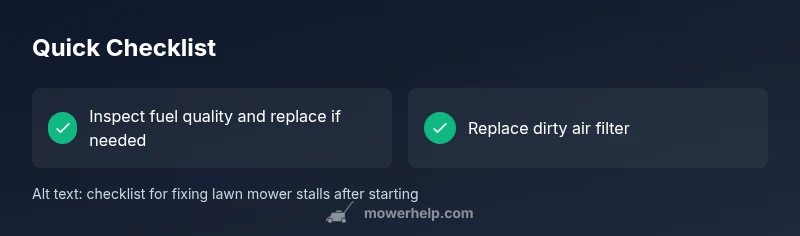
- Inspect and replace the air filter if it looks dirty or oily. A clogged filter starves the engine of air, causing stalls as soon as idle RPMs rise.
- Check the fuel in the tank. If it smells sour or has been sitting for more than 30 days, drain it and refill with fresh gasoline. Stale fuel can varnish carb passages and reduce combustion efficiency.
- Confirm the spark plug is clean and properly gapped. A fouled plug can produce weak or inconsistent sparks that lead to stalling during the transition from starter to running.
- Make sure the fuel cap vent is not blocked. A blocked vent can create a vacuum in the tank, reducing fuel flow and leading to stalling especially when the engine seeks high RPMs.
If these checks do not restore idle stability, proceed to the next level of diagnosis. The goal is to identify whether the stall is caused by fuel, air, ignition, or a mechanical restriction. The diagnostic flow below will help you decide the correct path without guessing.
Deep Dive: Fuel, Air, Ignition, and Mechanical Causes
Fuel delivery: If fresh fuel and a clean air path do not fix the stall, inspect the carburetor. A varnished carb or clogged passages can choke fuel supply at higher RPMs. Cleaning jets and passages requires care; use carburetor cleaner spray and a small brush to dislodge varnish without damaging gaskets.
Air intake: A compromised air intake or a dirty air filter reduces air that mixes with fuel, causing an overly rich fuel condition that can stall. Swap to a clean, properly seated filter to restore airflow. In some cases, the air intake boot or ducting can crack or loosen, causing unmetered air to enter the engine—a signal to replace the boot if needed.
Ignition: A marginal spark or incorrect spark plug gap will fail to sustain combustion. Inspect the spark plug for fouling and replace if needed. Verify the ignition coil connections and ensure the wiring harness is intact. If your mower uses a low-tension ignition system, check for voltage at the spark plug boot and look for signs of wear on the kill switch.
Mechanical: A partially obstructed blade, seized crank, or debris in the cooling fins can cause overheating or mechanical drag that stalls the motor. Ensure the blade spins freely with the spark plug removed and the mower off the ground. Debris cleanup around the mower deck and cooling fins can restore proper free movement and cooling.
Safe Repair Plan: Step-by-Step Actions to Restore Running
As you proceed, remember to work with the engine off, the spark plug disconnected, and the battery (if applicable) disconnected for safety. Start with the simplest fix and escalate only if needed. Use the diagnostic flow to guide your decisions and avoid unnecessary disassembly. When in doubt, consult the manufacturer’s manual or a qualified technician to prevent accidental damage or voiding warranties.
Steps
Estimated time: 60-75 minutes
- 1
Prioritize safety and prep
Turn off the mower, remove the spark plug wire, and disconnect the battery if present. Gather tools and a clean workspace. This reduces the risk of accidental starts during maintenance and keeps you safe.
Tip: Double-check the mower isn't near any flammable materials. - 2
Drain old fuel and refill with fresh gasoline
Begin by draining outdated fuel from the tank and dispose of it properly. Refill with fresh fuel and, if possible, avoid ethanol blends that can cause carb varnish over time.
Tip: Label the new fuel with the date of purchase to track freshness. - 3
Replace the air filter
Remove the air filter cover, pull out the old filter, and replace with a new one that matches the mower model. Ensure the air path is clean and the seal is tight to prevent unmetered air.
Tip: Do not over-tighten the filter housing; a snug fit is enough. - 4
Inspect and test the spark plug
Remove the plug, inspect for fouling or glazing, and replace if needed. Check the electrode gap with a feeler gauge and set as specified in the manual.
Tip: Ground the plug on the engine metal to test for a bright, consistent spark. - 5
Clean the carburetor jets
Access the carburetor and spray carb cleaner through jets and passages to dislodge varnish. Be careful not to bend small components; reassemble carefully.
Tip: Work in a well-ventilated area and keep small parts organized. - 6
Reassemble, re-connect, and test run
Reinstall any removed parts, reconnect the spark plug wire and battery, and start the mower. Observe idle and response to throttle; if the engine returns to normal operation, you’ve likely resolved the stall.
Tip: If it still stalls, reassess fuel delivery or ignition timing and consider professional service.
Diagnosis: Lawn mower stalls after starting
Possible Causes
- highStale or contaminated fuel
- highClogged air filter
- highCarburetor varnish or jets clogged
- mediumFaulty spark plug or ignition timing
- lowFuel cap vent blocked causing vapor lock
Fixes
- easyDrain old fuel and replace with fresh gasoline
- easyReplace the air filter if dirty
- mediumClean carburetor jets and throat with carb cleaner
- easyInspect/replace spark plug and adjust gap
- easyCheck fuel cap vent for blockages and clear
Got Questions?
What is the most common cause of a lawn mower stalling after starting?
Old or contaminated fuel, along with a dirty air filter, are frequent culprits. Address these first before diving into more involved carburetor work.
Most stalls come from old fuel or a dirty air filter. Start there and you’ll often fix the problem.
Should I test the mower while it’s running when diagnosing stalling?
Some quick observations can help, but avoid pushing the mower beyond safe idle behavior. If it dies again, use the diagnostic flow to isolate the cause.
You can observe at idle first, but don’t push the engine beyond safe limits. If it stalls again, follow the flow chart.
Can old fuel really cause stalling even after replacement?
Yes. Fuel may look and smell fine but can varnish carb passages and restrict flow. Always use fresh fuel and dispose of old fuel properly.
Old fuel can varnish carb parts and cause stalling even after you replace it. Use fresh fuel next time.
Is a dirty carburetor the sole reason for stalls?
Not sole, but a common reason. It can combine with air or ignition issues to produce stalling. Cleaning the carburetor is a key step.
Carburetor issues are common, but they often happen with air or ignition problems. Cleaning it is a critical step.
When should I seek professional help for a stall?
If the mower continues to stall after all basic fixes and carburetor cleaning, or if you’re not comfortable with ignitions or fuel systems, consult a technician.
If it keeps stalling after basic fixes, or you’re unsure about ignition or carburetors, seek professional help.
What safety steps are non-negotiable during troubleshooting?
Always disconnect the spark plug, remove the battery if applicable, and work on a cool engine in a ventilated area. Keep hair and clothing away from moving parts.
Unplug the spark plug and work in a vented area. Make safety your first step.
Watch Video
The Essentials
- Start with simple fixes first.
- Fresh fuel and clean air paths resolve most stalls.
- Carburetor cleaning helps when jets clog.
- Seek professional help if the problem persists.