Lawn Mower White Smoke After Tilting: Troubleshooting Guide
Urgent troubleshooting guide for lawn mower white smoke after tilting. Learn common causes, safety steps, and proven fixes to keep your mower running reliably.


Most likely, tilting a hot lawn mower causes oil to slosh into the exhaust, producing white smoke. The quick fix is to stop the engine, let it cool, and check the oil level and air filter for contamination. Clear the air path, then restart. If smoke persists, inspect the carburetor and fuel seals for leaks.
Why white smoke can appear after tilting a lawn mower
When you tilt a running lawn mower, you may notice white smoke rising from the exhaust. This isn’t always a sign of a fatal engine failure, but it is a signal that something is being affected by the change in orientation. According to Mower Help, tilt-related smoke is often related to the way oil and fuel interact with the engine’s hot surfaces and air pathways. In many cases, the smoke is moisture steam that arises when a cold engine is tilted and a small amount of water in the fuel or condensate in the crankcase is heated rapidly. If the mower has been run hard or the oil level is too high, oil can migrate toward the exhaust and burn briefly as the engine returns to its normal upright position. The key is not to panic, but to perform a calm, systematic check of oil, air filtration, and fuel system to identify the responsible factor.
Immediate Safety and First Checks
Before you touch any internal parts, prioritize safety. Stop the engine, unplug the spark plug, and allow the mower to cool on a flat surface. Once cooled, check the oil level with the dipstick. If the oil is above the full mark, do not run the mower; drain a small amount into a clean container and recheck. Next, inspect the air filter for signs of oil contamination or wetness from the crankcase, and replace it if needed. Wipe away any visible oil from the muffler or deck to prevent burning on restart. Finally, inspect the fuel condition: if the fuel is old, discolored, or has water droplets, drain the tank and replace with fresh gasoline. These basics are easy checks that prevent accidental injury and set up a clean baseline for diagnosis.
Common Causes When White Smoke Appears After Tilting
Here are the most likely culprits, arranged from most to least probable after tilting. First, an overfilled crankcase or an oil splash from tilting can push oil into the breather tube and toward the exhaust, producing visible smoke when the engine is upright again. Second, oil or fuel can contaminate the air filter or breather, which causes burning and vapor when the engine runs. Third, a small amount of water or condensed fuel residue in the fuel or carburetor can vaporize during tilt and burn as white steam. Fourth, a worn crankcase seal or valve breather can leak oil during tilt and contribute to smoke after starting. These factors are more about the immediate physical effects of tilting than long-term wear; the fix is typically straightforward—address oil level, filter integrity, and air/fuel paths first.
Diagnostic Flow Preview: Symptoms to Diagnosis
Start with the symptom: white smoke after tilting. If the engine is cool, perform the quick checks (oil level, air filter, fuel quality). If oil level is high or there's oil on the air path, the likely diagnosis is oil migration due to tilt. If the air path and oil look clean but smoke remains, inspect the carburetor and seals for leaks. This flow prioritizes simple checks first and progressively tests air/fuel paths to confirm the root cause. Remember, condensation smoke from a cold engine after tilt can also appear; distinguish steam from burning oil by odor and duration. If in doubt, stop and consult a technician.
Step-By-Step Fixes for the Most Likely Cause
The most common fix after tilting is adjusting oil levels and cleaning/confirming the air path. Start by ensuring the engine is cool, then drain any excess oil to the proper level. Replace a saturated air filter and inspect the breather tube for oil residue. Clean the muffler area if needed and verify there are no fuel leaks around the carburetor. Refill with fresh gasoline if the fuel looks or smells off. Reassemble and start the engine on idle; observe for smoke. If smoke persists, move to more advanced diagnostics or contact a pro.
Maintenance Tips to Prevent Reoccurrence
To reduce the chance of tilt-related smoke in the future, maintain a steady oil level and perform regular oil changes as per the mower’s maintenance schedule. Keep air filters clean and replace them when they show oil contamination or debris buildup. Use fresh, clean fuel and store fuel properly to avoid water contamination. Avoid tilting the mower while the engine is hot, and never run the machine with a visibly oil-covered exhaust area. Periodic inspection of the breather, seals, and carburetor seals will help catch leaks before they manifest as smoke.
Safety, Warnings, and When to Call a Pro
Always disconnect the spark plug and wait for the engine to cool before investigating smoke. If you notice persistent blue smoke (oil burn) or white smoke that doesn’t dissipate after a cool-down, stop using the mower and schedule service. Do not run the mower with signs of a possible head gasket issue, coolant leak, or significant oil leaks. For minor smoke that clears after the first restart, continue monitoring and perform a light maintenance pass. When in doubt, a qualified technician can diagnose internal leaks, worn seals, or carburetor faults more quickly and safely.
Quick Reference Checklist
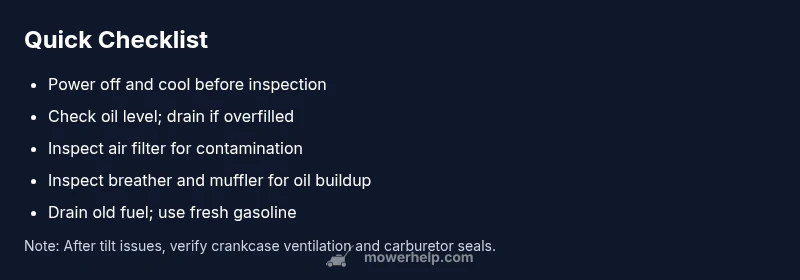
- Power off and cool before inspection
- Check oil level; adjust if overfilled
- Inspect and replace oil-contaminated air filter
- Inspect the breather and muffler for oil buildup
- Drain and replace old fuel; use fresh gasoline
- Avoid tilting when hot; store mower upright
- If smoke persists after basic checks, seek professional help
Steps
Estimated time: 30-60 minutes
- 1
Power off and cool the mower
Shut down the engine and remove the spark plug cap to prevent accidental starts. Let the engine and exhaust cool completely on a flat, stable surface before you begin any inspection.
Tip: Waiting for full cooling prevents burns and protects you while you handle hot components. - 2
Check oil level and correct if overfilled
Wipe the dipstick, reinsert it, and read the level. If oil is above the full line, drain a small amount into a clean container until it’s at the proper mark.
Tip: Keep a clean catch pan handy to avoid spills on the ground. - 3
Inspect and replace air filter
Remove the air filter housing and check for oil contamination or wetness on the filter. Replace a saturated filter and clean the housing before reassembly.
Tip: A clean air filter prevents oil vapor from entering the combustion chamber. - 4
Check crankcase breather and muffler area
Look for oil residue on the breather tube and around the muffler. Clean or replace components as needed to restore proper ventilation.
Tip: A clogged breather can push oil into the exhaust path during tilt. - 5
Test with fresh fuel and inspect carburetor
Drain old fuel from the tank, add fresh gasoline, and inspect the carburetor for leaks or gumming. If needed, clean jets and seals per the manual.
Tip: Old fuel can cause incomplete combustion and smoke, especially after tilting.
Diagnosis: Lawn mower white smoke after tilting
Possible Causes
- highOverfilled crankcase oil causing oil splash into the breather and exhaust
- mediumOil contamination of air filter or breather due to tilt
- lowWater or condensate in fuel/carburetor vaporizing after tilt
Fixes
- easyDrain oil to the proper level and replace the oil if needed
- easyReplace oil-contaminated air filter and clean breather tube
- easyDrain old fuel, use fresh gasoline, and clean carburetor as needed
Got Questions?
Why does tilting a lawn mower cause white smoke to appear?
Tilting can shift oil into the air path or combustion area, and in cold engines, moisture in fuel or condensate can vaporize into visible steam. Most cases are resolved with basic maintenance like oil level correction and air filter checks.
Tilting changes how oil and moisture move inside the engine, which can show up as white smoke; start with safe, basic maintenance.
Is white smoke always a serious issue?
Not always. Some white smoke is steam from condensation or from a briefly overfilled oil that burns off after the engine settles. If smoke persists after cooling and basic checks, there may be a leak or foul fuel condition that needs professional inspection.
White smoke can be harmless steam, but persistent smoke means you should investigate further.
Can I continue mowing if the smoke stops after cooling?
If smoke ceases after cooling and basic maintenance, you can resume slowly and monitor. Stop if it returns or if you notice unusual smells, drops in performance, or oil leaks.
It’s best to proceed with caution and watch for recurring smoke before continuing work.
Should I replace the oil after tilting if I see smoke?
If the oil appears contaminated, or you had to drain oil to fix overfill, replace with fresh oil and a new filter per the manual. Don’t reuse old oil that’s been contaminated.
Yes—clean oil and a fresh filter help prevent repeated smoking.
When should I seek professional help for tilt-related smoke?
If basic checks don’t stop the smoke, or you notice fuel leaks, unusual odors, or loss of power, a professional mower technician should inspect the carburetor, seals, and crankcase.
If basic fixes don’t solve it, get a professional to check seals and the carburetor.
Watch Video
The Essentials
- Check oil level first and correct any overfill.
- Inspect air filter and breather for contamination.
- Replace old fuel and clean the carburetor if needed.
- Tilt-induced smoke is often solvable with basic maintenance.
- If smoke persists, seek professional service.