Mowing Lawn Before Frost: A Practical Late-Season Guide
Learn how to mow the lawn before frost with confidence. This guide covers timing, height, clippings, leaf management, and winter prep to protect your turf and mower.


You will learn how to mow the lawn before frost safely and effectively. This guide covers timing, mowing height, clippings management, tool readiness, and safety precautions. You’ll know when to mow, how often to mow, and how to protect turf as cold weather approaches.
Why mowing before frost matters
Mowing before frost is not just about keeping a neat lawn—it’s about protecting crown tissue, encouraging healthy root growth, and reducing the risk of disease as temperatures drop. A well-timed cut helps grass store energy for winter, improves winter hardiness, and reduces the amount of leaf and dry matter that can harbor pests. According to Mower Help, late-season mowing should prioritize grass health and frost readiness, balancing a clean appearance with the plant’s natural growth cycle. By finishing the season with a proper cut, you set up a stronger start when spring arrives and minimize stress on your mower at the same time.
As winter approaches, the turf benefits from a carefully timed, moderate mowing that respects what the grass can safely endure in chilly conditions. If you’re a homeowner looking to keep your lawn resilient, this guide provides a practical, step-by-step approach that aligns with expert guidance.
Tools & Materials
- Mower with sharp blade(Ensure the blade is sharp to avoid tearing turf.)
- Grass rake(Use to remove leaves and debris for an even cut.)
- Gloves(Protect hands from scratches and provide grip.)
- Safety glasses(Shield eyes from flying debris.)
- Fuel and oil for gas mower(Check stability and mix as required by your engine.)
- Leaf blower or tarps(Optional for heavy leaf buildup.)
- Weather-appropriate outerwear(Dress in layers for chilly mornings.)
- Ground cover or mulch catcher(Mulch or bag clippings as needed.)
Steps
Estimated time: 60-90 minutes
- 1
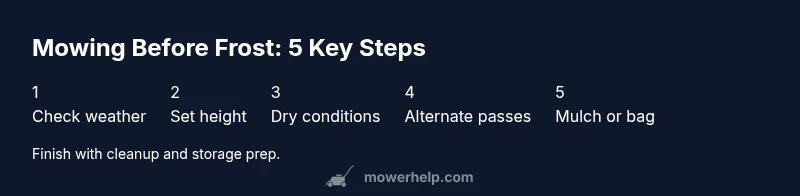
Check weather and frost readiness
Before you pick up the mower, review the forecast and assess ground and frost status. If frost is present or the soil is soggy, delay mowing to protect the turf and soil structure. Mowing on frozen or thawing ground can lead to compaction and uneven cuts. When frost is expected, plan for a late-morning window after frost has melted.
Tip: If frost is forecast overnight, schedule mowing after the sun has warmed the lawn and the ground is dry. - 2
Set mowing height for late-season mowing
Adjust your mower to a slightly taller setting to protect crowns and promote energy storage in cooler weather. Avoid scalping the turf, which can weaken root reserves and invite stress from cold.
Tip: Aim for a modest increase in cutting height; check your mower’s user manual for the recommended fall range for your grass type. - 3
Mow on dry, calm days
Choose a dry day with minimal wind to prevent clumping and ensure even distribution of clippings. Wet or frosted turf can wrap around the blade and soil compaction increases when the ground is soft.
Tip: If soil moisture is high, postpone mowing until conditions improve. - 4
Mow in alternating directions
Mow in one direction on the first pass, then perpendicular on subsequent passes to reduce wheel tracks and create a uniform cut. This technique also helps distribute clippings more evenly across the lawn.
Tip: Keep your mowing pace steady and avoid long, slow passes that scar the ground. - 5
Mulching vs bagging clippings
In late fall, mulching can return nutrients to the soil, but heavy leaf litter may require bagging for cleanliness and to prevent matting. Choose the method based on leaf density and turf health.
Tip: If leaves are thick, consider a mulching blade or first pass to reduce volume before a final pass to finish. - 6
Clean up and prepare for winter
After mowing, remove debris, inspect blades for damage, and clean the mower before storage. Dry, cleaned equipment lasts longer and starts easier in spring.
Tip: Run the mower briefly in dry conditions to ensure all moisture is expelled from the engine and cooling fins. - 7
Plan future mowing windows and maintenance
As temperatures drop, schedule regular mowing windows that avoid the harshest weather. Perform basic maintenance like air filter checks and blade sharpening to extend mower life.
Tip: Keep spare parts and a small toolkit on hand for quick fixes before a frost event.
Got Questions?
Is it safe to mow when the lawn is frost-covered?
No. Frost can make the turf brittle and the ground soft, increasing damage risk. Wait until frost has melted and the lawn is dry.
No. Wait for frost to melt and the lawn to dry before mowing.
What height should I mow at in late fall?
Aim for a slightly taller height than summer mowing to protect crowns; about a moderate increase is typical for many cool-season grasses.
Aim for a slightly taller height to protect crown tissue in cold weather.
Mulching vs bagging: which is better before winter?
Mulching returns nutrients and helps the soil but thick leaf litter may require bagging. Choose based on leaf density and turf condition.
Mulch if leaves aren’t too thick; bag if there’s heavy leaf fall to prevent matting.
How often should I mow before frost?
Mow as growth dictates and conditions permit. Don’t force extra passes if the lawn is wet or the ground is soft.
Mow as growth requires, but avoid mowing when the ground is soft or wet.
Should I fertilize or apply lime in late fall?
Typically avoid high nitrogen applications late in the season. Follow local guidelines and consider soil tests for acidity adjustments.
Don’t rely on heavy fertilizer late in the season; consult local guidelines and test soil.
How can I protect the lawn from frost damage after mowing?
Keep leaves cleared and avoid heavy traffic on frost-prone turf. A clean, dry surface helps protect the grass through freezing nights.
Clear leaves and keep the lawn dry; avoid heavy traffic when frost is likely.
Watch Video
The Essentials
- Mow on dry days with frost approaching.
- Raise mowing height to protect crowns in fall.
- Mulch or bag leaves based on volume and lawn health.
- Clean and store mower properly for winter.