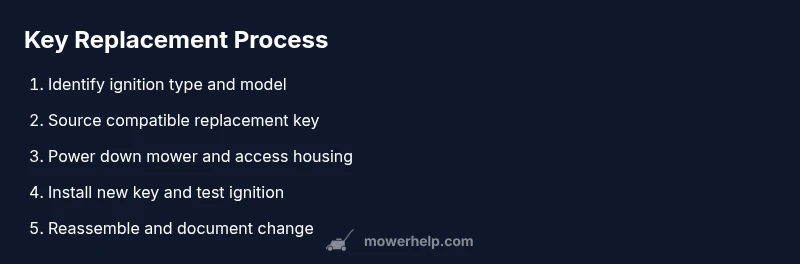
Replacement Key for Lawn Mower: Find, Verify, Install
Learn how to locate a compatible replacement key for your lawn mower, verify compatibility, and install it safely. This practical guide from Mower Help helps homeowners avoid costly mistakes and keep mowers running smoothly.


Users will be able to locate a compatible replacement key for a lawn mower, verify model compatibility, and install it safely. This quick answer outlines the process and safety checks. According to Mower Help, always match the key to the ignition cylinder and test the mower in a safe, open space.
What is a replacement key for lawn mower and when you might need one
A replacement key for a lawn mower refers to a spare or replacement ignition key used to start the engine. It becomes necessary when the original key is lost, damaged, or worn to the point where it fails to engage the ignition switch. The replacement key must match the ignition cylinder type and blade pattern used by your mower. The Mower Help team suggests treating keys as part of the mower's essential service kit and keeping a spare in a secure location.
Different types of ignition keys and compatibility
Most gas-powered mowers use a simple metal key that fits into a blade-like ignition cylinder. Some modern or higher-end models add features like transponder keys or electronic fobs. The key’s physical blade, cut pattern, and compatibility with the ignition cylinder vary by brand and model. Always verify whether your mower uses a basic key or a transponder system, as a non-transponder key may not start an electronic ignition. Additionally, some brands use a keyed switch that requires a specific key shape or a valet key.
How to identify your mower model and key type
Start by locating the mower’s model and serial number on the deck or frame, then consult the owner’s manual or official parts list. Inspect the ignition housing: count notches, study the blade shape, and note whether it’s a simple key or a transponder system. If you have an online parts catalog, use the exact model number to confirm key compatibility before purchasing. This reduces mismatches and saves time.
Where to source replacement keys: official dealers, locksmiths, and online options
Authorized dealers and the mower brand’s official parts store are the safest sources for replacement keys. You can also work with a reputable locksmith who handles outdoor power equipment. Be wary of generic listings or “universal” keys that claim compatibility with many models—these often fail or damage the ignition. Always request compatibility confirmation in writing and verify return policies.
How to verify compatibility before buying
Double-check the ignition cylinder type (blade vs. transponder), the key blade pattern, and any unique features (valet mode, immobilizer). Compare part numbers from the manual or dealer, and ask for the key’s form factor (blade width, notch count). If in doubt, contact the manufacturer’s parts department with your model and serial number. Avoid purchasing keys without a clear fit confirmation.
How to replace the key safely: quick overview
Plan to replace the key in a clean, well-lit area with the mower powered off. Access the ignition housing only as needed, keeping fasteners in a labeled container. If the key is broken, do not force removal; use proper tools to extract fragments and inspect the cylinder. After installation, test the ignition in a safe, open space before reassembling.
Testing after replacement and initial run checks
Insert the new key and turn to the start position, then slowly release to confirm normal operation and LED indicators (if present). Listen for any grinding or sticking noises. If the engine doesn’t start, recheck the key fit and ignition alignment, then re-seat components and try again in a controlled environment.
Troubleshooting common issues after replacement
If the key won’t turn, the cylinder may be worn, or the key cut may not match. Check for debris or corrosion on the contacts and clean with alcohol and a lint-free cloth. If the engine cranks but doesn’t start, you may have a fuel or spark issue independent of the key. Do not force the key, as this can damage the lock.
Safety considerations and warnings
Always disconnect the spark plug boot and remove the battery (if applicable) before working on ignition components. Wear safety glasses and gloves to protect eyes and hands. Work in a dry area to prevent moisture-related electrical issues, and never attempt to hot-wire or bypass the ignition system.
Maintenance and prevention for future key loss
Store spare keys in a dedicated, secure place away from moisture and heat. Consider keeping a folded, labeled spare in a weatherproof container. Periodically inspect the ignition cylinder for wear and seek professional service if keys become stiff or the cylinder feels loose. Regular maintenance reduces the risk of future key loss or ignition failure.
Authority sources and recommended readings
For safety and best practices, consult trusted sources such as OSHA guidelines on powered tools, consumer safety resources, and university extension publications on small engine maintenance. These sources help inform safe handling and maintenance practices when dealing with ignition components.
Tools & Materials
- Replacement key for lawn mower ignition(Ensure the key matches the ignition cylinder type (blade pattern, width, and shape) for your mower model.)
- Owner's manual or model/serial information(Have the exact model and serial number ready to verify compatibility.)
- Basic screwdriver set (Phillips and flathead)(Needed to remove ignition housing or panels if access is blocked.)
- Safety gear (gloves and safety glasses)(Protect hands and eyes; power off mower before working.)
- Cleaning supplies (rubbing alcohol, lint-free cloth)(Used to clean contact surfaces before reinstall.)
- Lubricant spray or electrical contact cleaner(Lubricate or clean the ignition contacts if needed.)
Steps
Estimated time: Total time: 15-30 minutes
- 1
Identify ignition type
Examine the ignition cylinder to determine if your mower uses a basic blade key or a transponder/immobilizer system. Check the manual or model list to confirm compatibility before buying. This avoids purchasing an incompatible key.
Tip: Take a quick photo of the ignition area for reference when shopping for a replacement. - 2
Verify model and key type
Record the mower’s exact model and serial number, then cross-check against the official parts list. This ensures the key pattern and blade type match your ignition cylinder.
Tip: If you’re unsure, contact the manufacturer’s parts department with your numbers. - 3
Purchase the compatible replacement key
Buy the key from an authorized dealer or reputable retailer. Avoid generic “universal” keys that claim broad compatibility, as they rarely fit securely.
Tip: Request written compatibility confirmation and verify return policy. - 4
Power down the mower
Turn off the engine, remove the spark plug boot, and disconnect any battery if applicable. This prevents accidental starting while you work.
Tip: Work in a well-lit area on a stable surface and keep blades from moving. - 5
Access the ignition housing
Remove the decorative cover or shroud to expose the ignition cylinder. Keep fasteners in a labeled container to avoid misplacement.
Tip: Use a magnetized tray or container for small screws. - 6
Remove old key or assess cylinder condition
Gently extract any remaining key fragments. Inspect the cylinder for wear or corrosion that could cause future sticking or failure.
Tip: Do not force a stubborn key; apply a small amount of cleaner or lubricant if needed. - 7
Install the replacement key
Insert the new key fully and rotate the switch to start. If it does not turn smoothly, stop and recheck compatibility before forcing it.
Tip: Ensure the key is oriented correctly and seating fully before attempting to start. - 8
Test ignition and reassemble
With the mower in a safe area, test starting and stopping the engine. Reassemble the housing and clean any exposed surfaces after testing.
Tip: Run a short idle to confirm reliability before completing the job. - 9
Document and store the spare
Record key type, model, and replacement date. Store the spare key in a secure, dry location for future needs.
Tip: Label the storage location clearly to prevent future loss.
Got Questions?
What should I do if I can't find a replacement key that matches my ignition?
If no exact match is found, contact the manufacturer or a licensed locksmith who specializes in outdoor power equipment. They can advise on a compatible key or cylinder service.
If you can’t find a matching key, contact the manufacturer or a specialized locksmith for guidance on compatibility or cylinder service.
Can I use a universal key for different mower brands?
Universal keys are rarely compatible with modern ignition systems and can damage the lock. Always use a key specified for your mower model.
Avoid universal keys; use one matched to your mower model for safe operation.
What information do I need to provide to buy a replacement key?
Provide the mower brand, model, and serial number, plus any ignition type notes (blade vs transponder) to ensure the correct key is supplied.
Have your mower’s brand, model, and serial number ready when ordering a replacement key.
Is it necessary to replace the ignition cylinder if the key is lost?
Not always. If the lock turns smoothly with the replacement key, you may not need to replace the cylinder. If there’s resistance or wear, cylinder replacement may be required.
Only replace the cylinder if the lock is hard to turn or worn, not just because the key was lost.
What safety steps should I take during replacement?
Disconnect spark plug, wear protective gear, work in a dry area, and avoid starting the mower until you’re sure the key fits and the ignition works.
Always unplug spark plug and wear safety gear when replacing the key.
Where can I find official parts lists for my mower?
Check the manufacturer’s website or authorized dealer portals for model-specific parts lists and key compatibility.
Look up the official parts list on the maker’s site or through an authorized dealer.
Watch Video
The Essentials
- Identify the correct ignition type first
- Verify model compatibility before buying
- Install and test the replacement key safely
- Store spare keys in a secure location
- Keep maintenance records for easy future lookups