Replacement Engine for Lawn Mower: A Step-by-Step Guide
Learn how to select and install a replacement engine for your lawn mower, including compatibility checks, safety tips, and a clear step-by-step process.


You can replace the lawn mower engine by selecting a compatible replacement engine, matching horsepower, displacement, mounting pattern, and shaft size, then completing the swap with common hand tools. This quick guide outlines the safety checks, parts you’ll need, and the essential steps to install a new engine and test the mower.
What is a replacement engine for lawn mower?
According to Mower Help, a replacement engine for a lawn mower is a drop-in power unit designed to fit your mower's frame and drive system. It should match the original horsepower (HP) and displacement (cc), the mounting pattern, the shaft orientation (horizontal vs vertical), and the starter type. Most modern small engines used on residential mowers are 4-stroke gasoline engines, and they come in vertical-shaft or horizontal-shaft configurations. A replacement engine isn't just about horsepower; it's about compatibility with the mower's belt drive, PTO linkage, recoil starter, and exhaust location. When you search for a replacement, you’ll see terms like torque, bore and stroke, and carburetor type. Understanding these will help you compare options and avoid buying an engine that won’t fit physically or functionally. Understanding mounting holes, shaft size, and overall geometry is essential for a safe, reliable engine replacement that returns your mower to peak performance.
Signs you need a replacement engine
A replacement engine for lawn care equipment becomes necessary when reliability issues persist despite basic maintenance. Common signs include persistent hard-start behavior, smoking that isn’t from a simple oil spill, loss of power under load, frequent overheating, unusual knocking or grinding noises, and oil leaks at the crankcase or gasket lines. If you’ve rebuilt the carburetor, checked the ignition, and replaced filters with no lasting improvement, the engine may be beyond economical repair. Before deciding to replace, perform a compression test if possible or consult your maintenance log to evaluate wear patterns. In many cases, a failed engine is the most cost-effective fix when the rest of the mower remains in good condition. For guidance, see how these signals align with the symptoms you’re seeing. This is where a replacement engine for lawn mower often becomes a practical choice for home DIY enthusiasts.
How to choose the right replacement engine
Choosing the right replacement engine for lawn care equipment means balancing performance with fit. Start by confirming horsepower and displacement match the original engine. Verify shaft orientation (vertical vs horizontal) and whether the mounting holes align with the mower frame. Check the starter type (recoil vs electric) and ensure carburetor and exhaust locations won’t clash with the mower body. Consider the fuel system compatibility (gas type and fuel lines) and whether you’ll need new gaskets or mounting hardware. If you’re replacing a worn engine, it’s wise to select an engine with similar peak torque and a similar fuel economy profile. Finally, review warranty terms and availability of spare parts, as a replacement engine is only as good as the support behind it. Plan to source a unit with a reputable warranty and a straightforward return policy to minimize risk.
Compatibility basics: mounting, shaft, and drive
A successful replacement begins with mechanical compatibility. The mounting pattern must align with your mower’s frame, the shaft must match the crankshaft type (horizontal or vertical), and the drive system (belt/pulley) must correspond to the engine’s output. Many small engines share common bore-stroke sizing, but the exhaust and carburetor positioning can differ, which influences fit and access for maintenance. Verify the starter mechanism and pull cord routing to avoid interference with the mower housing. Don’t overlook electrical connections if you’re upgrading to an electric-start model. If your mower uses a specific blade belt or PTO linkage, ensure the new engine can accommodate these components without requiring extensive modification. Careful measurement and reference to the mower’s service manual are essential before purchasing a replacement.
Where to source a replacement engine
There are several viable routes to find a replacement engine for lawn mower use, including new, remanufactured, and good-condition used options. New engines typically offer the best warranty and longest life, but cost more. Remanufactured engines strike a balance between price and reliability, while used engines can be economical but come with higher risk. Always verify the engine’s model number, compatibility notes, and install instructions. Read user reviews and confirm the parts supplier’s return policy and warranty coverage. If you’re unsure, ask for a compatibility checklist from the vendor that covers mounting holes, shaft type, and oil capacity. In any case, document the engine’s serial or model numbers for future reference and spare parts ordering. The goal is to select a unit that minimizes modification work while maximizing lifespan and performance.
Installation overview: what to expect
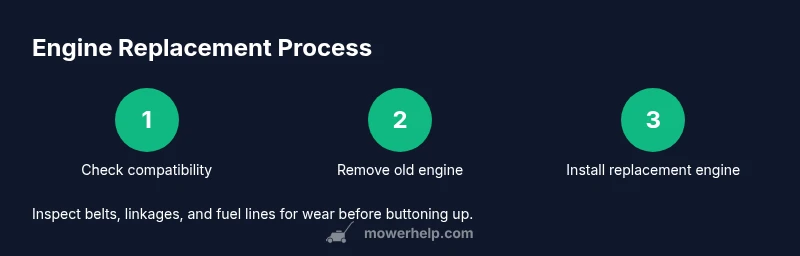
Installing a replacement engine involves removing the old engine components, aligning the new unit, and reinstalling belts, pulleys, and linkages. Basic steps include disconnecting electrical and fuel lines, draining fluids, detaching mounting hardware, and carefully lifting the old engine away. The new engine then needs to be positioned and bolted into place, followed by reattachment of belts, throttle linkages, recoil starter, exhaust, and carburetor connections. It’s important to ensure tight, clean connections and to check that hoses are not kinked or pinched. After installation, replacing fluids (oil and coolant if applicable) and refilling fuel are essential. Finally, perform a cautious start-up and a short idle test to verify there are no leaks or abnormal noises. This phase is critical for verifying that the replacement engine for lawn mower will operate safely and reliably.
Break-in and initial maintenance after install
After installing a replacement engine for lawn mower, follow a careful break-in routine to seat piston rings and bearings properly. Start with a low idle and varied RPM range, avoiding high-load operations for the first few hours of operation. Check for oil pressure and leaks, fuel leaks, and unusual vibrations. Monitor exhaust color and smoke, and listen for any changes in tone or rhythm. Change the oil after the initial break-in period as recommended by the engine manufacturer. Keep an eye on air filters and spark plugs, replacing them as needed. Regular maintenance, including fuel system checks and belt tension, will extend the engine’s life and help maintain consistent performance. The goal is to transition from new-installation behavior to steady, reliable operation implemented with the right maintenance plan.
Common mistakes and safety reminders
Even experienced DIYers can slip up during a replacement engine project. Common mistakes include selecting an engine with incompatible mounting or shaft orientation, failing to disconnect the spark plug and stop gas supply, forgetting to drain fluids, and forcing misaligned bolts. Safety reminders are essential: work on a level surface, remove the battery when possible, wear eye protection, and keep a fire extinguisher nearby. Avoid using electricity near fuel, and never smoke near gasoline. Always double-check that all links, hoses, and bolts are secured before starting the engine. If you encounter unexpected resistance when aligning mounting points, pause and reassess the fit rather than forcing parts together.
Maintenance plan to extend engine life
A proactive maintenance plan is the best way to maximize the life of your replacement engine for lawn mower. Establish a routine to inspect belts and pulleys every season, change the oil per the manufacturer’s schedule, and verify fuel quality and air filtration. Keep a log of service dates and parts replacements to track wear and anticipate next maintenance. Use the proper grade of oil and a clean fuel source to prevent varnish buildup in the carburetor. Store the mower in a dry, well-ventilated area and perform a yearly belt tension check. With consistent maintenance, your replacement engine for lawn mower will deliver reliable performance for many seasons.
Tools & Materials
- Safety glasses(ANSI Z87.1 compliant)
- Work gloves(Durable, cut-resistant if available)
- Socket set (both metric and standard)(Include deep sockets for tight spaces)
- Wrench set(Combination or adjustable sizes (metric and standard))
- Screwdrivers (flat and Phillips)(Assorted sizes)
- Pliers and wire cutters(For hoses clamps and wiring)
- Torque wrench(Helpful for precise mounting torque)
- Drain pan(Safely collect fuel and oil during drain)
- Funnel(For refilling oil and fuel without spills)
- Engine oil(Match the new engine's specification)
- Gasoline(Fresh fuel, stored safely in a proper container)
- Replacement mounting hardware(Bolts, nuts, and washers compatible with new engine)
- Anti-seize lubricant(Optional for corrosion protection on fasteners)
Steps
Estimated time: 2-3 hours
- 1
Verify compatibility and gather the engine
Measure mounting holes, shaft type, and belt alignment. Confirm HP and displacement match the original. Gather the replacement engine and all required mounting hardware before starting the job.
Tip: Take photos of the original interfaces for reference. - 2
Prepare workspace and safety
Park on a flat surface, disconnect the spark plug, and shut off the fuel supply. Remove the battery if present and ensure good ventilation.
Tip: Have a fire extinguisher within reach. - 3
Disconnect fuel and electrical connections
Carefully detach fuel lines and electrical connectors from the old engine. Cap open ends to minimize spills and label wires if needed.
Tip: Keep track of each connection to simplify reassembly. - 4
Remove the old engine
Unbolt mounting hardware and detach belts, pulleys, and linkage. Lift the engine out with a helper if necessary.
Tip: Use a non-marring strap or lift point to avoid damaging the mower frame. - 5
Prep the mounting area and install the replacement engine
Clean the mounting surface, align holes, and bolt the new engine in place. Use new gaskets and ensure mounting hardware is secure.
Tip: Torque fasteners to manufacturer specs if you have a torque wrench. - 6
Reconnect belts, linkages, exhaust, and carburetor
Reattach the belt/pulley system and all linkage to throttle, choke, and stop switches. Reinstall the exhaust and carburetor connections per the original routing.
Tip: Double-check belt tension and ensure no interference with moving parts. - 7
Refill fluids and fuel
Fill engine oil to the recommended level and add fresh gasoline. Ensure the fuel line is properly connected and clamp any open ports.
Tip: Use a clean funnel to avoid contamination. - 8
Test start and evaluate
Start the engine and perform a cautious idle test. Look for leaks, unusual noises, or vibrations. If all looks good, run the mower at low speed to verify operation.
Tip: If anything unusual appears, shut down and recheck connections before continuing.
Got Questions?
Can I install a used replacement engine in my mower?
Used engines can be economical, but they carry higher risk of wear or hidden damage. Always perform a compression test if possible and verify the engine’s history and compatibility before purchasing.
Used engines can work, but check compression and history to avoid hidden problems.
Will replacing the engine void the mower's warranty?
Replacing the engine can affect the warranty, especially if other components are modified. Check the manufacturer’s terms and consult the dealer or service manual for guidance.
Engine swaps can affect warranties; review terms or ask the dealer first.
What is the typical cost range for a replacement engine?
Costs vary based on engine size, new vs remanufactured options, and availability. Compare total installed cost, warranty length, and expected life when evaluating options.
Costs vary by engine type; compare price, warranty, and expected life.
Should I hire a professional to replace the engine?
If you lack experience with engine swaps or electrical/fuel systems, hiring a professional reduces risk. An expert can ensure correct alignment, torque specs, and leak prevention.
Consider a pro if you're unsure about hardware alignment and safety.
Do I need to modify other parts when installing a replacement engine?
Some swaps require minor modifications to engine mounts, hoses, or linkage. Always compare the new engine’s interface with your mower’s existing components before purchasing.
Some swaps need minor modifications; plan accordingly.
What maintenance is essential after installing a new engine?
Perform an oil change, check fuel and air filters, inspect belts and throttle linkages, and run the engine through a break-in cycle. Regular checks help extend engine life.
Do oil changes, check filters, and run a break-in cycle.
Watch Video
The Essentials
- Confirm engine compatibility before purchase.
- Disconnect power and fuel lines before removal.
- Securely mount the engine and check for leaks.
- Follow break-in guidelines to maximize life.
- Document connections for easier future maintenance.