How to tell if lawn mower ignition coil is bad
Learn how to identify a bad ignition coil in your gas lawn mower, test for spark, inspect wiring, and perform safe fixes with a clear, step-by-step troubleshooting guide from Mower Help.


If your lawn mower won’t start or runs rough, the ignition coil is a common culprit. The quickest way to tell is to perform a simple spark check and inspect for heat damage, cracks, or corrosion. In many cases, replacing the coil or swapping in a known-good spark plug fixes the issue. Follow these steps for a safe, systematic check.
Understanding the ignition coil and why it fails
In this guide on how to tell if lawn mower ignition coil is bad, you’ll learn the signs, the quickest tests, and practical fixes you can perform at home. The ignition coil is a critical part of the ignition system: it converts the battery’s low voltage into a high-voltage spark that lights the fuel-air mixture. When it wears out, the spark can be weak or nonexistent, causing no-start conditions or rough running. Common failure modes include heat damage, internal shorts, cracked windings, and corroded connections. By recognizing symptoms early and following a safe diagnostic flow, you can avoid guesswork and shorten repair time.
Common symptoms of a failing ignition coil
Look for telltale signs that point toward the ignition coil as the culprit. No spark at the spark plug is the clearest indicator, followed by intermittent starting, misfires under load, or engine stalls that recover after cooling down. You may also notice a hot or burnt odor around the coil area, visible cracks on the coil housing, melted insulation, or corrosion on the plug boot. Keep in mind that similar symptoms can arise from a bad spark plug, faulty kill switch, or fuel issues, so you’ll want to test methodically.
Quick at-home checks you can perform safely
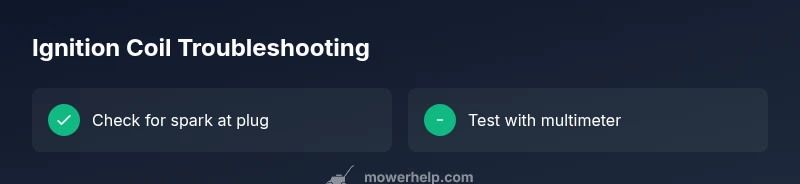
Before diving into electrical testing, start with the basics. Ensure the mower is off and the spark plug boot is disconnected from the spark plug. Ground the boot on a metal surface to check for a visible spark while someone cranks the engine (careful—do not touch metal while cranking). If you see a bright blue spark, the coil is likely fine; if there is no spark or a weak one, the coil or wiring may be at fault. Inspect the spark plug condition and replace if necessary, then move to coil-specific tests.
Using a multimeter to test the coil
A simple resistance check with a digital multimeter can indicate whether the coil windings are intact. Disconnect the ignition coil connector, set the meter to the low-ohm range, and measure the primary and secondary windings according to your mower’s service manual. Compare readings to the spec for your model; if readings are wildly out of range or show an open circuit, the coil is likely bad. If you don’t have a manual, you can still check for obvious shorted windings by looking for heat damage or discoloration after extended runs.
Visual signs and heat-related damage you might spot
A physical inspection can reveal problems the meter misses. Look for melted insulation, scorch marks, cracking on the coil housing, or corrosion at the plug boot. Excessive heat during operation can degrade internal insulation, reducing spark energy. If the coil feels unusually hot to the touch after a short run, this is a warning sign. In some cases, the coil may look intact but still fail under load due to internal shorts—testing with a meter remains the best verification method.
Diagnostic flow: symptom → diagnosis → solution
Start with your symptom: no spark, weak spark, or engine misfire. Diagnosis: no spark typically points to coil or wiring; weak spark may indicate aging coil, poor wiring, or fuel issues. Solution: test spark with a tool, check primary and secondary windings, inspect wiring harness and kill switch, and replace the coil if the tests show an open or very high resistance. If you are unsure, consult a repair guide or seek professional help before proceeding with disassembly that could affect safety.
Step-by-step repair guide for the most common cause
When the coil is confirmed as bad, a focused replacement is often quickest. Gather the exact replacement coil for your mower model, unplug any power sources, and document wire routing before removal. Install the new coil, reattach the wiring harness, and test the ignition by cranking with the spark plug boot grounded. If no spark is produced after replacement, double-check wiring and the kill switch, then perform a final spark test before attempting a start.
Safety tips and when to call a pro
Working with ignition components involves live electricity and flammable fuel. Always disconnect the spark plug, work in a well-ventilated area, and wear eye protection. If you smell gas, see sparking near fuel lines, or can’t locate the coil correctly, stop and seek professional service. If your mower is under warranty or you’re unsure about steps, a pro can prevent costly damage.
Prevention tips to extend ignition coil life
Keep air filters clean to reduce backpressure that stresses ignition components; store the mower out of direct sun and away from moisture; replace the spark plug at recommended intervals; avoid starting the engine in wet conditions; use fresh fuel with stabilizer; inspect kill switch wiring for corrosion; consider a protective shield in dusty or high-heat environments.
Steps
Estimated time: 30-60 minutes
- 1
Safety first and prep
Disconnect the battery (if equipped) or ensure the engine is cool and off. Remove the spark plug wire from the boot and set tools within reach. This shields you from accidental shocks and fuel hazards.
Tip: Always work in a well-ventilated area and wear eye protection. - 2
Locate ignition coil and route wires
Find the ignition coil near the flywheel. Note how the wires are routed before disconnecting anything to ensure a proper reassembly. Avoid pulling on wires; disconnect the plug from the coil connector gently.
Tip: Take photos from multiple angles before removal. - 3
Test for spark with boot grounded
Reconnect the spark plug boot to the plug, ground the boot on metal, and have a helper crank the engine. A bright blue spark indicates a healthy coil; no spark points to coil, wiring, or kill switch.
Tip: Do not hold the metal with bare hands while cranking. - 4
Check coil resistance with a meter
Disconnect the coil connector and measure resistance for primary and secondary windings according to your service manual. Compare against the manufacturer's spec; significant deviation implies a bad coil.
Tip: If you don’t have the manual, look for obvious open circuits or burned insulation. - 5
Inspect wiring and kill switch
Follow the harness for any cracked insulation, loose connectors, or corrosion. A faulty kill switch can cut spark even with a good coil.
Tip: Repair or replace corroded connectors and test again. - 6
Replace the ignition coil if needed
Remove mounting screws, lift out the old coil, and install the replacement coil in the same orientation. Reconnect the wires and boot, ensuring secure connections.
Tip: Use the exact coil model for your mower and torque screws to spec. - 7
Reinstall and test spark
Reattach the spark plug boot, ground, and perform a spark test again. If you still see no spark, re-check wiring and switch components.
Tip: Double-check the ground contact on the spark plug boot. - 8
Reassemble and perform a start test
Reinstall the engine cover and any safety shields. Start the mower in a safe area and observe stable operation.
Tip: If the engine still won’t start, proceed to compression tests or seek professional help. - 9
Evaluate after replacement
If ignition tests pass but the engine still fails to start, there may be a fuel or compression issue. Consider a professional evaluation or model-specific guidance.
Tip: Document symptoms and tests for the technician.
Diagnosis: Engine won't start or runs irregularly with no/weak spark
Possible Causes
- highIgnition coil failure or internal short
- highFaulty spark plug or worn spark plug wire
- mediumWiring damage or bad kill/safety switch
- lowFuel system issues (stale fuel, clogged carb)
Fixes
- easyPerform spark test and inspect coil mounting/wiring; replace coil if no spark
- easyReplace spark plug and boot; ensure proper gap and seating
- easyInspect kill switch and wiring for corrosion or loose connections; repair/replace as needed
- mediumIf coil is defective, replace with compatible model following torque specs
- hardIf symptoms persist after coil replacement, check compression and consult a professional
Got Questions?
What are the signs of a bad lawn mower ignition coil?
Common signs include no spark or weak spark at the plug, engine that won't start, misfires under load, and heat-related damage to the coil housing. Visual cues like cracks or corrosion can also indicate failure.
Look for no spark, misfires, or visible heat damage—these suggest the ignition coil may be failing.
Can a bad ignition coil cause a mower to stall while running?
Yes. A failing coil can produce intermittent spark, causing the engine to stall or lose power under load.
Yes, a faulty coil can cause stalling or sudden power loss.
Should I test the spark plug before testing the coil?
Yes. A bad spark plug can mimic coil failure, so replace or test the plug before diagnosing the coil itself.
Always check the spark plug before blaming the coil.
How do I test an ignition coil with a multimeter?
Disconnect the coil wiring, set the meter to a low-ohm range, and measure primary and secondary resistance. Compare results to the service spec for your model.
Use a multimeter to compare the coil’s windings to the manufacturer’s specs.
Is it safe to test the ignition coil with the spark plug connected?
No. Always disconnect the spark plug, and ground the boot before testing to avoid electric shock or sparks near fuel.
No—disconnect power and ground the spark plug before testing.
How long does an ignition coil typically last on a mower?
Coil life varies by model and conditions; heat, vibration, and fuel quality influence longevity. Regular inspection helps catch issues early.
Coils wear over time, especially with heat and vibration; inspect regularly.
Watch Video
The Essentials
- Test for spark first before coil replacement
- Visual and resistance checks help pinpoint faults
- Kill switches and wiring can mimic coil failure
- Follow torque specs and model-specific guides
- Preventive maintenance extends coil life