How to Check Lawn Mower Coil: A DIY Guide
Learn how to check a lawn mower ignition coil, test for spark, and decide when to replace the coil with practical, step-by-step guidance from Mower Help.


This guide will show you how to check a lawn mower coil to diagnose ignition problems and restore starting reliability. You'll learn where to locate the coil, how to test for spark with simple tools, and when to replace the coil. Basic safety steps included.
Understanding Ignition Coils in Lawn Mowers
The ignition coil is a key part of your gas-powered mower's ignition system. It steps up the battery's low voltage to create a strong spark at the spark plug. A healthy coil is essential for reliable starting and smooth engine operation. If your mower struggles to start, stalls, or backfires, the coil may be the culprit, or it may be related to worn wiring or the plug. In this guide from Mower Help, we will cover how to check lawn mower coil and interpret the results. We'll cover locating the coil, safe testing methods, what the readings mean, and when to replace it. By learning the basics of the coil and related components, homeowners can diagnose common ignition problems without always expensive service.
When to Check Your Coil: Common Symptoms
If you notice any of these signs, it’s a good time to check the coil: the engine is hard to start, it starts intermittently and stalls, you hear coughing or backfires, there is reduced power or misfiring, or you smell burning components near the mower. While fuel issues can cause similar symptoms, ignition problems should be ruled out early. A quick spark test often reveals whether the coil is delivering enough energy to the spark plug. Early diagnosis saves time and money and keeps your yard running on schedule.
Safety First: Prep Your Workspace
Before touching any ignition components, ensure the mower is off and cooled. Disconnect the spark plug boot to prevent accidental starts, and if your model uses a battery, disconnect the battery to avoid any electrical shocks. Work on a clean, dry surface with good lighting. Wear safety glasses and work gloves. Keep metal tools away from the flywheel area while the blade is exposed to prevent injuries. A tidy workspace reduces the risk of misplaced screws or unintended electrical contact.
Step-by-Step: How to Check Lawn Mower Coil
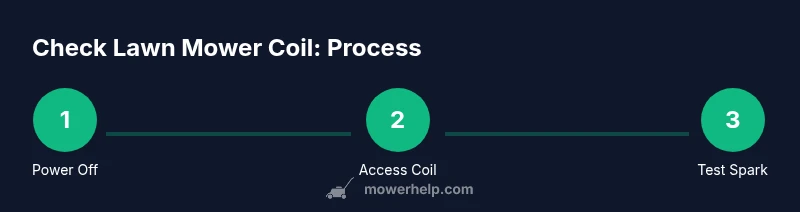
This section provides a practical, actionable approach to verify coil health. It includes locating the coil, safely disconnecting required wires, and performing a spark test. The steps are designed to be completed with common household tools and a basic spark tester. Follow the sequence carefully to avoid damage to ignition harnesses and to ensure accurate results. If you encounter resistance or broken connectors, inspect and address those issues as part of the coil evaluation.
How to Test for Spark Without a Multimeter
Testing spark often requires only a spark tester or a spare spark plug. Remove the spark plug boot, ground the spark plug against the engine metal, and pull the recoil cord to observe the spark. A healthy coil will produce a bright blue spark visible across the gap. If the spark is weak, orange, or inconsistent, the coil or its wiring may be failing. Always perform tests away from flammable gases and fuel spills.
Interpreting Test Results: What Weak Spark Means
A weak or intermittent spark typically indicates coil degradation, loose connections, or worn spark plug threads. Corrosion at the connectors, damaged insulation, or a cracked coil body can also reduce spark quality. If you see burnt or cracked windings, replace the coil. Remember that testing without proper ground references can give false readings, so ensure all test leads are correctly positioned and the engine is still when you test.
Coil Troubleshooting: Repairs vs Replacement
Coil issues are often resolved by cleaning corroded connections and reseating wiring. However, many modern small engines require coil replacement if the windings are damaged or resistance readings are out of spec. Compare your measurements with the mower’s service manual or manufacturer specs. Replacement coils are generally affordable, and installing a new coil can restore reliable starts and smooth operation.
Pro Maintenance Tips to Prevent Coil Problems
Regular maintenance reduces coil failures. Keep air vents clear, replace spark plugs on schedule, use fresh fuel and fuel stabilizer, and clean the ignition area from oil or dirt buildup. Store your mower in a dry, sheltered location to protect electrical components. Periodically inspect wiring harnesses for wear and keep connectors tight with a dab of dielectric grease.
Authority Sources
- https://www.popularmechanics.com
- https://www.familyhandyman.com
- https://www.osha.gov
Tools & Materials
- Spark tester or spare spark plug(Essential for spark testing)
- Insulated pliers(Handle wiring safely)
- Socket wrench set and screwdrivers(Remove coil housing and fasteners)
- Multimeter (optional)(Useful for resistance checks)
- Dielectric grease(Prevent corrosion on connectors)
- Rags and solvent(Clean surfaces as you work)
- Replacement ignition coil(Have on hand if coil is faulty)
- Safety glasses and gloves(Personal protection)
- Owner’s manual for model-specific steps(Check wiring diagrams)
Steps
Estimated time: 30-45 minutes
- 1
Prepare a safe workspace
Park the mower on a flat, dry surface and wait for the engine to cool. Remove the spark plug boot to prevent accidental starts. Gather tools and wear safety gear to minimize risk.
Tip: Keep a clean workspace and label any wires you disconnect. - 2
Locate the ignition coil
Find the coil assembly near the flywheel with its lead going to the spark plug boot. Consult your manual if needed, as coil placement varies by model.
Tip: Take a quick photo before disconnecting wires for reference. - 3
Disconnect electrical connections
Gently disconnect coil wires and secure them away from moving parts. Ground yourself and ensure no tools bridge conductive parts.
Tip: Work with one hand to avoid shorting circuits. - 4
Remove coil housing and access coil
Unfasten screws keeping the coil in place and lift the housing to expose the coil. Do not pull on wires; detach only from connectors.
Tip: Use the appropriate screwdriver size to avoid stripping screws. - 5
Test spark with a tester
Attach the spark tester or spare plug and ground it on metal. Pull the cord to observe spark. A strong blue spark indicates good coil health.
Tip: Hold the plug at a consistent gap for reliable readings. - 6
Check windings and connections
Inspect for melted insulation, corrosion, or broken windings. Wiggle connectors gently to check for looseness that could cause intermittent spark.
Tip: Look for signs of heat damage around the coil housing. - 7
Decide replacement vs repair
If the spark is weak or windings show damage, replacement is usually the smartest option. If connections are corroded, cleaning may help but test afterward.
Tip: Compare cost of new coil vs. potential service call. - 8
Reinstall and test
Reconnect wires, reassemble the housing, and reconnect the spark boot. Re-test spark engine to confirm proper operation before starting the mower.
Tip: Run a short idle test to ensure the system stabilizes.
Got Questions?
Do I need a replacement coil if the mower won't start?
If there is no spark after testing, the coil or related wiring may be faulty; inspect ignition components and replacement coil may be required.
If there's no spark after testing, the coil or wiring could be faulty; you may need to replace the coil.
How can I test spark without a multimeter?
Use a spark tester or spare plug to observe a strong blue spark. Ground the plug properly and test in a safe area away from fuel sources.
Use a spark tester or spare plug to watch for a strong blue spark, grounded correctly.
Why does the mower spark weakly only when cold?
A cold-start coil can show reduced resistance or poor insulation, improving as the engine warms. This may indicate aging windings or poor connections.
A weak spark when cold can mean aging windings or loose connections that improve as it warms.
Is it safe to test ignition coil while the engine is hot?
Testing a hot engine is riskier due to heat and fumes. Allow the engine to cool before handling ignition components and inspect for heat damage.
It's safer to test after the engine cools; avoid handling hot parts.
Can a faulty coil cause misfiring at high RPM?
Yes. A failing coil can cause inconsistent spark that leads to misfiring or rough operation at higher RPMs.
A bad coil can cause misfires, especially at higher engine speeds.
What maintenance helps prevent coil failure?
Regularly replace spark plugs, keep connections clean and dry, use fresh fuel, and store the mower in a dry place to protect electrical components.
Maintain spark plugs, dry connections, and proper storage to prevent coil problems.
The Essentials
- Test spark to verify coil health.
- Inspect coil windings and connectors for damage.
- Replace faulty coil rather than patching it.
- Reassemble carefully and re-test for reliable starts.
- Prevent coil problems with regular maintenance.