Lawn Mower Smells Like Gas: Troubleshooting Guide
Learn why your lawn mower smells like gas and how to troubleshoot safely. Step-by-step checks, diagnostic flow, and maintenance tips from Mower Help.


Most often, a lawn mower smells like gas due to a small fuel leak, a rich carburetor condition, or exhaust backflow. Quick fix: stop running the engine, inspect fuel lines and fittings for seepage, tighten connections, and wipe away spills. If you can't locate the leak, follow the diagnostic flow for safe troubleshooting.
What 'lawn mower smells like gas' really means
If you notice a strong gasoline scent around or after operating your lawn mower, it's a red flag that you may have a fuel system issue, an exhaust leak, or spilled fuel. For homeowners and DIY enthusiasts troubleshooting and maintaining lawn mowers, this smell often indicates a leak or improper combustion rather than combustion odors from a healthy engine. The phrase 'lawn mower smells like gas' is not normal; addressing it quickly reduces fire risk and engine damage. In this section we’ll unpack what it means, how smells develop, and what steps you should take now to stay safe and protect your mower.
Gas odors around a mower can stem from leaks, evaporation, or improper fuel mixture. Each source creates a distinct odor profile—fuel line drips produce a sharp, solvent-like smell; a flooded carburetor may give off a stronger, heavier gasoline scent; exhaust leaks can push fumes toward the intake or surface areas you can touch. Understanding the context (engine hot vs. cooling, after refueling, or during operation) helps narrow down the cause. As you troubleshoot, prioritize safety: engine off, fuel secured, and no ignition sources nearby. This article from Mower Help explains how to interpret odors and act quickly to protect you and your equipment.
For homeowners, the goal is to identify the source without risking fire or fuel exposure. Begin with the simplest checks (fuel cap, visible leaks) and progress to more involved inspections (fuel lines, carburetor, exhaust). If you’re unsure at any point, don’t force parts apart; consult a professional. The Mower Help team emphasizes careful observation and methodical testing to avoid accidental fuel spills and injuries.
Immediate safety steps you should take
When you detect a gasoline smell from your mower, safety comes first. Begin with a simple, rapid shutdown and secure the area, then proceed with checks in a safe, well-ventilated space. Here are the core steps to start with:
- Stop the engine and disconnect the spark plug boot to prevent accidental starting.
- Move the mower to a well-ventilated area away from ignition sources and open flames.
- Avoid refueling the mower until you’ve completed an initial inspection; wipe away any spilled fuel and clean the exterior to assess leaks.
- Check the fuel cap seal and tank for cracks or seepage; replace the cap or tank if you find damage.
- Do not restart the mower until you’ve completed a closer inspection of fuel lines and carburetor connections.
- If you smell gas after refueling, allow the engine to cool before inspecting and avoid starting the engine again until the issue is diagnosed.
These steps minimize fire risk while you perform a thorough diagnosis. Remember: if you’re uncertain about how to safely handle fuel components, seek professional help rather than improvising with fuel lines or carburetor components.
Common causes of gas smell in mowers
Gas odors around a lawn mower can originate from several common problems. Understanding each source helps you decide what to inspect first and what may require professional service. Here are the leading culprits, ranked roughly by how frequently they occur in DIY troubleshooting:
- Fuel line or carburetor leak: Cracked hoses, loose clamps, or degraded seals can leak fuel during operation or when the engine is off.
- Overfilled fuel tank or spilled fuel during refueling: Excess fuel can spill and evaporate, producing a noticeable odor near the engine.
- Exhaust or muffler leak: A hole or gasket failure in the exhaust system can vent fuel or hot gases that irritate the nose and skin.
- Worn gaskets and seals: Deteriorated seals around the carburetor or fuel system can allow vapors to escape.
- Stale or contaminated fuel: Fuel that’s old or contaminated can vaporize more readily and smell stronger, especially in warmer weather.
Each of these causes may manifest differently: leaks are often visible as puddles or damp spots; overfilling leaves fuel drips on the ground; exhaust leaks can be detected by heat or soot marks near the muffler. A systematic check helps pinpoint the exact source without guessing.
How to inspect the fuel system safely
A careful, methodical inspection of the fuel system is essential when your lawn mower smells like gas. The goal is to identify leaks or improper fuel handling that could lead to engine damage or a fire risk. Start with the simplest checks and progress to more involved inspections as needed:
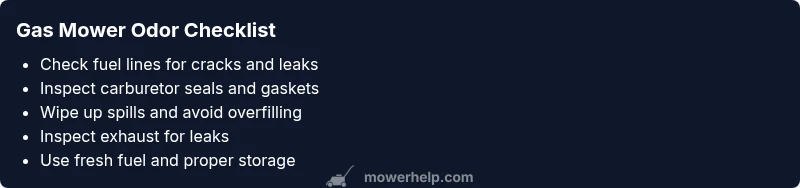
- Visually inspect all fuel lines for cracks, stiffness, or hardening. Pay attention to clamps and quick-connect fittings that may deteriorate with heat.
- Check the fuel cap seal for cracks or deformation. A poor seal allows vapor to escape and can smell strong near the fuel area.
- Examine the fuel tank for any cracks or signs of seepage, especially around seams and the fuel valve.
- Inspect the carburetor area for fuel dampness around the bowl seal and gaskets; look for residue that indicates a slow leak.
- Look at the exhaust area for signs of leakage, such as soot residue or hissing sounds when the engine runs.
- If you find a leak, replace the faulty component and re-test in a safe area away from ignition sources before attempting another run.
Repair and maintenance actions you can safely perform
When the root cause is a simple fault you can address at home, you’ll want to execute fixes using proper safety precautions. The most common, low-risk actions include tightening clamps, replacing small gaskets, or refreshing fuel with fresh, properly stored fuel. Always disconnect the spark plug wire and work in a ventilated space before touching fuel components. Here are some practical steps:
- Replace cracked fuel hoses and tighten clamps securely. Ensure the hose routing avoids sharp bends that can cause future leaks.
- Replace worn carburetor seals or gaskets that show signs of cracking or hardening.
- Clean up any spilled fuel and thoroughly dry all surfaces before reassembly. Avoid leaving fuel on painted surfaces to prevent damage.
- If you suspect an exhaust leak, do not run the engine. Exhaust repairs often require professional service due to heat and emissions concerns.
- Consider draining stale fuel and refueling with fresh gasoline in a clean container. Store fuel in a certified container away from heat sources.
If these steps don’t resolve the odor or you uncover a serious leak in hoses, tank, or exhaust, contact a qualified mower technician for a more in-depth diagnosis.
Safety reminders and best practices
Working with fuel is inherently hazardous. A disciplined approach reduces risk and ensures you can safely return to lawn care. Keep these reminders in mind as you troubleshoot and perform maintenance on your mower:
- Do not operate a mower with a known fuel leak, cracked fuel tanks, or a compromised exhaust system.
- Always work in a well-ventilated area away from open flames or sparks; never smoke near fuel.
- Wear protective gloves and eye protection to guard against fuel contact and potential debris during inspections.
- Prepare a small, dedicated workspace with rags, a fire extinguisher, and a container to collect any drained fuel.
- After any repair, run the engine in a safe outdoor area to confirm the odor is gone and there are no leaks.
If you’re not confident performing these steps, it’s safer to seek professional help rather than risking fuel exposure or an ignition event.
Long-term prevention and maintenance tips
Prevention is the best strategy to avoid gas smells in future lawn mower use. Regular maintenance and proper fueling practices greatly reduce the likelihood of fuel-system odors and leaks. Here are proactive strategies to help you keep your mower odor-free:
- Use fresh, good-quality gasoline and add a stabilizer if you won’t be using the mower for more than a month. Dispose of old fuel properly.
- Change the fuel filter as recommended by your mower’s maintenance schedule and inspect fuel lines for wear during seasonal checks.
- Schedule a carburetor service as part of annual maintenance, especially if you notice changes in throttle response or unusual odors.
- Store the mower and fuel away from heat sources, in a clean, dry area to prevent vapor buildup and degradation of fuel components.
- Keep a maintenance log to track fuel quality, line replacements, and gasket changes; note any odors and their timing relative to engine operation.
By incorporating these practices, you reduce odor risks and extend the life of your mower’s fuel system.
What to do if you still smell gas after inspections
If the odor persists after performing the checks and repairs described, do not continue running the mower. A lingering gas smell can indicate a hidden leak or a failing component that warrants professional service. In this scenario:
- Stop using the mower immediately and discontinue fuel handling until a thorough diagnostic is completed.
- Contact a qualified mower technician or a licensed small-engine repair shop for a detailed assessment. They can pressure-test the fuel system and verify the integrity of seals and gaskets.
- Consider bringing the mower to a shop for carburetor overhaul or fuel-system replacement if recommended by the technician.
Persistent gasoline odors are a safety issue. Addressing them promptly protects you and your equipment from fire risk and engine damage.
Steps
Estimated time: 30-60 minutes
- 1
Power down and secure the mower
Shut off the engine, remove the spark plug boot, and move to a safe outdoor area. This prevents accidental starting and minimizes fuel exposure.
Tip: Double-check that the spark plug is disconnected before any inspection. - 2
Inspect fuel cap and tank
Check the gas cap gasket for cracks and inspect the tank for cracks or seepage. Replace damaged parts and wipe away residue before testing further.
Tip: Use a clean rag to avoid dragging dirt into fuel system fittings. - 3
Check fuel lines and clamps
Look for cracks, stiffness, or deformities in hoses. Tighten clamps and replace any worn hoses that show signs of wear.
Tip: Do not force hoses off; use a small amount of soapy water to release clamps if needed. - 4
Inspect carburetor area
Inspect the carburetor bowl seal and gaskets for dampness or fuel residue. Replace worn seals if fuel is leaking around the carburetor.
Tip: Take photos during disassembly to help with reassembly. - 5
Inspect exhaust system
Look for holes or leaks in the muffler and exhaust pipe. If you hear a hiss or see soot near joints, plan for repair.
Tip: Do not attempt repairs that involve heat or metal cutting unless you’re trained. - 6
Decide on next steps
If leaks persist after basic fixes, schedule professional service. Run a test in a safe area to confirm the odor is resolved.
Tip: Document symptoms and steps taken for the technician.
Diagnosis: Lawn mower smells like gas around or during operation.
Possible Causes
- highFuel line or carburetor leak
- mediumOverfilled fuel tank or spilled fuel during refueling
- lowExhaust or muffler leak causing fuel odor to escape
Fixes
- easyInspect fuel lines, carburetor, and tank for leaks; tighten clamps or replace damaged hoses.
- easyWipe spills, avoid overfilling, and ensure a clean refueling procedure to prevent future odors.
- mediumIf exhaust or muffler leaks are suspected, stop using the mower and arrange professional service.
Got Questions?
Why does my lawn mower smell like gas after sitting?
Gas odors after a period of inactivity often indicate fuel leaks or vapor buildup from the fuel system. Inspect lines, the tank, and the carburetor seals to locate the source. Do not operate the mower until the issue is diagnosed and repaired.
Gas odors after sitting often mean a leak or fuel buildup. Check lines, the tank, and carburetor seals to locate the source, and avoid running the mower until fixed.
Is it safe to start a mower that smells like gas?
No. A strong gasoline smell is a fire risk. Stop, secure fuel, and perform a safe inspection. If you’re unsure, contact a professional before attempting to restart.
No—gas smell means risk. Stop and inspect or call a pro before starting again.
Can stale fuel cause a gas smell?
Yes. Old or contaminated fuel can vaporize and produce stronger odors. Drain and replace with fresh fuel after cleaning the fuel system as needed.
Old fuel can cause stronger odors. Drain and replace with fresh fuel after cleaning the system.
Should I repair fuel leaks myself or hire a pro?
Simple hose or gasket replacements can be DIY with proper precautions. Leaks around the exhaust or fuel tank may require professional service to ensure safety and proper sealing.
Small leaks can be DIY, but leaks near the exhaust usually need a pro.
How can I prevent gas smells in the future?
Maintain fuel freshness, inspect lines and seals regularly, and store fuel properly. Follow a seasonal maintenance schedule and heed manufacturer guidelines to avoid odors.
Keep fuel fresh, inspect lines, and follow maintenance schedules to prevent odors.
Watch Video
The Essentials
- Stop using the mower if you smell gas and inspect safely.
- Identify the source: fuel line, carburetor, or exhaust leaks.
- Targeted repairs now prevent bigger engine damage later.
- Regular maintenance reduces future odors and risks.