Lawn Mower Fuel Problems: Troubleshooting Guide
Comprehensive troubleshooting guide to diagnose and fix lawn mower fuel problems, including stale fuel, clogged carburetors, and fuel line issues. Learn safe steps and prevention tips for reliable starting and smooth running.


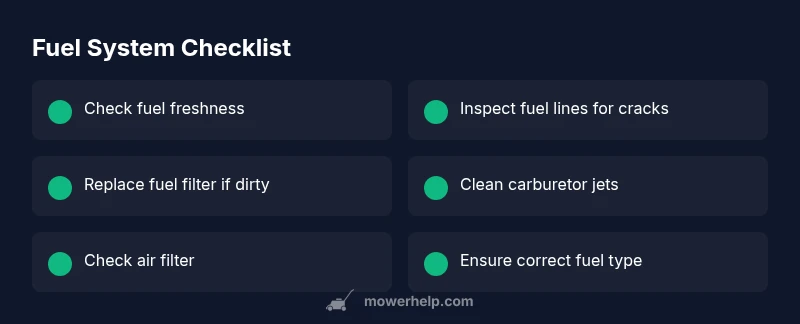
Most lawn mower fuel problems stem from stale fuel and restricted fuel delivery. Start with simple steps: 1) drain old fuel and refill with fresh gasoline; 2) check for water in the tank and clean or replace the fuel filter; 3) inspect the carburetor and air filter; 4) verify proper choke operation. If issues persist, consult the diagnostic flow.
Understanding the Root Causes of Lawn Mower Fuel Problems
Lawn mower fuel problems are usually easier to solve than they look, once you understand the root causes. In many cases, stale fuel, ethanol varnish, and degraded additives clog carburetors and starve the engine of clean fuel. According to Mower Help, the most common culprits are fuel quality, contaminated fuel, and worn fuel delivery parts. Recognizing these root causes helps you choose the right fix rather than guessing blindly. This section breaks down the four most frequent categories and explains how they lead to symptoms you notice in the yard. By addressing quality and delivery first, you often restore starting reliability without costly repairs.
- Stale or degraded fuel that varnishes carburetor passages
- Water contamination that creates phase separation in ethanol blends
- Clogged fuel filters or kinked fuel lines that restrict flow
- Worn or cracked fuel tanks and fittings that leak or vaporize
The Mower Help team emphasizes a methodical approach: fix the fuel itself first, then test delivery and air intake. This mindset reduces guesswork and speeds up restoration of reliable starting and smooth operation.
boldnote
Signs Your Mower Has Fuel-Related Issues
Fuel problems often show up before you hear an engine. Common signs include hard starting or the mower failing to start at all, rough running and misfires, sputtering when you throttle up, and sudden stalling as you mow. You might also notice a faint gasoline smell near the exhaust or around the fuel tank, or you’ll see black smoke if the mixture is rich. If you see these symptoms in combination with a stubborn choke, expect fuel delivery or carburetor issues to be the cause. Being able to connect these signals to fuel problems helps you prioritize tests without wasting time on ignition or safety components.
- Hard starting or no start
- Rough running, misfires, sputtering
- Stalling under load or while idling
- Fuel smell near tank or exhaust
- Black smoke or sooty exhaust
Quick Checks Before You Dig Deeper
Before diving into carburetor cleaning or tank removal, perform quick, low-risk checks. Start with the fuel in the tank: is it fresh, and does it meet the mower’s fuel type requirements? Look for water droplets or a cloudy layer at the bottom of the tank – water sinks and can cause misfires. Inspect the fuel cap vent to ensure it’s not blocked and that the cap seals properly. Check the air filter and spark plug for fouling, but reserve major repairs for later sections if those aren’t the root cause. These quick checks save time and minimize unnecessary disassembly.
- Verify fuel type and freshness
- Inspect for water and sediment in the tank
- Check venting on the fuel cap
- Inspect air filter and spark plug for fouling
- Look for obvious fuel line kinks or loose connections
Diagnostic Flow Overview
A structured diagnostic flow helps you avoid random fixes. Start with the most common, easiest checks after noting the symptom. If the mower struggles to start, test fuel freshness first, then look for water in the tank, and inspect the fuel filter. If fuel delivery appears clear but performance remains erratic, move to carburetor cleaning and jet inspection. Document each result so you don’t repeat tests and can decide whether to escalate to professional service.
- Step 1: Confirm symptom and fuel status
- Step 2: Check for water, varnish, and filter condition
- Step 3: Inspect fuel lines for cracks and leaks
- Step 4: Clean carburetor jets if varnish is suspected
- Step 5: Re-test with fresh fuel and run under load
Fresh Fuel vs. Stale Fuel: What To Use
Fuel freshness matters more than you might think. Modern lawn mower engines tolerate a range of gasoline grades, but fuel that has sat in a tank for weeks or months can oxidize, varnish carb passages, and trap moisture. Ethanol blends attract moisture, leading to phase separation and poor fuel economy. Always start with fresh gasoline from a sealed container, and consider using a fuel stabilizer if you won’t mow for an extended period. If you’re unsure about your current fuel, drain and replace it. Keep a labeled bottle of stabilizer on hand for quick seasoning of stale fuel.
Inspect The Fuel System: Tank, Lines, and Filter
Inspect the fuel tank for signs of rust, varnish, or sediment. Siphon or drain careful amounts and replace with fresh fuel. Check fuel lines for cracks, dry rot, or stiffness, and ensure clamps are snug. Remove the fuel filter and inspect for debris or discoloration; replace if contaminated. Finally, confirm that the fuel line connections are secure and that there are no kinks that restrict flow. These checks often reveal simple fixes that restore fuel delivery without full carburetor disassembly.
- Look for rust or varnish in the tank
- Inspect lines for cracking or stiffness
- Check clamps and connections
- Inspect or replace the fuel filter
- Ensure the carburetor and intake are sealed properly
Carburetor Troubleshooting and Cleaning
Carburetors are the heart of fuel delivery and are commonly the root cause of lawn mower fuel problems when idle and start issues appear. Remove the carburetor only if you’re confident in basic mechanical work, then disassemble carefully and spray cleaner through all jets and passages. Do not overtighten screws or bend delicate parts. After cleaning, reinstall with a fresh gasket and adjust the idle and mixture according to the manual. If you notice varnish or gum in the passages, repeat the cleaning or consider professional service.
Air, Ignition, and Fuel: A Delicate Balance
Even with clean fuel, a fouled air path or aging ignition components can mimic fuel problems. Inspect the air filter for dirt, replace if necessary, and verify the intake boot is sealed. A weak spark can misfire under load, mimicking a lean fuel condition. Check the spark plug for fouling and correct gap. If you fix the fuel path but still have symptoms, test ignition timing and coil health or seek service. The goal is to ensure every part is working with the fuel system, not in isolation.
Preventive Maintenance to Avoid Future Fuel Problems
Develop a simple maintenance routine to prevent recurring fuel issues. Use fresh fuel, store mower with a full tank and stabilize if storage is extended, and run the engine long enough for the fuel to reach the carburetor before shutting off. Schedule seasonal checks for the fuel filter, lines, and carburetor spray jets. According to Mower Help, a proactive approach—combining fuel care, cleaning, and periodic inspection—reduces downtime and extends mower life. By building these habits, lawn mower fuel problems become rarer and less disruptive.
Steps
Estimated time: 30-60 minutes
- 1
Drain stale fuel and refill with fresh fuel
Position the mower on a flat, cool surface and disconnect the spark plug cap for safety. Use a siphon to remove the old fuel from the tank, then fill with fresh gasoline of the correct type. Prime or crank as per your manual and note if starting improves.
Tip: Dispose of old fuel according to local regulations; label containers to avoid mixing fuels. - 2
Check fuel filter and lines for blockage
Remove the fuel line and inspect for cracks, kinks, or sediment. If a filter is present, inspect and replace if contaminated. Reconnect lines securely and ensure there are no air leaks in the connections.
Tip: Use a clean catch basin to avoid spills and wipe fittings dry before reassembly. - 3
Inspect and clean the carburetor jets
Remove the carburetor or access its jets according to the manual. Spray cleaner through all jets and passages; avoid bending metal parts. Reassemble with a fresh gasket and verify the throttle linkage moves freely.
Tip: Do not soak delicate diaphragms; handle with care to avoid tears. - 4
Check choke, primer, and starting sequence
Ensure the choke operates smoothly and returns to run position properly. Verify primer or bulb actuates fuel flow without sticking. Re-start the engine and observe how it responds to choke settings.
Tip: If the engine floods, wait a moment and restart with the choke half-on. - 5
Inspect air filter and ignition components
Remove and inspect the air filter; replace if dirty. Check the spark plug for fouling and correct gap. If ignition components show wear, plan replacement or professional servicing.
Tip: Keep a spare spark plug and air filter on hand for quick fixes. - 6
Test run and adjust idle/mixture
Run the mower under load and observe performance. If idle is unstable, adjust the idle speed and mixture according to the manual. Re-test until starting and running are smooth.
Tip: Document any adjustments for future reference.
Diagnosis: Engine cranks but starts poorly or stalls shortly after starting
Possible Causes
- highStale or degraded fuel
- highWater contamination within ethanol-blended fuel
- mediumClogged or collapsed fuel filter/lines
- mediumCarburetor varnish or gum in jets
- lowWrong fuel type or extremely old fuel
Fixes
- easyDrain old fuel and refill with fresh gasoline
- easyDrain water-contaminated fuel and replace with fresh fuel
- easyReplace clogged fuel filter or repair lines
- mediumClean carburetor jets and passages, then reassemble
- mediumInspect fueling components for compatibility and replace if needed
Got Questions?
What are the most common causes of lawn mower fuel problems?
The majority of issues come from stale fuel, water contamination, clogged filters, and varnish gum in the carburetor. In many cases, replacing fuel and cleaning the carburetor resolves the symptoms.
Usually stale fuel or varnish in the carburetor is the culprit; replace fuel and clean the carburetor to restore performance.
Can I use old gasoline in my mower?
Old gasoline can degrade, causing varnish and phase separation that clogs jets and reduces performance. Drain and replace with fresh fuel for best results.
No—the old gas can gum up the carburetor; drain and use fresh fuel.
Does ethanol in gasoline cause problems?
Yes. Ethanol blends attract moisture and can cause varnish and fuel separation in the tank. Stabilizers help, but replacing stale fuel is often necessary.
Ethanol can pull moisture and gum up the system; consider avoiding harsh blends or using stabilizers.
How often should I replace the fuel filter?
Check the mower’s manual and inspect for contaminants or discoloration. Replace when dirty or if you notice reduced performance, typically seasonally or at storage changes.
Change the filter if it looks dirty or you notice performance issues.
Can starting fluid fix starting issues?
Starting fluid is not a fix for fuel problems; it masks issues and can damage the fuel system if used improperly. Use only as directed for troubleshooting.
Starting fluid isn’t a real fix; it’s a quick diagnostic aid and can be risky.
When should I call a professional?
If the carburetor is varnished beyond DIY cleaning or if fuel delivery components are damaged, seek professional service. A trained tech can diagnose ignition timing and fuel system health.
If you’re not comfortable with carburetor work or if problems persist, it’s time for a pro.
Watch Video
The Essentials
- Assess fuel quality before disassembly
- Replace stale fuel and filters promptly
- Clean the carburetor jets if varnish is suspected
- Maintain fuel storage to prevent future problems