Can You Charge a Lawn Mower Battery with a 12-Volt Charger? A DIY Guide
Learn if a 12-volt charger can safely charge a lawn mower battery, which battery types fit, safety steps, and maintenance tips from Mower Help for DIY homeowners.


Yes, you can charge many lawn mower batteries with a 12-volt charger, provided the charger is designed for lead-acid or similar chemistry and has an appropriate charging profile. Check that the battery type matches, observe safety precautions, and avoid charging lithium-ion packs unless the manufacturer permits it. For best results, use a smart charger with automatic shutoff.
What a 12-volt charger actually does for lawn mower batteries
A 12-volt charger is designed to bring a discharged battery back toward its rated voltage by delivering a controlled amount of electrical current. For lawn mowers, most common batteries are lead-acid types (including flooded and sealed varieties) that respond to a 12-volt charging input. The key is not the voltage alone, but the charging profile the charger uses. A charger with an automatic or smart profile will shift from a higher current to a lower current as the battery approaches a full charge, preventing overheating or gassing. According to Mower Help, the safest and most reliable approach is to match the charger to the battery chemistry and use a device that stops charging automatically when the battery reaches full voltage. This reduces the risk of overcharging and extends battery life.
If your mower uses a lithium-ion battery, you should not assume a standard 12-volt lead-acid charger is safe. Lithium packs require a charger specifically rated for lithium chemistry and often require a dedicated BMS (battery management system) integration. Mower Help emphasizes adhering to manufacturer recommendations for lithium packs to avoid safety hazards or warranty issues.
From a practical standpoint, a 12-volt charger is a convenient option for routine top-ups or maintenance charging when used correctly. It is not a substitute for a charger designed to handle high-rate charging or deep discharges on certain battery chemistries. Always consult your mower’s manual to confirm compatible charging methods and to identify the exact battery type used in your model.
Battery chemistry matters: what kinds of batteries live in lawn mowers
Most walk-behind and ride-on lawn mowers run on a 12V lead-acid battery, sometimes labeled as SLA (sealed lead-acid) or AGM (absorbent glass mat). These chemistries tolerate casual charging with a 12V charger so long as the charger provides the appropriate profile for lead-acid chemistry. Some newer mowers use lithium-ion batteries, which behave differently and often require a dedicated charger with a built-in battery management system. Mixing lithium-ion packs with a non-specialized 12V charger can be dangerous and may void warranties. Always verify battery type before charging and follow manufacturer guidance.
Mower Help notes that using the wrong chemistry charger is one of the most common mistakes homeowners make. If you’re unsure whether your battery is lead-acid or lithium, check the label on the battery or consult the owner’s manual. When in doubt, use a charger specified for that battery chemistry and avoid improvising with adapters or DIY wiring.
Safety first: hazards to be aware of when charging outdoors
Charging a battery generates heat and, in some conditions, flammable gases. Work in a well-ventilated area away from flames or sparks. Wear safety glasses and gloves to protect against acid leaks, and ensure the charging area is dry. Do not charge indoors or in a damp location. If you notice a hissing sound, smell like sulfur, or visible bulging on the battery case, stop charging immediately and consult a professional. Mower Help strongly recommends using a charger with automatic shutoff and an overcharge protection feature to minimize risk.
Keep the charger and cables off direct contact with metal surfaces that could short out a connection. Inspect all connectors for corrosion or wear before connecting. A loose or corroded connection can cause heat buildup and reduce charging efficiency. Lastly, never jump-start or connect a charger to a battery while it is still installed in the mower if the manufacturer advises removal for charging.
Can a 12V charger be the right choice for you? assessing compatibility
To determine if a 12V charger is appropriate, look for these signs: the charger is labeled for lead-acid or AGM/Li-ion if applicable (with the correct chemistry), it has a smart charging profile or automatic shutoff, and its output voltage matches the battery’s nominal voltage. If you’re charging a flooded lead-acid battery, ensure you’re using a charger that can handle venting and possible gas buildup safely. Mower Help recommends checking the manual for any battery maintenance guidelines and looking for chargers that explicitly state compatibility with your battery type. If the battery is older or swollen, avoid charging altogether and replace the pack.
Real-world scenarios and common missteps
Many DIYers successfully top up a 12V lead-acid mower battery using a basic smart charger, but they avoid charging lithium batteries with these devices. A frequent error is ignoring the need for a proper health check on the battery before charging; a failed or damaged battery can produce heat or gas even when connected to a charger. Another pitfall is leaving a charger attached for too long once the charger reports full, especially with older batteries that may not hold voltage well. Always monitor the charging process initially, and unplug if you notice any unusual warmth or odor.
Tools & Materials
- 12-volt lead-acid compatible charger(Must be labeled for lead-acid/ AGM or appropriate chemistry; should have automatic shutoff or maintenance mode)
- Battery clamps or adapter cables(Ensure secure, clean connections to the battery terminals)
- Multimeter or voltmeter(For verifying voltage before/after charging; optional but helpful)
- Personal protective equipment(Safety glasses and gloves; keep a dry working area)
- Water or electrolyte-safe area(Charge in a ventilated, non-flammable space; never indoors in restricted areas)
Steps
Estimated time: 30-60 minutes
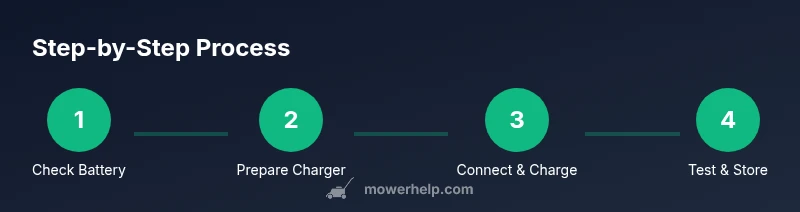
- 1
Check battery type and health
Confirm the battery type (lead-acid vs lithium) and assess visible condition. Look for cracks, swelling, or leaks. If the battery appears damaged, do not attempt to charge. This step protects you and preserves the mower’s electrical system.
Tip: If in doubt about the battery health, have it tested at a local service center before charging. - 2
Gather required equipment
Collect the 12V charger, clamps, protective gear, and a dry, well-ventilated workspace. Inspect cables for wear and clean the battery terminals to ensure a solid connection.
Tip: Use a charger with automatic shutoff to avoid overcharging. - 3
Set charger to appropriate profile
Select a charging profile suitable for lead-acid chemistry. If the charger offers multiple modes, choose maintenance or float mode after the initial charging phase.
Tip: Avoid high-current presets on old or damaged batteries. - 4
Connect charger to battery
Attach the charger clamps to the battery terminals: positive to the positive post and negative to the negative post. Ensure the connections are tight and free of corrosion.
Tip: Use insulated tools and keep hands dry during connection. - 5
Start charging and monitor
Plug the charger into a power source and monitor for warmth, unusual smells, or hissing. For most lead-acid batteries, charging should begin smoothly without excessive heat.
Tip: If the charger lacks an automatic shutoff, remove the power after a short test period to check voltage. - 6
Check voltage and condition periodically
Periodically measure the battery voltage with the multimeter. When near the full range, observe whether the charger reduces current or switches to a maintenance mode.
Tip: Do not leave a non-automatic charger connected indefinitely. - 7
Disconnect and test after charging
Unplug the charger, remove clamps, and test the battery voltage again. Ensure it holds a stable voltage and there is no swelling or heat after disconnecting.
Tip: If the battery fails to hold charge, replace it rather than continuing to charge. - 8
Store and maintain
Store the battery in a cool, dry place and use a maintenance charger if required by your climate. Regularly inspect terminals and clean corrosion as part of routine mower maintenance.
Tip: Document charging sessions to track battery health over time.
Got Questions?
Can a 12V charger work with all lawn mower batteries?
Not all mower batteries accept a 12V charge. Lead-acid and AGM batteries commonly do, but lithium-based packs require a charger rated for lithium chemistry and BMS. Always check the battery label and the mower manual.
Most traditional lead-acid mower batteries can be charged with a 12V charger, but lithium batteries need a manufacturer-approved charger.
What happens if I charge a damaged battery?
Charging a damaged battery can cause overheating, leakage, or gas buildup. If you see swelling, cracking, or leaks, stop and replace the battery instead of charging.
If the battery is swollen or damaged, stop charging and replace it.
Should I remove the battery from the mower before charging?
In many cases you should remove the battery to charge it safely, especially if the manual advises removal. This also helps keep the mower dry and protected during charging.
Removing the battery can improve safety and charging effectiveness in many setups.
How long does charging take with a 12V charger?
Charging time depends on battery capacity and the charger's profile. Start monitoring after a short initial period and stop when the charger indicates a full charge.
Charging times vary; monitor the process and don’t rely on a fixed duration.
Is a smart charger required for lawn mower batteries?
A smart charger helps prevent overcharging and can extend battery life. It’s especially helpful for maintenance charging between uses.
Yes, a smart charger is generally recommended for safety and longevity.
What safety steps should I follow?
Work in a ventilated area, wear PPE, ensure dry surfaces, and keep flames away. Check connections and inspect for damage before starting.
Charge in a safe, ventilated area with protective gear and inspect equipment first.
Watch Video
The Essentials
- Use a compatible 12V charger for lead-acid mower batteries.
- Always verify battery health before charging.
- Monitor charging and avoid overcharging with smart or maintenance modes.
- Do not charge Li-ion batteries with non-specialized chargers.
- Inspect connections and store batteries properly after charging.