Lawn Mower Stops After a Few Minutes: Troubleshooting Guide
Learn how to diagnose and fix a lawn mower that stalls after a few minutes. Step-by-step checks, safety reminders, and prevention tips from Mower Help to get you back mowing fast.


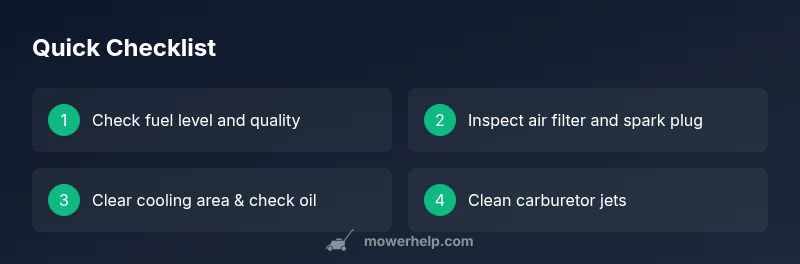
Most often the mower stalls after a few minutes due to fuel starvation, a clogged air filter, or overheating. Start with simple, safety-first checks: confirm fresh fuel, inspect the air filter, and test the spark plug. If the problem persists, clear the carburetor passage and ensure cooling fins aren’t blocked. For ongoing issues, schedule professional service.
Symptom snapshot: lawn mower stops after a few minutes
According to Mower Help, when a gas-powered mower stops after a few minutes, it’s often a sign of fuel or airflow problems rather than a seized engine. The symptom can feel urgent because you want to finish the job, but forcing it can lead to more damage. In practice, you’ll typically notice the engine stalling as it nears mid-range RPM, followed by trouble restarting or a sputter that clears briefly before dying again. The root cause is usually one of a few predictable culprits: fuel delivery, air intake, or heat-related shutdown. By examining fuel quality, air filtration, and cooling airflow, you can usually identify the problem within minutes and return to mowing. The Mower Help team found that most stalls are repeatable and tied to simple maintenance gaps, not major mechanical failures.
Common culprits to check first
The most frequent reasons a lawn mower stops after a few minutes are fuel issues, an obstructed air intake, or overheating. Start with fundamentals: is there fresh fuel in the tank, and has it been stored properly? Next, inspect the air filter for dirt or clogging and examine the spark plug for signs of fouling. A dirty filter or fouled spark plug can choke the engine’s breathing and cause stalling. Overheating can also trigger shutdowns, especially in hot weather or when the mower is operated on tall, dense grass. Clearing debris from around the cooling fins and ensuring the engine has good ventilation is essential. By methodically checking fuel, air, and cooling, you can often pinpoint the cause and restore reliable operation.
Safe, quick checks you can perform now
All checks in this section can be performed with basic tools and without disassembling critical components. Start by examining the fuel quality and level; dispose of stale fuel and replace it with fresh gasoline. Remove and inspect the air filter—replace it if it’s dirty or damaged. Inspect the spark plug for corrosion or heavy fouling; clean or replace as needed and gap it to the manufacturer’s specification. Listen for any odd sounds indicating a loose heat shield or exhaust leak, and ensure grass and debris aren’t blocking cooling fins. These quick checks address the bulk of stall-caused failures and reduce risk before deeper inspection.
Understanding the diagnostic flow
A systematic approach helps you move from symptom to diagnosis to solution efficiently. Begin with the surface indicators: fuel, air, and cooling. If the mower stalls only after a few minutes under load, suspect fuel starvation or overheating. If stalling occurs even with light load, ignition or carburetor issues may be involved. For each suspected cause, perform a matching check or action: drain stale fuel and test fresh fuel, clean or replace air filters, inspect spark plug and ignition, and examine the carburetor passages for blockages. If the issue persists after these steps, you’ll want to test with known-good parts or seek professional service.
Step-by-step: fixes for the most common causes
- Fuel delivery: Drain stale fuel, fill with fresh fuel, and check fuel lines for cracks or clogs. Replace the fuel filter if equipped. Run the engine briefly to confirm stable operation. Pro tip: avoid ethanol-heavy fuels for storage and mix if required by your model. 2) Air intake: Remove and inspect the air filter; replace if dirty. Clean the air intake housing; ensure nothing is restricting airflow. 3) Spark plug: Remove, inspect, and clean or replace if fouled. Re-gap to the recommended distance and reconnect. 4) Cooling & ventilation: Clear grass and debris from around cooling fins and the engine; check that the cooling shroud is intact. 5) Carburetor: If you suspect a blockage, spray carburetor cleaner into jets with the engine off and dry-fire it to avoid flooding. 6) Electrical checks: Verify safety switches are functioning and the kill switch isn’t shorted. Then re-test under load.
Safety, maintenance, and prevention
Safety should always come first. Always disconnect the spark plug before inspecting or servicing fuel or ignition components. Work in a well-ventilated area and avoid leaning over the exhaust. Use fresh, stabilized fuel and store it properly to prevent deterioration. Regular maintenance—air filter replacement, spark plug checks, and carburetor cleaning—reduces the risk of stalls. Finally, keep the mower clean and free of grass buildup to improve cooling efficiency and prolong engine life.
When to call a professional
If the mower continues to stop after a few minutes despite following the checks and fixes outlined, it’s time to seek professional help. A qualified technician can diagnose ignition coil issues, carburetor rebuilds, or internal engine wear that isn’t safely or easily addressed at home. Don’t delay if you notice oil leaks, excessive smoke, or a sudden increase in engine noise; these may indicate serious problems requiring specialized tools.
Steps
Estimated time: 60-90 minutes
- 1
Check fuel quality and level
Park on a flat surface, shut off the mower, and inspect the fuel. Drain stale fuel and refill with fresh, clean gasoline. Confirm the fuel valve is open and there are no leaks. If your fuel is old or stored improperly, replace it to restore proper operation.
Tip: Always work in a well-ventilated area; never siphon fuel by mouth. - 2
Inspect and replace air filter
Remove the air filter housing and inspect the element for dirt or damage. Replace the filter if it is dirty or degraded. Clean the housing and reseal the cover to prevent unfiltered air from entering the engine.
Tip: A clean air filter improves throttle response and reduces fuel consumption. - 3
Check spark plug and ignition
Remove the spark plug and inspect the electrode for fouling or wear. If needed, clean it with a wire brush or replace it and re-gap to the manufacturer’s specification before reinstalling.
Tip: Always disconnect the spark plug boot before handling the plug to avoid shocks. - 4
Examine cooling and ventilation
Look for grass, leaves, or debris around the engine and cooling fins. Clear any obstructions and ensure there is ample airflow around the mower while it runs.
Tip: Do not use tools that can damage fins; use a soft brush or compressed air with caution. - 5
Inspect carburetor and lines
If fuel and air checks don’t fix the issue, inspect the carburetor for blockages. Clean jets with carb cleaner and inspect fuel lines for cracks or leaks. Replace damaged lines if needed.
Tip: Avoid over-cleaning; follow manufacturer torque specs during reassembly. - 6
Test run the mower
Start the engine and run under light to moderate load for 5-10 minutes. Observe whether the stall reoccurs and note any unusual sounds or smells. If the problem persists, consider professional service.
Tip: Take photos of any disassembly to assist a technician if you need to seek help.
Diagnosis: Lawn mower stops after a few minutes
Possible Causes
- highFuel starvation or stale fuel
- highAir intake restriction or dirty air filter
- mediumOverheating or restricted cooling
- mediumCarburetor blockage or improper fuel-air mixture
Fixes
- easyDrain stale fuel and fill with fresh gasoline; check fuel lines and filter
- easyRemove and replace dirty air filter; clean air intake
- easyClean cooling fins and ensure unblocked airflow; check oil level if applicable
- mediumInspect carburetor jets and adjust or clean; consider a carburetor rebuild if needed
Got Questions?
Why does my lawn mower stop after a few minutes of operation?
Frequent causes are fuel starvation, a clogged air filter, or overheating. Check fuel quality, inspect the air filter and spark plug, and ensure proper cooling. If it keeps happening, deeper ignition or carburetor issues could be involved.
Common causes are fuel issues, dirty air filters, or overheating. Start with fuel and air checks, then cooling; seek professional help if it persists.
What should I check first when a mower stalls?
Begin with fuel level and fuel quality, then the air filter and spark plug. These are the most frequent culprits that cause stalls after short runs.
First check fuel quality, air filter, and spark plug for issues.
Can stale fuel cause stalling?
Yes. Old fuel can break down and clog fuel passages, causing starvation and stalls. Replace stale fuel with fresh gasoline and consider stabilizers for storage.
Stale fuel can clog lines and cause stopping; replace with fresh fuel.
How do I clean a carburetor safely?
Remove the carburetor and spray cleaner into jets with the engine off. Avoid forcing parts; allow solvents to dissolve deposits before reassembling. If uncertain, consult a service manual.
Carburetor cleaning involves removing and spraying with cleaner; be careful with jets.
Is overheating the main cause of stalls?
Overheating is a common trigger, especially in hot weather or with clogged cooling paths. Improve airflow, remove debris, and ensure the engine isn’t worked beyond its capacity.
Yes, overheating is a frequent cause; improve cooling and airflow.
Will replacing the spark plug fix the issue?
A faulty spark plug can contribute to stalling, but it’s usually one part of a larger issue. Check wires and gaps after replacement, then test engine response.
Replacing the spark plug can help, but test other areas too.
Watch Video
The Essentials
- Identify fuel, air, or cooling as the culprits.
- Perform safe, stepwise checks before deep maintenance.
- Keep maintenance up to date to prevent stalls.
- Know when to call a pro to avoid further damage.